
Creator of a printed heritage booklet
You combine text and historical images and want to check your pages and print-ready PDF.


Choose a laptop based on your layout software, the number of source images you work with and how much space you need to review pages. If you often work on location, consider portability, ports and the stated battery life too. Adobe recommends 16 GB of RAM for InDesign on Windows. For colour-critical print work, a wide colour gamut alone does not guarantee accurate colours, as RTINGS.com points out. Check the requirements with your printer and, if needed, review a proof.
You combine text and historical images and want to check your pages and print-ready PDF.
You take your laptop to an archive, then work with photos and documents saved locally.
You review and edit a large number of images before using them in your layout.
Start with your software and the size of your source files, then weigh up screen space against how often you’ll be taking your laptop with you.
| What to consider | What to check before buying | Who should pay particular attention? |
|---|---|---|
| Screen and print work | Compare screen size and resolution. For colour-critical print work, check the colour space requirements with your printer and review a proof if needed. Adobe notes that images below 300 ppi may cause problems when creating a print-ready PDF. | If I want to review spreads, captions and historical photos, page layout matters a great deal; around 31% of consumers prioritise print layout. |
| Memory and storage | Check the requirements of your own software, the RAM configuration, available SSD space and your back-up process. For InDesign on Windows, Adobe lists 8 GB of RAM as the minimum and 16 GB as the recommended amount. | When I’m working with lots of scans and files open at once, I want room to work on my project locally; around 25% of consumers prioritise image files. |
| Transferring source files | Compare the ports with those on your scanner and storage devices. When transferring InDesign files, the Package feature can gather linked images and other project assets. | If I’m bringing together material from different local sources, suitable connections and an orderly transfer are important; around 25% of consumers prioritise transferring source files. |
| Portability and battery life | Compare the size, weight, ports and included power supply of the exact model. Treat stated battery life as a manufacturer’s figure under specified conditions, not as a guaranteed working time when editing images. | When I take my laptop to an archive, portability matters more, even if the built-in screen offers less space; around 19% of consumers prioritise working on location. |
A wide colour gamut does not prove that colours are displayed accurately. P3 coverage also does not mean full Adobe RGB coverage.
Check the required colour space with your printer and review a proof if colour accuracy is important.
Colour checks, calibration or reviewing a print proof can take extra time.
InDesign projects may need linked images and fonts; missing links can come to light during checks.
Organise your source files, make a back-up and use your layout software’s checking and packaging features when transferring files.
Finding missing images or fonts can take extra time.
Usage rights can vary by collection and image. Just because a photo is available to view online does not automatically mean you can publish it in a printed booklet.
Record the rights holder, licence and any attribution requirements for each image before adding it to your layout.
If permission is missing, you may need to replace an image or obtain permission.
According to Apple, the Apple MacBook Air has two Thunderbolt 4 ports. For the HP OmniBook configuration reviewed, HP lists a recommended 65 W USB-C adapter, available separately.
Check the ports on the exact laptop and the connections on your scanner, storage devices and external screen. Also check what’s included in the box.
According to Apple, the MacBook Air M5 comes in 13- and 15-inch models, for those who want macOS and are choosing between a more compact size and extra screen space.
The OmniBook Ultra 14-kd0672nd is a compact Windows model with a stated 14-inch 3K OLED touchscreen, 16 GB of RAM and a 512 GB SSD.
According to Lenovo, the Yoga Pro 7 Gen 9, model 83HN0034MH, has a 14.5-inch 2.8K OLED screen.
According to its product information, ASUS positions the ProArt P16 H7607BA for creative and AI tasks; the specification reviewed lists a 16-inch UHD+ OLED screen and a card reader.
The Dell Pro 14 Premium PA14250 is a configurable business Windows range for those who want to work on the move and compare different configurations.
This selection focuses on laptops for laying out a heritage booklet, reviewing images and working with project files locally.
 Image unavailable
This 16-inch model may suit you if you want to view pages and images on a larger screen.
16-inch WUXGA OLED screen, Snapdragon X processor, 16 GB LPDDR5X memory, 512 GB SSD and Windows 11 Home.
 Image unavailable
This configuration may suit you if you want to work with text, pages and source material locally.
Intel Core i5-13420H, 16 GB DDR5 memory, 512 GB SSD, Wi-Fi 6 and Windows 11 Pro. The description lists USB-C with DisplayPort and Power Delivery, and a starting weight of 1.61 kg.
 Image unavailable
The listed 32 GB of memory may be useful if you work with lots of scans and project files at once.
16-inch screen with 1920 × 1200 resolution and a 16:10 aspect ratio, 32 GB DDR5 memory, 512 GB PCIe 4.0 SSD and Windows 11 Pro. The description lists a weight of around 1.9 kg; the power adapter is not included.
 Image unavailable
This 15-inch model may suit you if you want more screen space for your layout than a more compact laptop offers.
15.3-inch Liquid Retina display, 16 GB memory, 512 GB storage, two Thunderbolt 4 ports and a MagSafe charging port. The power adapter is not included.
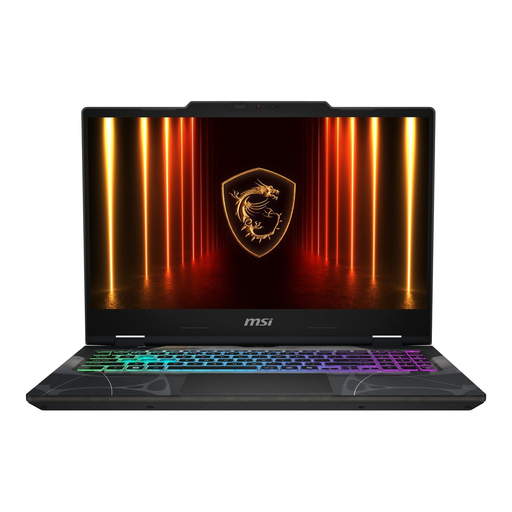 Image unavailable
This laptop may suit you if, alongside book layout, you also use other applications that benefit from the listed graphics configuration.
15.6-inch Full HD screen, Intel Core 5 210H, 16 GB DDR5 memory, 512 GB SSD, NVIDIA GeForce RTX 5050 and Windows. The description lists a weight of 1.95 kg; the power adapter must be purchased separately.
Not just to lay out pages with text and photos. According to RTINGS.com’s buying guide, a dedicated GPU is mainly relevant for more complex 3D design work; check the requirements of your own image-editing software.
If you use InDesign, first run Preflight to check for missing links and fonts. The Package feature can collect the document and linked images. Then export the print PDF and check that it meets your printer’s requirements.
No. Being available online does not automatically mean an image can be published. The Cultural Heritage Agency of the Netherlands describes different rights and conditions for each image; the National Archives notes that permission is required in advance for copyright-protected photos. Check the rights information for every image.
Online purchases generally come with a statutory cooling-off period, although there are exceptions. ACM ConsuWijzer states that this period ends 14 days after delivery. Your statutory rights are also separate from any manufacturer’s warranty. If a product breaks too soon under normal use, the retailer is responsible for providing an appropriate remedy at no extra cost.
No. Your statutory rights are separate from any commercial warranty you buy or receive. Assess an extra package based on the additional cover and terms you need.