
Student with a small desk
You read and compare plans in a limited workspace, weighing up a compact screen against a larger visible working area.


Start by checking the programmes and versions your course actually requires: viewing plans calls for something different from CAD or 3D modelling. A compact laptop takes up less desk space, while a larger built-in screen can give you more room to view a plan. Also check the requirements of the specific software and whether there’s space for an external monitor at your desk.
You read and compare plans in a limited workspace, weighing up a compact screen against a larger visible working area.
You may need to do more than view plans, so you’ll want to check which programmes and versions your course requires first.
You take your laptop with you and also use it at a small desk. Weight, the power supply and the option to connect a monitor may all matter.
A good fit if: you have limited desk space and your course requires Windows software.
The trade-off: a smaller built-in screen shows less of a plan at once; an external monitor needs extra space and a suitable port.
A good fit if: all the required programmes are available on macOS. QGIS offers a macOS version; Autodesk lists AutoCAD Map 3D as a Windows toolset.
The trade-off: check the exact software edition, as well as the ports and external display capabilities of the specific MacBook model.
A good fit if: you study using a browser or apps that are confirmed to be supported, and don’t need local desktop CAD or GIS software.
The trade-off: ChromeOS isn’t a straightforward replacement for desktop software; check in advance that the apps and files you need will work.
A good fit if: you mainly view plans on the built-in screen and have room for the laptop on your desk.
The trade-off: the larger screen may show more of a plan, but the laptop takes up more of your limited workspace.
| What to consider | What should you check? | Who is this important for? |
|---|---|---|
| Reading plans at a small desk | Check the screen size and resolution; see whether an external monitor will fit, given the available ports and space. | When I’m viewing a detailed plan at a small desk, I want to see enough of it at once without the laptop taking over my whole workspace. Around 36% of consumers prioritise being able to read plans clearly when desk space is limited. |
| Required design software | Check the operating system and version, then compare the exact configuration with the Autodesk AutoCAD or SketchUp requirements for your assignments. | When my course requires CAD, GIS or design software, I want to know in advance whether the right version will work on my laptop. Around 29% of consumers prioritise compatibility with required design software. |
| Taking your laptop with you and working in different places | Check the weight, dimensions and included power supply, as well as the conditions used to calculate any stated battery life. | When I travel between study spaces, I want to be able to take my laptop with me and know whether I can work there without a power socket. Around 21% of consumers prioritise portability. |
| Total costs and after-sales support | Check whether you’ll need a power supply or connection accessories, and distinguish commercial warranty terms from your statutory rights against the seller. | When I’m managing my study budget, I want to know in advance which essentials and terms will affect the total cost, without losing sight of the tasks my course requires. Around 14% of consumers prioritise total costs and after-sales support. |
A small screen saves space, but shows less of a plan and fewer toolbars at once. A larger laptop, on the other hand, takes up more room on your desk.
Compare the screen, laptop body and ports as one complete workspace, rather than as separate specifications.
Software and versions aren’t available on every operating system. Autodesk lists AutoCAD Map 3D as a Windows toolset, while the ASUS Chromebook model reviewed runs ChromeOS.
Before you buy, ask which software and versions are required, and which operating systems they support.
A commercial warranty period doesn’t, by itself, determine how long your statutory rights against the seller apply.
Keep your purchase and product details, and if something goes wrong, distinguish between the commercial warranty terms and your statutory rights.
The ThinkBook 14 G8 IAL is a compact Windows range with a 14-inch screen and ports for connecting an external monitor.
The Dutch ProBook range includes configurations with 14- and 16-inch screens, so the balance between screen space and desk space varies across the range.
The MacBook Air is a compact macOS option to consider if your course software runs on macOS.
The Chromebook CM14 Flip is a compact ChromeOS option for light tasks that are confirmed to be compatible.
The Aspire 17 A17-51M-53T4 is a larger Windows option to consider if you want to study plans directly on the built-in screen.
This selection focuses on compact laptops for studying at a small desk. For CAD, GIS and 3D work, always check the requirements of the exact software and version you’ll use.
 No image available
A compact 14-inch model for viewing plans in a small workspace; check that the required software works on this configuration.
A power supply isn’t included; according to the product information, you’ll need a compatible USB-C charger of at least 45 W, sold separately.
 No image available
A 14-inch model for viewing plans at a small desk; compare the configuration with your course’s software requirements.
The product name lists an AMD Ryzen 5 7520U, 8 GB RAM, 512 GB SSD and Windows 11 Home. The product information states that the laptop is supplied without a charger and that its memory can’t be upgraded.
 No image available
This 14-inch model is a compact option for studying at a small desk; check that the installed software suits the assignments on your course.
The product name lists a Full HD screen, Intel Core 7 150U, 16 GB DDR4, a 512 GB SSD and Windows 11 Home.
 No image available
A compact MacBook to consider if the study programmes you need are available on macOS; check the software edition before you buy.
The product name lists 24 GB of memory, 1 TB of storage and a QWERTY keyboard.
 No image available
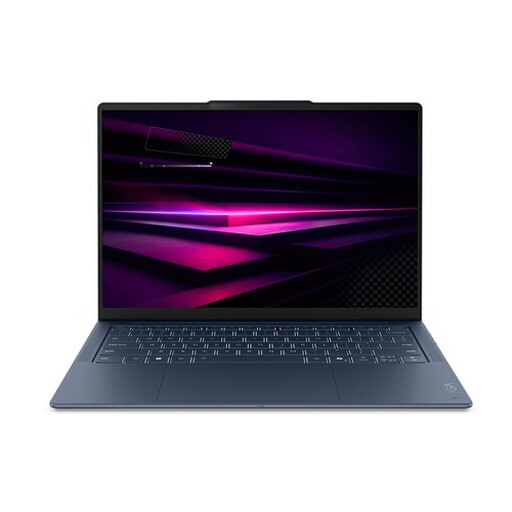
A 14-inch model for taking with you and using at a small study space; check that the required software is compatible with the exact configuration.
The product name lists a Snapdragon X2P-42-100 processor and a QWERTY keyboard.
Not until you know what you need to do with the plans. Ask which programmes, versions and tasks are required. Autodesk distinguishes between basic requirements and additional requirements for things such as large datasets and 3D modelling; SketchUp gives separate graphics recommendations for models with advanced materials.
Yes, if the model has a suitable display connection and you have space for a compatible monitor. Lenovo lists HDMI and video output via USB-C for the ThinkBook 14 G8 IAL; Apple specifies external displays for the MacBook Air model described. Check the ports on the exact configuration and whether the monitor will fit on your desk.
First check which software, version and operating system your course requires. QGIS offers versions for Windows and macOS; choose a laptop that supports the version you actually need.
In the Netherlands, your statutory guarantee rights are separate from a manufacturer’s or seller’s guarantee. If a product is faulty under the applicable terms, the seller must offer an appropriate solution. The explanation from ACM ConsuWijzer doesn’t state that every laptop has a fixed statutory guarantee period of exactly two years.
For online purchases in the Netherlands, you generally have a statutory cooling-off period of up to 14 days after the product has been delivered. ACM ConsuWijzer also explains that there are exceptions and conditions; check which ones apply to your purchase.