Start with the GIS software your course requires: QGIS is available for Windows and macOS, while ArcGIS Pro requires a local Windows system that meets Esri’s system requirements. If you often move between classrooms, consider the weight, charging options and ports. For larger rasters, or when you work with maps and data side by side, storage, memory and screen space matter more. A stated battery life is no guarantee of how long the laptop will last during your GIS work.
Who is this laptop guide for?
Students who often move between classrooms
If you regularly take your laptop with you, compare the weight, charging options and available ports for each specific configuration. Lenovo PSREF shows that specifications are tied to a particular configuration.
Students who calculate heatmaps themselves
If you create or edit map layers and raster outputs, first check which GIS software you need, then weigh up the processing power and storage required. Esri publishes system requirements for ArcGIS Pro, while the QGIS documentation explains how output resolution affects file size.
Students who view maps and data side by side
If you want to view a map alongside layers, a legend or tables while studying, weigh up screen space against ease of carrying. The specifications for the screen configuration you choose are what matter.
What should you look for when choosing?
First check which software and version your course requires. Then compare the weight and charging setup with the space you need for your maps and files.
| What to consider |
What to look for |
Who is this most relevant to? |
| Portability and moving between classrooms |
Compare the weight of the exact configuration and check the charging options and included adapter. |
If I often carry my laptop between classrooms, I want to know what I’ll be carrying along with the charger; around 26% of consumers prioritise portability. |
| GIS software |
Ask which software and version are required, then compare the official system requirements with the full configuration. |
For consumers whose choice is determined by their course software, compatibility comes before portability; around 26% prioritise software compatibility. |
| Processing power and storage |
Compare the software requirements and the size of your files with the configuration’s memory and SSD capacity. |
If I process map layers and rasters myself, I want to allow for larger output files; around 21% of consumers prioritise local analysis. |
| Space for maps and data |
Compare screen size and resolution, and consider whether you can usually use an external monitor. |
If you want to view maps, layers or tables at the same time, screen space may be a priority; around 16% of consumers give it top priority. |
| Overall study setup |
Check what’s included and ask your course provider about access to the required GIS software. |
If I want to keep the cost of my full setup affordable, I want to know in advance what I’ll need besides the laptop; around 11% of consumers prioritise the total cost. |
Buying pitfalls
-
Choosing an operating system before you know which software your course uses
QGIS lists Windows and macOS as available platforms; ArcGIS Pro requires a supported Windows system. The software used on your course may therefore determine your choice.
Ask your course provider which application and version you’ll need, then compare the supplier’s system requirements with the laptop configuration.
-
Assuming stated battery life equals working time with GIS
Battery life also depends on your programmes, map files and screen settings; a stated battery life can’t accurately predict how long that combination will last.
As well as checking the battery specifications, see how the laptop is charged and whether the required adapter is included with your chosen configuration. Don’t plan your work around advertised battery life alone.
-
Assuming every configuration in a product range is the same
Configurations can differ in memory, storage, screen and included accessories, among other things. With some configurations, you’ll need to buy a charger separately.
Before you buy, check the full model number, specifications and what’s in the box. Don’t assume that a configuration has the same features as another model in the same range.
Brands to consider
Lenovo
IdeaPad Slim configurations are one Windows option to compare; the ThinkPad E14 Gen 7 is a separate product range.
- For one ThinkPad E14 Gen 7 configuration, Lenovo PSREF lists features including a 14-inch screen, USB-C and HDMI.
- These ports aren’t automatically included on IdeaPad models or other E14 configurations, so check the full model number.
HP
The OmniBook 5 Flip range is worth considering if you’re looking for Windows and a touchscreen for making notes.
- HP lists a touchscreen and 16 GB RAM for one 14-inch configuration.
- For that configuration, a recommended USB-C adapter is sold separately. A touchscreen alone doesn’t indicate whether a laptop is suitable for demanding GIS analysis.
ASUS
The Zenbook 14 OLED is a compact Windows range to compare if portability and screen quality matter to you.
- The range includes configurations with different model numbers.
- ASUS lists several UX3405 variants with different processors and screen specifications. Don’t assume the performance or features from the range name alone.
Dell
The Dell 14 Plus is a Windows alternative to compare if you’re looking for a configurable 14-inch model.
- You can tailor the configuration to suit the model you want.
- Dell notes that changing a configuration can also change other specifications, so check the full configuration.
Apple
A MacBook may suit a course that allows QGIS or other compatible macOS software.
- QGIS lists macOS as an available platform.
- If your course requires ArcGIS Pro locally, macOS isn’t a substitute for a laptop that meets Esri’s Windows system requirements.
Joybuy laptop picks
These laptops are suited to studying GIS on Windows, from a configuration that’s easy to take with you to models with more screen space for maps and data.
 No image available
MSI Modern 14 F1MG-867NL
A lightweight Windows configuration to compare if you often move between classrooms.
14-inch Full HD IPS screen; Intel Core 7 150U; 16 GB DDR4; 512 GB SSD; Windows 11 Home.
The stated weight is 1.40 kg. The description lists USB-C with Power Delivery and DisplayPort.
View at Joybuy
 No image available
HP OmniBook 5 Flip 14-fp0075nd C5VM5EA#ABH
A Windows 2-in-1 to consider if you want to work on the screen while studying maps.
14-inch 1920 × 1200 OLED touchscreen; Intel Core 7 150U; 16 GB memory; 512 GB SSD; Windows 11 Home.
The stated weight is 1.62 kg. A compatible USB-C charger isn’t included, and the stylus is sold separately.
View at Joybuy
 No image available
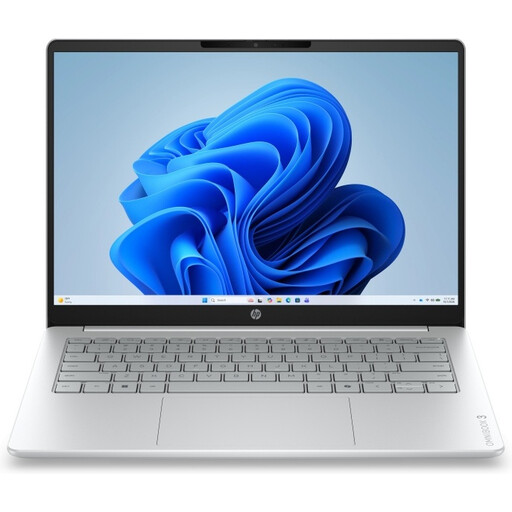
HP OmniBook 3 14-HY0005NDX
A 14-inch Windows laptop to compare if you’re looking for a portable model for studying between classrooms.
1920 × 1200 IPS screen; AMD Ryzen 5 130; 12 GB memory; 512 GB SSD; Windows 11 Home.
The stated weight is around 1.42 kg. The charger must be purchased separately.
View at Joybuy
 No image available
MSI Venture 16 AI A2HMG-068NL
A larger Windows configuration to compare if you want to view maps and data side by side.
16-inch screen with 1920 × 1200 resolution; Intel Core Ultra 7 255H; 32 GB DDR5; 512 GB SSD; Windows 11 Pro.
The stated weight is around 1.9 kg. This configuration is supplied without a power adapter.
View at Joybuy
 No image available
Lenovo IdeaPad Slim 5 15ARP10
A Windows laptop with a larger screen to compare if you want to view map information at the same time.
15.3-inch screen with 1920 × 1200 resolution and IPS technology; Ryzen 5 7535HS; 16 GB memory; 512 GB SSD; Windows 11 Home.
The stated weight is around 1.50 kg. The required USB-C adapter isn’t included.
View at Joybuy
Frequently asked questions
Do you need Windows to create heatmaps?
Not for every workflow: QGIS lists Windows and macOS as available platforms. If you need to use ArcGIS Pro locally, compare your laptop with Esri’s supported Windows systems and other system requirements. Ask your course provider which application is required.
Why can a QGIS heatmap file become large?
According to the QGIS documentation, increasing the number of raster rows and columns reduces cell size and increases file size. Choose an output resolution that suits your assignment and allow for enough storage; you don’t need more pixels for every neighbourhood map.
Is ArcGIS Pro automatically free through your course provider?
That depends on the access your course provider arranges for your course. Esri describes several education licences; ask your course provider which access applies and whether there are any costs.
What rights do you have when buying a laptop online in the Netherlands?
For an applicable online consumer purchase from a business, you’ll often have a 14-day cooling-off period, according to the Dutch government. This is separate from your rights if a product is faulty, damaged or not as described: the retailer is responsible for dealing with faulty goods. According to the Dutch government, the Netherlands has no fixed statutory guarantee period; check the terms that apply to your specific purchase.


