What should you consider when choosing?
Choosing between a Chromebook, Windows and macOS mainly depends on whether your work can be done in a browser or requires local GIS software. Conversations around you also call for separate consideration of concentration and microphone use.
Windows laptop
A good fit if: your course requires Windows software or you may want to use QGIS locally.
Consider: screen size, ports and portability vary between configurations, so compare the full model specification.
MacBook
A good fit if: macOS meets your course’s software requirements and you want to work locally.
Consider: Apple quotes battery life for specified activities; those figures don’t automatically predict how long it will last during map research.
Chromebook
A good fit if: you mainly use suitable browser-based tools and documents, and don’t need unsupported local software.
Consider: QGIS doesn’t offer a standard ChromeOS download. Linux may be limited on a Chromebook, particularly on a school-managed device.
| What to consider |
What to check before buying |
Who is this important for? |
| Maps and notes side by side |
Compare screen size, resolution and reflections. Also check the port if you want to connect an external monitor. |
If I want to view historical maps alongside sources and notes, I’m looking for a screen layout that’s easy to read for my work. Around 36% of consumers rank map readability as their top buying concern. |
| Conversations and audio |
Decide whether you mainly want to block out sound or be heard clearly when taking part. For online meetings, check the microphone, audio connection and meeting app settings. |
When I study with conversations going on around me or take part in online meetings, I want to know whether I can concentrate and whether others can hear me clearly. Around 29% of consumers give conversations and audio top priority. |
| Local GIS software |
Ask which programmes and operating systems your course requires. On ChromeOS, also check Linux support and any restrictions on a managed device. |
If my assignment requires local GIS work, I want to know before buying whether the operating system and software are compatible. Around 21% of consumers prioritise local GIS compatibility. |
| Portability and configuration |
Compare the screen size and weight of the specific configuration with how often you’ll carry the laptop around. Check the memory and storage against your software and files. |
If you often take your laptop between study spaces, you’ll want to weigh up screen space against what’s practical to carry in your bag. Around 14% of consumers place the most importance on portability and the configuration they choose. |
Joybuy products
These laptops are relevant to map research and studying. For each configuration, check the operating system, your course’s software requirements and the accessories you need.
 No image available
HP OmniBook 3 14-hy0058ndx
A 14-inch Windows laptop for browser-based maps and report writing. If you want to use local GIS software, check your course requirements.
AMD Ryzen 5 7520U, 8 GB RAM, 512 GB SSD and Windows 11 Home. The product description says that the laptop is supplied without a charger, which must be bought separately.
Joybuy
 No image available
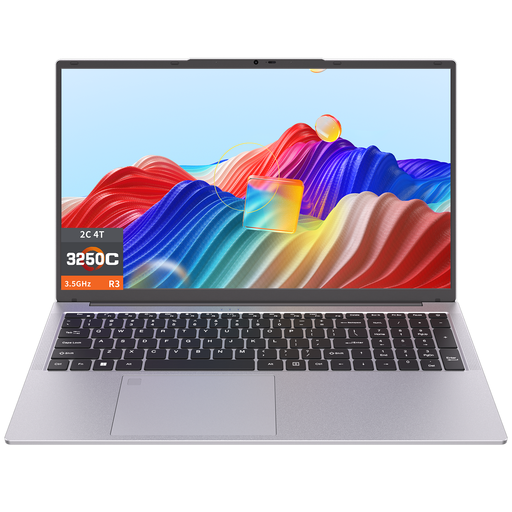
Auusda T173A
The 17.3-inch screen could suit you if you want to view maps and documents on a larger built-in display. Weigh up the size against how often you’ll carry the laptop around.
The product name lists a 3250C processor, 8 GB of DDR4 memory and a 512 GB SSD. Before buying, check which operating system and ports are included with this configuration.
Joybuy
 No image available
ASUS ProArt P16 H7607BA-SE030X
This 16-inch Windows 11 Pro laptop could suit you if you want a larger screen for map research and it meets your course’s software requirements.
The product name lists 64 GB of RAM and a 1 TB SSD. Check that the ports and configuration suit your workspace and programmes.
Joybuy
 No image available
Ruzava 14-inch laptop
The product name mentions student and business use; check whether the operating system is suitable for your course’s software.
N5095 processor, 8 GB RAM and a 256 GB SSD, expandable to 1 TB according to the product name.
Joybuy
 No image available
Apple MacBook Neo 13-inch A18 Pro
A MacBook option for map research and note-taking if your course’s software is compatible with macOS. Check this in advance if you need local GIS.
8 GB of memory, 256 GB of storage and a QWERTY keyboard. The product description says that a USB-C power adapter of at least 20 W is required and isn’t included. Colour: Citrus.
Joybuy
Frequently asked questions
Do I need QGIS to view historical polder maps?
No, not just to view and compare maps on Topotijdreis; you can do that on the website. If your assignment requires you to carry out your own GIS work, check your course requirements. QGIS is available for Windows, macOS and Linux.
Does noise cancellation help with conversations around me?
During a Teams call, noise cancellation can help reduce what other participants hear through your microphone. It doesn’t tell you how much background conversation you’ll hear yourself; for online meetings, also check the microphone and audio source you’ll be using.
Can I install local GIS software on a Chromebook without checking first?
No, don’t assume that you can. QGIS doesn’t offer a standard ChromeOS download, and Google says that Linux may not be available on some Chromebooks, including school-managed devices. Check your device and your course’s software requirements.
What are my rights when I buy a laptop online in the Netherlands?
When you buy from a business online, you generally have a 14-day cooling-off period, subject to exceptions and conditions. Products must also meet legal expectations; if there’s a problem, the retailer is your point of contact for the legal guarantee. An additional warranty package doesn’t replace these rights.


