
Diagram reader
You study rain garden sketches and legends alongside course materials, and want enough screen space to examine the details. ASUS Netherlands and Lenovo Netherlands list anti-glare screen options in their product specifications.


When studying diagrams in PDFs and on websites, a clear screen with adjustable brightness is generally a more useful starting point than powerful graphics hardware. If you also need to edit maps or use CAD software, first check which application and configuration your course requires. These could affect your choice of operating system, memory and graphics hardware.
You study rain garden sketches and legends alongside course materials, and want enough screen space to examine the details. ASUS Netherlands and Lenovo Netherlands list anti-glare screen options in their product specifications.
You study in changing or dim light and want to be able to adjust the brightness and display. Microsoft Support explains how to adjust brightness in Windows; Google Chromebook Help describes the adjustable Night Light feature in ChromeOS.
You may need to do more than view diagrams, so first check whether the required GIS or CAD software works on your laptop. QGIS and Autodesk publish information about their respective software requirements.
Best for: combining PDFs, online resources and coursework, especially if you take your laptop with you regularly.
Trade-off: ASUS Netherlands lists an anti-glare 14-inch WUXGA screen for the M1407GA family. A more compact screen gives you less physical space to view a diagram alongside your notes.
Best for: studying mainly at a desk and viewing a diagram alongside text.
Trade-off: Lenovo Netherlands lists an anti-glare 15.3-inch WUXGA screen for an IdeaPad Slim 3i bundle. Check the screen specifications for the exact version, as bundles and models differ.
Best for: rotating, zooming in on or showing diagrams during a discussion using touch controls.
Trade-off: HP lists a touchscreen and 360-degree hinge for the OmniBook 5 Flip 14-fp0600ndx. For the version you choose, also check stylus compatibility and the accessories included.
Best for: when the required files and school services work in ChromeOS or a browser, and you don’t need a specific desktop application.
Trade-off: QGIS documentation describes standard installations for Windows and macOS. Check the required software and update period for the specific Chromebook model.
Best for: when your course requires a specific design application, larger datasets or 3D models.
Trade-off: Autodesk distinguishes between minimum and recommended system requirements for AutoCAD 2026. Start by identifying the software version and the work involved: extra graphics hardware won’t necessarily help if you’re only reading diagrams.
| What to consider | What should you check? | Who should prioritise this? |
|---|---|---|
| Reading diagrams and legends | Compare the screen size, resolution, aspect ratio and reflections for the exact version. ASUS Netherlands and Lenovo Netherlands list these features for specific models. | I want to view small labels and notes clearly alongside each other; around 33% of consumers prioritise how easy diagrams are to read. |
| Display for evening study | Check whether you can adjust the brightness and whether automatic adjustment is available on the laptop you’re considering. Microsoft Support explains manual brightness adjustment in Windows; Google Chromebook Help describes Night Light in ChromeOS. | I want to adjust the display myself in dim light; around 27% of consumers give adjustable evening display settings their highest priority. |
| Required software | Ask about the exact application, version, operating system and project size. QGIS documents standard installations for Windows and macOS; Autodesk publishes system requirements for AutoCAD 2026. | I need to be sure the required mapping or design software works before I choose; around 27% of consumers prioritise software compatibility. |
| Carrying and charging | Compare the stated weight, screen size and included power adapter for the specific version. Don’t treat the stated battery life as a measure of how long it will last during your own study sessions. | I take my laptop with me often and want to know what I’ll need to carry each day; around 13% of consumers prioritise portability. |
The Lenovo LOQ 15IRX10 83JE012XMH is designed for more demanding work. Lenovo PSREF lists a starting weight of 2.4 kg for this version.
Lenovo also lists a 170 W adapter. Factor in the weight of both the laptop and adapter if you’ll be carrying it regularly.
Start with your coursework and required applications. Only then compare a compact study laptop with a model designed for more demanding graphics work.
Viewing diagrams is different from opening a GIS project or editing a CAD model. QGIS documentation describes standard installations for Windows and macOS, while ChromeOS is a different operating system.
If the required desktop software doesn’t work on your chosen laptop, you may need a different way of working or another device.
Before choosing a browser-based laptop, ask which application and file format your course requires.
Specifications for a Lenovo bundle or a specific HP OmniBook Flip version don’t automatically apply to other models or configurations.
HP states that the recommended 65 W USB-C adapter for the OmniBook 5 Flip 14-fp0600ndx is sold separately.
Check the full model code, screen, keyboard layout and box contents for the version you want to buy.
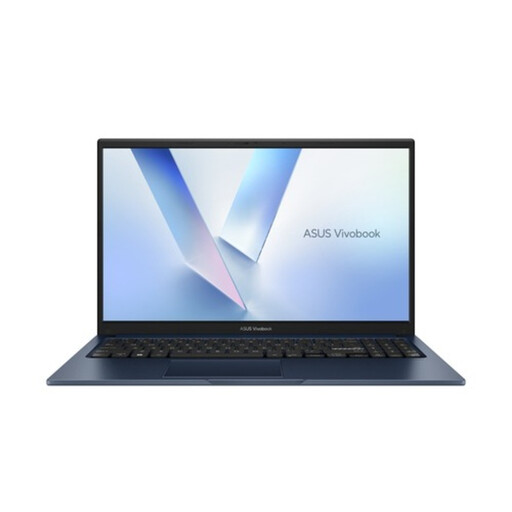
The Vivobook 14 M1407GA is a compact Windows option for viewing diagrams and course materials.
The IdeaPad Slim 3i is an option if you want more screen space; the LOQ is worth considering if your course requires more demanding design work.
The OmniBook 5 Flip is a Windows 2-in-1 for anyone who will actually use a touchscreen or convertible display.
The Chromebook Plus 514 CB514-6HT-32PZ is a ChromeOS option if your course files and services work with it.
The MacBook Air is a portable macOS option if the software you need for your course works with macOS.
This selection includes laptops with screens of 15 inches or larger, including Windows laptops and a MacBook Air, for anyone who wants to view diagrams alongside course materials.
 No image available
The 18.4-inch screen gives you room to view diagrams and course materials side by side.
Ryzen 7 260, 16 GB memory and 512 GB SSD. No AC adapter is included; the product information recommends a compatible 45–65 W USB-C PD charger. Stated weight: 2.60 kg.
 No image available
The 15.6-inch screen is a good option if you want to view diagrams and course materials on a larger display.
Core 5 320, 8 GB memory and 256 GB SSD.
 No image available
The anti-glare screen is worth considering if you want to reduce reflections while reading.
15.6-inch Full HD screen, 16 GB DDR5, 512 GB SSD, Wi-Fi 6 and Windows 11 Pro.
 No image available
This MacBook Air is an option if you need macOS and want to view diagrams on a 15-inch laptop.
M5 chip, 16 GB memory and 512 GB storage. No power adapter is included; the product information recommends a USB-C adapter of at least 35 W. Keyboard: QWERTY.
 No image available
The anti-glare 15.3-inch WUXGA screen is a good option for viewing diagrams alongside course materials.
Ryzen 5 7535HS, 16 GB memory and 512 GB SSD. The USB-C power adapter isn’t included. The keyboard is English EU-QWERTY.
You don’t necessarily need powerful graphics hardware just to view diagrams in PDFs and on websites. If you also need to use CAD, GIS or 3D software, check the requirements for the exact application and coursework. For example, Autodesk publishes separate minimum and recommended system requirements for AutoCAD 2026.
Adjust the brightness to suit the lighting and check how diagrams look on screen. Microsoft Support explains how to adjust brightness manually in Windows; automatic adjustment is available on some PCs only. Google Chromebook Help describes Night Light in ChromeOS, which lets you adjust the screen colour and set a schedule.
Before choosing a Chromebook, check that the files and applications your course requires work in ChromeOS. QGIS documentation describes standard installations for Windows and macOS. For the specific Chromebook model, also check how long it will receive automatic updates.
Before ordering, check whether a suitable power adapter is included; HP lists an adapter sold separately for a specific OmniBook 5 Flip version. For a standard online consumer purchase, you generally have 14 days to change your mind after the product is delivered, subject to legal exceptions. ACM ConsuWijzer says that under the statutory guarantee, the seller must put a faulty product right free of charge. This doesn’t mean every laptop automatically has a fixed two-year guarantee period.