Start with your software and the most demanding project you actually plan to create. If you regularly render in 3D, GPU compatibility, video memory and RAM are important. For drawing and 2D work, the screen and input options may matter more. Then compare the exact configuration for portability and upgradeability; specifications alone won’t tell you how long your scenes will take to render.
Who is this guide for?
Student with 3D rendering assignments
If you create scenes in software such as Blender, weigh up the GPU, video memory and RAM against the scale of your assignments. Blender Foundation recommends 8 GB VRAM and 32 GB RAM; the configuration you need depends on the project.
Student who draws animations
For hand-drawn animation and other visually focused work, the screen and input options may matter alongside graphics capabilities. ASUS lists an OLED touchscreen for the ProArt P16 configuration reviewed; check the specifications of the exact model.
Student who also works on the go
If you switch between your student room and campus, you’ll need to balance the size of the laptop and what you carry every day against the processing power you need. Studentenwegwijzer emphasises that your intended use and software requirements are key to making that choice.
What should you consider when choosing?
Start with the requirements of your animation software and course. Then look at the features that make a difference to the way you work.
| What to consider |
What should you check? |
Who is it most important for? |
| 3D rendering performance |
Check the exact GPU, VRAM and RAM, as well as support for your intended Blender rendering backend. Blender recommends 8 GB VRAM and 32 GB RAM; these aren’t requirements for every assignment. |
For consumers who regularly render complex Blender scenes, suitable GPU and memory capacity are the top priority; around 33% of consumers prioritise 3D rendering. |
| Screen and drawing input |
Check the screen size, stated colour coverage and reflectivity. Separately confirm whether the touch or pen input you want is supported; a touchscreen doesn’t automatically support a pen. |
If you mainly draw or work with images, you’ll want a screen and input options suited to the way you work; around 20% of consumers prioritise the screen and drawing input. |
| Portability and workspace |
Compare the weight, screen size, ports and charger you’ll need to carry for the exact configuration. Don’t assume the stated battery life applies when rendering on battery power. |
For consumers who take the same laptop to campus and use it at home, portability and workspace need to be balanced; around 20% prioritise portability. |
| Finding the right configuration |
Compare your course and software requirements with the full configuration, including RAM and storage. Check whether the memory can be upgraded if that could matter for your projects. |
If your priority is finding a configuration that suits your assignments, you’ll want to avoid paying for features you won’t use, while making sure you don’t miss components you need; around 27% of consumers make this their top priority. |
Common buying mistakes
-
Assuming a GPU model name proves how well it renders
GPU rendering in Blender depends on supported hardware, the rendering backend and drivers. The GPU’s name alone won’t tell you how long your scene will take to render.
Check the exact GPU and VRAM configuration, and whether it supports your intended Blender rendering backend. If rendering time is crucial, look separately for benchmark results relevant to the types of scenes you create.
-
Assuming a laptop range has one fixed configuration
A model range may include configurations with different processors, GPUs and amounts of RAM. Changing one part of a configuration can also affect other specifications.
Compare the full model code and configuration of the version you’re considering, rather than just the product family name.
-
Confusing an extended warranty with your statutory rights
ACM ConsuWijzer explains that your statutory warranty rights still apply even if you haven’t bought an additional warranty.
Check what extra cover includes and which seller is responsible. Your statutory warranty rights are separate.
Brands worth considering
Lenovo
The LOQ 15i Gen 10 is worth considering if you’re looking at a Windows laptop with a dedicated RTX GPU for 3D work.
- Lenovo lists Intel Core HX processors and RTX 50 Series GPUs for this range.
- This doesn’t apply to every configuration. Check the full model code and the RAM in the version you’re considering.
ASUS
The ProArt P16 may be a good fit if you’re weighing up the screen and drawing or image work alongside graphics capabilities.
- According to ASUS, the P16 configuration reviewed has a 16-inch OLED touchscreen, an RTX 5070 Laptop GPU and 32 GB of integrated RAM.
- The RAM in this configuration can’t be upgraded. These manufacturer specifications don’t automatically apply to every P16.
Apple
The MacBook Pro with M5 Pro is a macOS option if your course and software support the platform.
- Apple lists different configurations with M5, M5 Pro and M5 Max chips, as well as different memory options.
- Blender 5.0 and later requires Apple Silicon and macOS 13 or later on Mac, according to Blender Foundation. Also check the requirements of any other software your course specifies.
Dell
The Alienware 16 Aurora is a configurable Windows range worth comparing if you’re looking at dedicated GPUs and different configurations.
- Dell offers a choice of processor, RTX GPU and RAM for model AC16250.
- Dell warns that changing the configuration may also affect other specifications. Compare the final version you’re considering.
Acer
The Predator Helios Neo 16S AI is worth comparing if a 16-inch OLED screen and a dedicated GPU are important to you.
- Acer Store Netherlands lists an RTX 5060 with 8 GB of dedicated memory and 32 GB RAM for NH.QX9EH.001.
- These specifications apply to that specific configuration and don’t automatically apply to other models in the range.
Joybuy laptops for animation work
This selection includes laptops for visually focused animation work and configurations with RTX graphics. Check whether each model’s configuration suits your software, drawing style and portability needs.
 Image unavailable
ASUS ProArt P16 H7607BA-SE030X
An option to compare if you combine animation with visually focused work on a built-in screen.
16-inch 4K OLED touchscreen; stated colour coverage of 100% DCI-P3; NVIDIA Blackwell RTX graphics card; 64 GB RAM; 1 TB SSD.
The description lists a weight of around 1.85 kg and USB4 and HDMI ports.
View at Joybuy
 Image unavailable
ASUS ProArt P14 H7407BA-SM078X
A compact-screen option to compare if you combine drawing or visually focused work with taking your laptop on the go.
14-inch 3K OLED touchscreen; 120 Hz; stated colour coverage of 100% DCI-P3; NVIDIA Blackwell RTX graphics card; 128 GB RAM; 1 TB SSD.
The description lists a weight of 1.48 kg and USB4 and HDMI ports.
View at Joybuy
 Image unavailable
Lenovo Yoga 9 16N1X11 83N70020MH
A 2-in-1 configuration to consider if drawing or tablet-style controls are important to you.
16-inch OLED touchscreen with pen input; 2880 × 1800 resolution; 360-degree hinge; NVIDIA Blackwell RTX graphics card; 32 GB RAM; 1 TB SSD.
View at Joybuy
 Image unavailable
MSI Titan 18 HX AI A2XWJG-492NL
A configuration to compare if you want plenty of graphics memory and a large screen for working in one place.
18-inch UHD+ Mini LED screen; Intel Core Ultra 9 285HX; RTX 5090 Laptop GPU with 24 GB video memory; 64 GB RAM; 6 TB SSD.
The description lists a weight of 3.6 kg, so bear that in mind if you’ll be carrying the laptop around often.
View at Joybuy
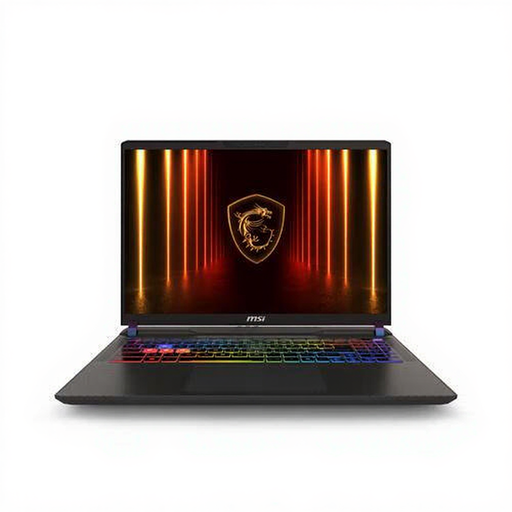 Image unavailable
MSI Vector A16 HX A8WIG-025NL
An option to compare for 3D work if you want to match the memory configuration to your projects.
16-inch QHD+ screen; RTX 5080 with 16 GB video memory; 16 GB RAM; 1 TB SSD.
The description states that the RAM can be upgraded to 96 GB. Blender Foundation recommends 32 GB, but this isn’t a requirement for every project.
View at Joybuy
Frequently asked questions
Do you always need a dedicated graphics card for Blender?
No, it depends on your assignment and the rendering method you choose. GPU rendering in Cycles requires supported hardware and the right settings. Blender Foundation recommends 8 GB VRAM and 32 GB RAM for Windows, but these aren’t requirements for every project.
How do you set up GPU rendering in Cycles after buying your laptop?
In Blender’s preferences, choose an available Cycles rendering backend, enable the compatible device and set the scene to GPU Compute. The available backend depends on your GPU, operating system and driver.
Should you buy an extended warranty for a laptop?
No, you don’t need an additional warranty to claim your statutory rights in the Netherlands. ACM ConsuWijzer explains that the seller is responsible for providing an appropriate solution if a product doesn’t perform as you could reasonably expect under normal use.
Can you return a laptop bought online in the Netherlands within 14 days?
For a standard online consumer purchase, you generally have a statutory 14-day cooling-off period after delivery. ACM ConsuWijzer lists some exceptions, so check the terms that apply to your purchase and don’t assume the same rule applies to every transaction.


