
Student mixing a soundtrack
If you mainly work with audio tracks, effects and samples, check your DAW’s requirements and the size of your project. Ableton distinguishes between minimum requirements and recommendations for larger Live projects.


Choose a laptop based on your DAW and the size of your soundtrack project. Check the software requirements for memory and storage rather than looking only at the minimum specification. If you’ll also be editing or exporting film footage, check the requirements for that video workflow separately. Then weigh up screen space, ports and portability against the equipment you’ll be taking to the workshop.
If you mainly work with audio tracks, effects and samples, check your DAW’s requirements and the size of your project. Ableton distinguishes between minimum requirements and recommendations for larger Live projects.
If you want to match audio to film footage or edit both in one project, check the requirements of your chosen software and video files. Blackmagic Design describes DaVinci Resolve as software for tasks including video editing and audio post-production.
If you’ll be taking your laptop with you and connecting an audio interface, monitor or other equipment, compare the size and ports of the exact configuration with your kit. Ableton describes audio interfaces as a way to connect microphones and instruments, among other things, to a computer.
Best for: anyone who often takes their laptop with them and doesn’t do intensive video editing on the same device.
Trade-off: a smaller screen gives you less room for audio tracks and video. Also check whether your equipment will need an adapter.
Best for: anyone who wants to view audio tracks and film footage side by side and doesn’t need to carry their laptop around as often.
Trade-off: more screen space may mean a less compact laptop. Check the ports and DAW compatibility for each configuration.
Best for: anyone finishing a soundtrack and video in a combined workflow. Blackmagic Design says DaVinci Resolve combines video editing and audio post-production.
Trade-off: being suitable for an audio session doesn’t prove that the laptop can handle your video effects or export as well. Check your project’s requirements.
| What to consider | What should you check? | Who is this relevant to? |
|---|---|---|
| Mixing with tracks and plug-ins | Note your DAW version, plug-ins, number of tracks, and memory and storage requirements. Ableton lists 8 GB as the minimum for Live 12 and recommends 16 GB or more for its usage scenario. | If my mix has lots of tracks and plug-ins, I want to know whether it’s suited to my chosen DAW version. Around 36% of consumers give mixing performance the highest priority. |
| Matching audio to film footage | Decide whether you’ll only play back footage or also edit and export it; check the requirements of your chosen software and files. | When I edit sound to match footage, I want to check the complete audio and video workflow. Around 29% of consumers prioritise this combination. |
| Taking it to the workshop | Compare the size and ports of the exact configuration with your equipment. A battery test for video streaming won’t predict how long you can mix for. | If I carry my laptop between workspaces, size and practical connections are important. Around 21% of consumers put portability first. |
| Connecting recording equipment | Make a list of your interface, microphone and connectors for recording. On Windows, also check the driver for your interface and test the buffer setting in your DAW. | When I want to use existing or planned recording equipment, I check the connections and drivers in advance. Around 14% of consumers start by checking what they can connect. |
The minimum requirement for installing software doesn’t mean a large session with lots of tracks and plug-ins will run smoothly. Ableton lists 8 GB as the minimum for Live 12 and recommends 16 GB or more for its more demanding usage scenario.
Compare the requirements for your own DAW version with your plug-ins and project, and allow for samples and project files when working out how much storage you need.
A port on your laptop won’t necessarily connect directly to your audio interface. Apple specifies two Thunderbolt 4 ports for the 13-inch MacBook Air configuration mentioned here, so USB-A equipment may need an adapter.
Check the connectors and driver support for your own interface before choosing a model.
A laptop that’s suitable for an audio session isn’t automatically suitable for the effects, video files or export involved in your editing project.
Decide whether you’ll only play back footage or also edit and export it. Then check the requirements of your chosen software and project.
The MacBook Air is a compact macOS option. Consider the 15-inch version too if you’d like more screen space.
The IdeaPad Pro 5a Gen 11 is a larger-screen Windows option for anyone looking for more room to work with a timeline.
The Dell 14 Plus DB14250 is a configurable 14-inch Windows option to consider when weighing up screen size and memory.
According to HP, the OmniBook 5 range includes 14-inch and 16-inch versions, among others.
This selection includes compact laptops for audio mixing and larger screens for anyone who also wants to work with a film timeline. Check that each configuration is suitable for your software and equipment.
 No image available
A compact option to compare if you take your laptop to the workshop and check your DAW’s requirements in advance.
13.3-inch Full HD IPS screen, 16 GB RAM and 512 GB SSD.
USB-A, USB-C and HDMI; stated weight 1.46 kg.
 No image available
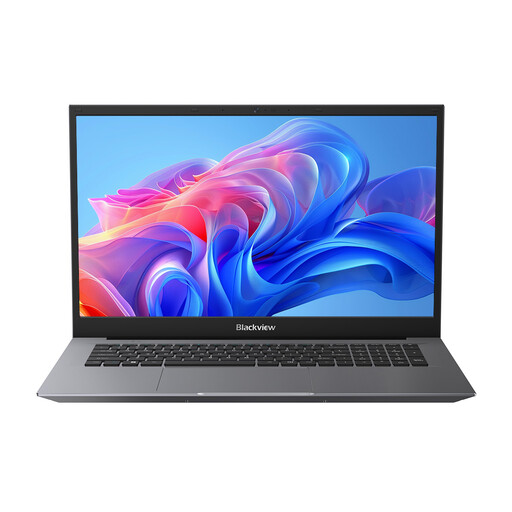
A large-screen option to compare if you want to view audio tracks and a timeline on your laptop screen.
18.5-inch Full HD IPS screen, 16 GB DDR4 RAM and 512 GB SSD.
Intel Pentium Silver N6000, Windows 11 Pro, USB-C, three USB-A ports and HDMI.
 No image available
A compact macOS option to compare with your DAW and project requirements if portability is important.
24 GB of memory and a 1 TB SSD.
13.6-inch screen and two Thunderbolt 4 ports; stated weight 1.23 kg.
 No image available
A compact macOS option to compare if you often take your laptop with you and your DAW project fits within this configuration.
16 GB of memory and a 512 GB SSD.
13.6-inch screen and two Thunderbolt 4 ports; stated weight 1.23 kg.
 No image available
A larger MacBook Air option to compare if you’d like more screen space than the compact alternative offers.
16 GB of memory and a 512 GB SSD.
15.3-inch screen and two Thunderbolt 4 ports.
Ableton lists 8 GB as the minimum for installing and running Live 12, but recommends 16 GB or more for its more demanding usage scenario. Check the requirements of your own DAW, the number of tracks and your plug-ins. Meeting the minimum doesn’t guarantee that a large mix will run smoothly.
When recording with Ableton Live on Windows, Ableton recommends an ASIO driver. A smaller buffer reduces latency, but puts more strain on the processor and may cause drop-outs in a demanding project. Check the driver for your interface and test the setting in your DAW beforehand.
For a consumer purchase in the Netherlands, you’re entitled to a product that meets expected standards and can contact the seller to seek a solution, according to the Dutch government. There is no fixed statutory two-year guarantee period for all products. For eligible distance purchases, you generally have a 14-day cooling-off period; check which terms apply to your purchase.
Don’t assume you can use music freely just because it’s a student project. Auteursrecht.nl states that you generally need permission in advance to use protected works, and also describes a requirement to obtain permission to play protected music outside the home. The rights you need to arrange depend on how you intend to use the music.
According to the Dutch Data Protection Authority, audio recordings in which someone is recognisable may be personal data. An organisation filming recognisable people at an event or publishing footage must have a lawful basis under the GDPR; consent is one possible basis, but it isn’t automatically the only one. Consider recording and publication separately before sharing any material.