
Manager of a linked family archive
You record where the scan or source file is stored for each letter, and want the link to remain useful if you move the archive. Gramps Project describes media as references to external files.


Start by checking that your indexing programme and existing scanner work with the laptop’s operating system. Then choose a screen that lets you read scans alongside index entries, with enough storage for your files. Keep the index and source files together in a consistent folder structure, and include both in your backup.
You record where the scan or source file is stored for each letter, and want the link to remain useful if you move the archive. Gramps Project describes media as references to external files.
You regularly compare scans with index entries, so you need a screen that makes both comfortable to view. The Consumentenbond points out that the amount of storage you need depends on the number and type of files.
You want to digitise new letters and need to check that your scanner software and connection will work with the laptop you choose.
In Gramps, media items refer to external files, so moving a file can affect its link. Check not only the laptop, but also how your programme manages source files and how you back them up. (Gramps Project.)
| What to consider | What should you check? | Who should pay particular attention? |
|---|---|---|
| Software and source-file links | Check that your programme works with the operating system and how it handles references to files. | If I move my archive, I want the links to scans to keep working; around 36% of consumers prioritise suitable software and links to source files that remain intact. |
| Screen space | Check whether you can read a letter and an index entry at the same time, and look at the screen size, resolution and keyboard. | When comparing scans with index entries, I want to be able to read both clearly; around 29% of consumers give screen space and input the highest priority. |
| Storage and backup | Check the size of your source folder and make sure your backup includes both the index and the media files. | I want to keep my scans and restore the complete archive; around 21% of consumers prioritise storage space and the ability to restore files. |
| Scanner and connections | Check which operating systems your scanner supports and what connector it uses, then compare that with the ports on the exact laptop configuration. | If I want to keep using my scanner and backup drive, the software and connections need to be compatible; around 14% of consumers give peripheral compatibility the highest priority. |
In Gramps, media references point to external files. If you move those files without managing the references properly, the links can be lost. (Gramps Project.)
Before moving anything, check your folder structure and test a backup with a few source files.
The Acer configuration reviewed runs ChromeOS, while Gramps offers desktop downloads for Windows, macOS and Linux. So it’s worth checking in advance whether your own programme and scanner will work with ChromeOS. (Acer Netherlands; Gramps Project.)
Before switching to ChromeOS, test your indexing programme, access to local files and scanner.
A compatible connection doesn’t prove that the scanner software or driver will work with the laptop’s operating system.
Check both your scanner’s system requirements and the ports on the exact laptop configuration.
The examples below show differences between specific configurations. They are not recommendations for every model from a brand, and do not indicate availability.
The Galaxy Book4 configurations offer a range of options if you’re weighing up screen space and connections against memory and storage.
The HP OmniBook 3 17-dk0655nd is a configuration with a large built-in screen.
The Chromebook Plus 516 CB516-1H-358R is a large-screen option if ChromeOS suits the way you manage your archive.
The 14-inch MacBook Pro with M5 is a macOS option if you’ve checked software compatibility and want a more compact workstation.
These laptop options are suited to managing family letters, scans and index entries. Before buying, check that your own indexing programme and scanner will work with the configuration.
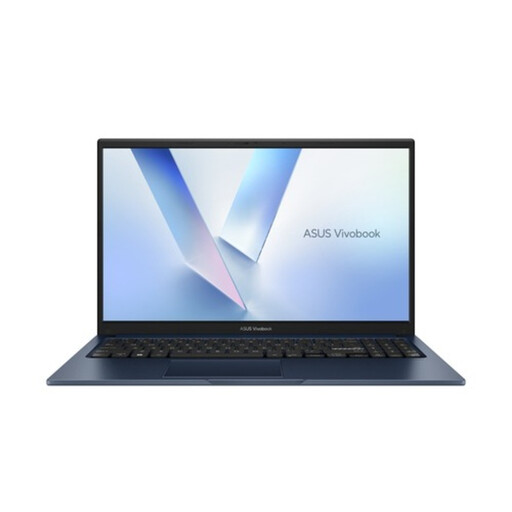 No image available
A 15.6-inch configuration for viewing a letter and index entry side by side. The product name lists a Core 5 320, 8 GB RAM and a 256 GB SSD.
 No image available
The product name lists an 18-inch WQXGA IPS screen with a 165 Hz refresh rate, 16 GB DDR5, a 1 TB SSD and Windows 11 Home. Check that the size and operating system suit your workspace and software.
 No image available
A 15.6-inch configuration for viewing scans and index entries on a larger screen. The product name lists a Core 3 304, 8 GB RAM and a 256 GB SSD.
 No image available
A MacBook Air configuration for anyone looking for a macOS setup and a 15.3-inch screen. The product name lists M5, 16 GB of memory and 512 GB of storage.
 No image available
According to the product name, this MacBook Pro configuration has a 14.2-inch screen, 24 GB of memory and 1 TB of storage. Check that this specific configuration suits your software and archive size.
Choose your programme first and check how it links to source files. Gramps Project offers desktop downloads for Windows, macOS and Linux; that alone doesn’t tell you whether another programme or your scanner will work.
Keep source files in a consistent folder structure and check the links after moving or renaming files. Gramps Project describes media references as links to external files: moving a media item in the records doesn’t move the file itself.
Not automatically. According to the Gramps manual, you can include or exclude media in an XML backup; the default is to exclude it. Check the setting and try restoring from a copy before relying on the backup.
The archive task alone doesn’t mean you need either. Microsoft describes File History as a Windows feature that saves copies of personal files; check that your index and source folders are included in the backup settings. In the Netherlands, the legal guarantee is separate from any additional manufacturer’s or retailer’s warranty. If a product breaks sooner than you could reasonably expect under normal use, ACM ConsuWijzer says the retailer is your point of contact for a solution.
It depends on how you share them. The Dutch Data Protection Authority describes an exception for use that is purely personal or domestic, subject to conditions such as sharing within a limited circle and not making the material publicly searchable. The exception does not automatically apply to wider publication; according to the regulator, in most cases you need permission to publish other people’s personal data online.