
Designer using hot desks
You take your laptop between shared workspaces and want to know whether you can connect it to the monitor and input devices available there.


Start by considering the design software you use and the facilities available at the shared workspace. For Canva in a browser, a supported browser and a stable internet connection are important; for InDesign, check the requirements for your version and operating system. Then compare the built-in screen space, the connections for an external monitor and keyboard, and how often you’ll need to move your laptop.
You take your laptop between shared workspaces and want to know whether you can connect it to the monitor and input devices available there.
You create your layout in a browser or in InDesign and want to choose a laptop that meets the requirements of your software and version. Adobe lists 8 GB RAM as the minimum for InDesign on Windows and recommends 16 GB; check the requirements for your version and platform.
Your calendar is going to a printer, and you don’t want to mistake how it looks on screen for a guaranteed colour result on paper. Adobe describes colour management using an ICC profile that matches the output device.
Start with your software and the equipment available at the shared desk. Then work out how much screen space you need and how important colour control is for print.
| Key consideration | What should you look for? | Who is this important for? |
|---|---|---|
| Connecting to the desk | Check the video output, USB ports, power supply and any dock compatibility of the exact laptop model. Also ask which monitors and keyboards are available. | If I work at different desks, I want to know whether my laptop will work with the equipment provided. Around 36% of consumers prioritise being able to connect and work comfortably at a shared desk. |
| Design software | Make a note of the programmes, versions, operating system and any plug-ins. For Canva, browser support and a stable connection are important; for InDesign, compare the system requirements for your version. | If I create my calendar in Canva or InDesign, I want to choose a configuration that suits the software I actually use. Around 29% of consumers put software compatibility first. |
| Portability or screen space | Compare the screen size and dimensions of the exact model with the space available at the desk and how often you’ll take your laptop with you. A larger built-in screen takes up more room than a more compact model. | If I change workspaces often, I weigh up a laptop that’s easy to carry against having enough screen space without an external monitor. Around 21% of consumers prioritise portability and compact storage. |
| Colour for print | Check the colour gamut of the exact screen configuration and discuss colour management and the right output profile with the printer. Screen specifications alone don’t guarantee a match with the print. | If my calendar is going to be printed, I want to know how the screen settings and output profile work together. Around 14% of consumers prioritise print and colour control. |
The laptop output, any adapter or dock, and the monitor input all need to be compatible. A USB-C port doesn’t automatically mean it will work with every monitor setup.
Before choosing a cable, adapter or dock, compare the ports on the exact laptop with those on the monitor at the desk.
If the desk doesn’t have the right cable or dock, you may need to arrange one.
Adobe’s memory recommendation applies to specific software requirements; it isn’t a universal threshold for every laptop or calendar you create in a browser.
Check the current requirements for your programme, version and operating system before choosing memory and storage.
A stated colour gamut doesn’t, on its own, tell you how a screen is set up or what the printed calendar will look like.
Check the exact screen configuration and agree on colour management and the output profile with the printer. Also ask whether you’ll need a proof print.
Print work may require extra coordination on colour management and a proof print.
The MacBook Air M5 is available in 13-inch and 15-inch sizes, giving you a choice of macOS and different amounts of built-in screen space.
The ThinkPad T14 Gen 6 (AMD), configuration 21QJ005EMH, is a Windows option to consider for a workspace with a range of physical ports.
The Zenbook 14 OLED UX3405 family is a compact range of Windows laptops to compare if you’re considering an OLED screen.
The OmniBook 5 14-he0000 series is worth exploring for portable, everyday design work on Windows.
These laptop options on Joybuy include different built-in screen sizes and configurations for designing an event calendar at a shared workspace.
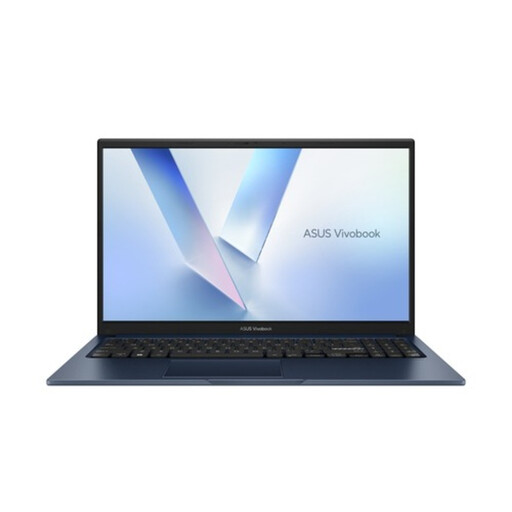 No image available
An option to compare if you want built-in screen space for designing your calendar.
15.6-inch screen; Intel Core 5 320; 8 GB RAM; 256 GB SSD.
 No image available
An option to compare if screen quality and space for design software are important to your choice.
15.3-inch WQXGA OLED screen with 165 Hz; AMD Ryzen 7 250; 16 GB DDR5; 512 GB SSD; GeForce RTX 5060; Windows 11 Home.
 No image available
An option to compare if you want a built-in screen and move your laptop between shared workspaces.
15.6-inch screen; Intel Core 3 304; 8 GB RAM; 256 GB SSD.
 No image available
An option to compare if a larger OLED screen and the listed configuration suit your design work.
16-inch QHD+ OLED screen with 240 Hz; Intel Core Ultra 9 386H; GeForce RTX 5060; 32 GB DDR5; 1 TB SSD; Wi-Fi 7; Windows 11 Home.
The charger must be purchased separately.
 No image available
An option if you want to pair a spacious built-in screen with the listed memory capacity.
16-inch WUXGA screen; 16 GB memory; 512 GB SSD; W11H.
The power adapter is not included and must be purchased separately.
Yes, Canva describes using the service in a desktop browser. Use a supported, up-to-date browser and a stable internet connection. Also check that the features your team needs are available in that setup.
No. For InDesign 21.3 and later on Windows, Adobe’s stated requirements list 8 GB RAM as the minimum and recommend 16 GB. Check the requirements for your version and operating system, and consider any other programmes you’ll have open at the same time.
For employees who use a screen for more than 2 hours a day, Arboportaal describes requirements under which the screen and keyboard must not be attached to each other. Discuss the available facilities with your employer; this requirement does not automatically apply to every buyer or every short period of use.
For an online consumer purchase, you generally have a statutory cooling-off period of up to 14 days after delivery; check whether an exception applies. In addition, according to ACM ConsuWijzer, the seller must resolve the issue free of charge if a product, under normal use, does not do what you could reasonably expect of it. An additional commercial warranty does not replace this statutory right.
No. A colour gamut alone doesn’t guarantee a match with the print. Check the exact screen configuration and agree on colour management and the appropriate output profile with the printer.