
Developer who needs plenty of screen space
You spend long periods working on forms and want to review enlarged text, code and the browser side by side. Screen space helps with this, but it doesn’t replace testing the website at larger text sizes.


If you usually work at a desk, compare laptops with enough screen space to use your editor and browser side by side. If you’re often on the move, weigh that space against the laptop’s size and weight. Then check the memory, exact configuration and ports that suit your development software. A larger laptop screen won’t make an enrolment website accessible by itself: text enlargement and reflow need to be tested on the website itself.
You spend long periods working on forms and want to review enlarged text, code and the browser side by side. Screen space helps with this, but it doesn’t replace testing the website at larger text sizes.
You use an editor, different browsers and possibly additional development software at the same time. The Consumentenbond recommends 16 GB of memory where possible when running several programmes at once; also check the requirements of the software you use.
You work in different places and need to weigh the built-in screen space against how easy the laptop is to carry and connect. Check the size and ports of the exact configuration.
Start with the screen space your work requires, then check the memory and software requirements. Assess accessibility separately: it’s a feature of the website you build, not the laptop.
| What to consider | What should you check? | Who is this important for? |
|---|---|---|
| Screen space and text enlargement | Compare the screen size and resolution of the exact configuration. Also test the form separately with enlarged text and in a narrow viewport; the W3C sets out separate criteria for this. | I want to view code and a sample page at the same time, and check how forms work when text is enlarged. Around 40% of consumers prioritise screen space and this testing. |
| Memory and workflow | Check the installed memory, whether it can be upgraded, and the requirements of your editor, browsers and any local test server. The Consumentenbond recommends 16 GB where possible when running several programmes at once. | I want to use my editor, browsers and development software at the same time without choosing based solely on a processor name. Around 30% of consumers prioritise this workflow and memory. |
| Portability and connectivity | Compare the size and weight of the configuration, and check which ports it has and whether you’ll need any adapters. | I regularly work in different places and want to know in advance how much screen space I’ll be carrying and how I’ll connect my peripherals. Around 20% of consumers prioritise this trade-off. |
| Configuration and included power supply | Compare the same combination of memory, storage and screen. Also check whether a power adapter is included and whether the memory can be upgraded later. | I want to choose a configuration that suits my software and know in advance which other components I’ll need. Around 10% of consumers prioritise the overall configuration and upgrade options. |
Visitors may enlarge text or use the website in a narrow viewport. Content or controls can still become unavailable, whatever screen you use to build the website.
Test the entire enrolment form with enlarged text and in a narrow browser viewport, even if you work on a large laptop screen.
The screen, memory and included accessories can vary between configurations. For example, HP states that the charger for the OmniBook 5 16-bm0630ndx is sold separately.
Compare the full model number with the product information and check what’s included with the configuration you’ve chosen.
A configuration with different specifications or no power supply may mean you need to reconsider your choice or the accessories you’ll need.
An additional warranty plan doesn’t automatically replace your statutory rights. ACM ConsuWijzer explains that the legal guarantee is separate from any additional warranty you may have purchased, subject to the applicable terms.
Check who the seller is and compare any additional cover with your existing rights before deciding.
The HP OmniBook 5 16-bm0630ndx is an example of a 16-inch Windows configuration to compare if you want a larger built-in screen.
The 15-inch MacBook Air M5 is a configuration to compare if you want to use macOS with a larger built-in screen.
The IdeaPad Slim 5 16 configuration 82XG0094MH is an example of a 16-inch Windows laptop with 16 GB RAM and a 512 GB SSD.
The Vivobook 16 OLED M1605 range is worth considering when comparing 16-inch screen configurations.
These Joybuy picks are laptops with large screens for working with editors, browsers and forms. If you work in different places, also compare the size, weight and included power supply of the exact configuration.
 No image available
A 16-inch screen may suit a workflow where you want to view your editor and browser side by side.
WUXGA 1920 × 1200, 16:10 screen, 16 GB DDR5, 1 TB SSD, Intel Core 7 240H, NVIDIA GeForce RTX 5070 8 GB, Windows 11 Home and Dutch QWERTY; weighs approximately 1.95 kg.
 No image available
This 18.4-inch configuration has a larger built-in screen; its approximate weight of 2.60 kg is worth considering if you’ll be carrying it often.
WUXGA 1920 × 1200, 16:10 anti-glare screen, 16 GB RAM, 512 GB SSD, Ryzen 7 260 and QWERTY keyboard. A power adapter isn’t included; the product description says a compatible 45–65 W USB-C PD charger is required.
 No image available
This 16-inch configuration is worth comparing if you need screen space for your browser and editor.
WUXGA 1920 × 1200 OLED screen, 16:10, Snapdragon X, 16 GB LPDDR5X, 512 GB SSD and Windows 11 Home; weighs approximately 1.70 kg.
 No image available
The listed configuration with 32 GB RAM is worth comparing if you use lots of programmes side by side.
16-inch screen with 1920 × 1200 resolution and a 16:10 aspect ratio, Intel Core Ultra 7 255H, 32 GB DDR5, 512 GB SSD, Windows 11 Pro and Gigabit Ethernet; weighs approximately 1.9 kg. The product description states that a power adapter isn’t included.
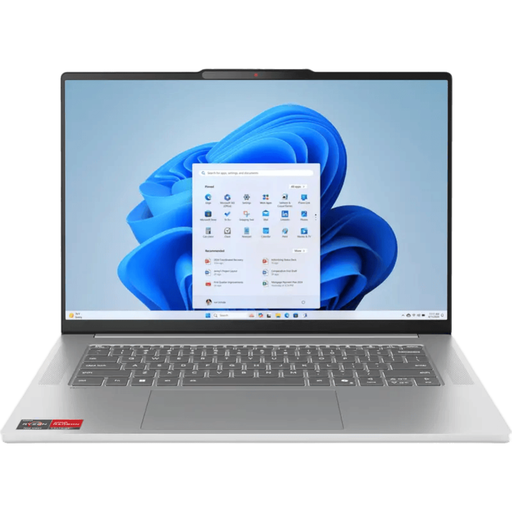 No image available
With a 15.3-inch screen, this configuration is worth considering if you want to balance workspace against the stated weight of approximately 1.49 kg.
IPS screen with 1920 × 1200 resolution, Ryzen 7, 16 GB RAM, 512 GB SSD, Windows 11 Home, USB-C and HDMI ports. The product description states that the charger must be purchased separately.
Test in the browser that text can be enlarged to 200% without losing content or functionality. Also check the page in a narrow viewport; for reflow, the W3C describes a width equivalent to 320 CSS pixels, with exceptions for content that requires a two-dimensional layout. These are website checks, not features guaranteed by a laptop.
Not just because you’re building a website: MDN lists a code editor, modern browsers and a local test server as basic tools. Check the additional requirements of the software you actually use. If you have lots of windows open at once, the Consumentenbond recommends 16 GB of memory where possible.
Install the editor and browsers you need, and use a local test server if your workflow calls for one. Then test the enrolment page with enlarged text and in a narrow viewport; a large laptop screen won’t show you how the website works in those conditions.
That depends on the service and the organisation. Business.gov.nl describes accessibility rules for services including e-commerce; check the conditions that apply to the provider and enrolment process before deciding which obligations apply.
The Dutch Data Protection Authority explains that a privacy statement sets out, among other things, which personal data an organisation processes, why it does so and how people can exercise their rights. Your choice of laptop model doesn’t take on that responsibility.