Choose your laptop to suit your editing software and source footage. A portable model with suitable storage and memory may be a good starting point for a simple film, while 4K footage or lots of effects call for a different approach. The Consumentenbond distinguishes between creative work and demanding 4K editing, while Adobe describes proxy files as a way to work with demanding video footage. Also check the exact configuration, software access and connections you’ll need for the screening.
Who is this advice for?
Student making a simple exhibition film
If you’re editing a straightforward film and will also use your laptop for studying, consider memory, storage and portability before opting for a more powerful graphics configuration. The Consumentenbond recommends 16 GB of RAM as a guide for creative work.
Student working with 4K footage or lots of effects
With demanding source footage or a complex timeline, it’s important to match the full hardware configuration to your editing software. The Consumentenbond distinguishes demanding 4K use from everyday creative work, while Adobe describes proxy files for editing high-resolution video footage.
Student screening the film at a venue
If you’re taking your laptop to the exhibition, check in advance how it will connect to the screening display, whether you’ll need any adapters and how you’ll access the film project. Apple and Lenovo list connections for their respective laptop ranges, but check the configuration you’re considering.
What should you look for when choosing?
Portable laptop for lighter editing
Best for: a short film with simple transitions, especially if you often take your laptop with you to study.
Trade-off: a more compact screen leaves less room for the timeline and preview window.
Windows laptop with a dedicated GPU
Best for: more demanding editing, such as projects with lots of 4K footage or effects. Compare the GPU and memory in the exact configuration.
Trade-off: consider how comfortable the configuration you choose will be to carry every day. Lenovo lists several GPU options in the Legion 5 15AKP10 range.
MacBook Air for macOS
Best for: anyone looking for a portable laptop and using editing software available for macOS. Apple lists hardware-accelerated processing for formats including H.264, HEVC and ProRes in the M5 Air range.
Trade-off: the M5 Air has two Thunderbolt 4 ports. Check whether you’ll need an adapter for storage or the screening display.
| What to consider |
What should you check? |
Who should consider this? |
| Editing workload |
Compare your source resolution, effects and software with the specifications of the exact configuration. The Consumentenbond distinguishes creative work from demanding 4K editing. |
If I mainly want to avoid buying more powerful hardware than my project needs, I start with the source footage and timeline. Around 33% of consumers say editing performance is their top priority when choosing. |
| File storage |
Allow space for source files, your project, cache and exports. Adobe recommends fast storage for the Premiere media cache and suggests external drives if internal storage is limited. |
When I have lots of footage, I want to know where my project files and temporary media can be stored. Around 25% of consumers give storage capacity and access to project files top priority. |
| Portability and screening |
Check the input on the screening display and compare it with the ports on the exact laptop configuration. Also work out whether you’ll need an adapter. |
If I’m taking my laptop to the exhibition, I want to know in advance that I can connect it at the venue. Around 25% of consumers prioritise portability and connectivity. |
| Software and requirements |
Check whether your course gives you access to your chosen editing software and what storage or connections your project needs. Blackmagic Design also offers a free version of DaVinci Resolve. |
If I want to edit the film using my school’s software, I’d rather check in advance that I can access the programme and the connections I need. Around 17% of consumers make software and other requirements their top priority when choosing. |
Common mistakes when choosing
-
Choosing a laptop for 4K without first considering your editing work
The configuration you need depends partly on your source footage and effects. The Consumentenbond distinguishes between creative work and demanding 4K video editing.
Make a note of your source resolution, effects and preferred software in advance. Then compare the specifications of the complete configuration.
-
Using all your storage for source files
Project files, cache and exports can all take up space, as well as your source footage. Adobe recommends fast storage for the Premiere media cache.
Set aside space for source files, cache, exports and backups. Check whether external storage suits the way you work and whether you can connect it to the laptop.
-
Assuming a product range name means one fixed configuration
Configurations within ranges such as the Lenovo Legion 5 and ASUS ProArt P16 can have different specifications.
Compare the full model number and the specifications of the specific configuration before making your choice.
-
Assuming the laptop alone is all you need for the screening
Your chosen software, the display at the venue and the available connections may all require extra preparation.
Check whether your school provides a licence and which cable or adapter you’ll need for the screening display. Test the film on the equipment you plan to use before the presentation.
Brands to consider
Apple
The MacBook Air M5 is worth comparing if you’re looking for a portable macOS laptop. Apple lists hardware-accelerated processing for formats including H.264, HEVC and ProRes.
- According to Apple, the M5 Air range has two Thunderbolt 4 ports.
- Check the screen size, memory, storage and whether you’ll need an adapter for the configuration you choose. Apple’s battery-life figures are based on activities other than video editing.
Lenovo
The Legion 5 15AKP10 and Yoga Pro 9i Aura Edition are Windows ranges designed with different priorities in mind. Lenovo lists several GPU options for the Legion, and OLED displays and NVIDIA graphics for the Yoga Pro 9i.
- These ranges offer different configurations to compare with your editing work and portability needs.
- Lenovo lists several GPU options for the Legion 5 15AKP10; Yoga Pro 9i specifications won’t necessarily apply to every configuration.
ASUS
The ProArt P16 H7606 is a creator-focused Windows range to compare if the display and graphics configuration are important considerations.
- The H7606 family includes several model variants.
- Check the full model number: the specifications of one H7606 configuration won’t necessarily apply to a different model number.
HP
The Victus 15 is a Windows gaming range worth comparing if a dedicated GPU is relevant to your editing work.
- For the Victus 15-fb3612ndx, HP lists 16 GB RAM, a 512 GB SSD and an RTX 5050 with 8 GB of video memory.
- These specifications apply to the configuration named above; don’t assume they apply to every Victus 15.
Joybuy laptops for editing
A selection of Joybuy laptops to consider for editing a student film, with different operating systems and configurations to compare with your project and how you plan to use your laptop.
 No image available
ASUS ProArt P16 H7607BA-SE030X AI workstation laptop
Worth comparing if you want plenty of RAM and internal storage for your project.
The product name lists 64 GB RAM, a 1 TB SSD, Windows 11 Pro and a QWERTY keyboard.
Joybuy
 No image available
MSI Cyborg A15 AI B2HWGKG-248NL
If you’re considering a Windows laptop with a dedicated GPU, compare this configuration with the requirements of your editing software.
The product name lists an RTX 5070 with 8 GB GDDR7, 16 GB DDR5, a 512 GB SSD and a 15.6-inch Full HD screen with a 144 Hz refresh rate.
Joybuy
 No image available
Thunderobot Radiant S16 5060
Worth comparing if you also want to consider screen specifications and storage alongside editing performance.
The product name lists an Intel Core i7-13650HX, RTX 5060, 16 GB DDR5, a 1 TB SSD and a 16-inch QHD+ screen with a 240 Hz refresh rate.
Joybuy
 No image available
Apple MacBook Air 15-inch M5, 16 GB, 512 GB
Worth comparing if you’re looking for a portable macOS laptop; check that your editing software is compatible.
The product name lists 16 GB memory, a 512 GB SSD, the Starlight colour and a QWERTY keyboard. According to the product information, the power adapter is not included.
Joybuy
 No image available
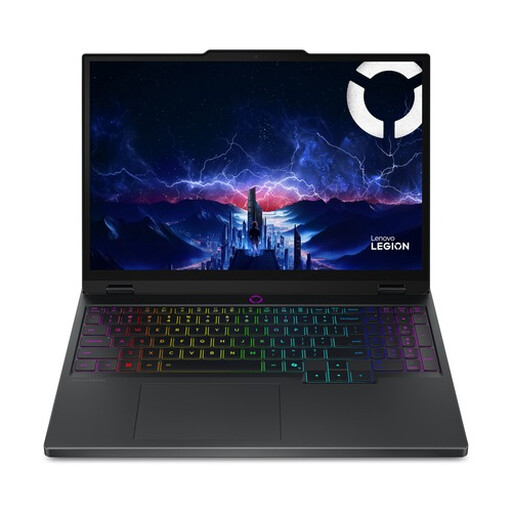
Lenovo Legion 5 15IAX10
If you’re looking for a Windows laptop with a dedicated GPU, compare the full configuration with the requirements of your editing software.
The product name lists an Intel Core Ultra 7 255HX, RTX 5070, 16 GB memory, a 512 GB SSD and a QWERTY keyboard.
Joybuy
Frequently asked questions
Do I need to choose a powerful editing laptop straight away for a short exhibition film?
Not necessarily. The Consumentenbond distinguishes between creative work, such as photo and video editing, and demanding use involving 4K video. First decide what you’ll be editing, then check the requirements of your editing software.
How can I edit large source files more easily?
If you use Premiere, Adobe says you can create proxy files: smaller copies that make it easier to edit demanding video footage. Also leave space on fast storage for media and cache, and test the project and final export before the screening.
What software should I arrange in advance?
First check whether your course gives you access to the software you want to use. Blackmagic Design also offers a free version of DaVinci Resolve; check which version suits the way you work.
Can I include recognisable visitors and existing music in the film?
Before screening the film, discuss the legal basis for filming and publishing footage of recognisable visitors with the organiser. The Autoriteit Persoonsgegevens says that a legal basis under the GDPR is required. According to the Dutch Government, you must not make other people’s copyright-protected music, films or photographs available to the public without permission.
If I buy online in the Netherlands, am I always entitled to exactly two years’ guarantee?
No. According to the Dutch Government, there is no fixed statutory guarantee period in the Netherlands; what you can expect from a product depends on the circumstances. Many distance sales to consumers also come with a 14-day cooling-off period, subject to exceptions.


