
Family archive manager
You want to organise letters so you can find them again later. The National Archives describes digital archiving as selecting, organising and describing material; a backup serves a different purpose.


Choose a laptop that works with your scanner and indexing software, and lets you keep your scans organised. Then decide whether connectivity, screen space or portability matters most to you. Windows and macOS offer documented ways to back up to an external drive, while with a Chromebook you should check in advance that your apps and files work offline. An internal SSD is not a separate backup.
You want to organise letters so you can find them again later. The National Archives describes digital archiving as selecting, organising and describing material; a backup serves a different purpose.
You scan paper correspondence and want to check that your scanner, connections and any handwriting recognition software will fit into your workflow.
You want to take scans with you and access them without an internet connection. So check that the apps and files you need are available offline.
Best for: a workflow using a USB scanner or Windows software, provided your equipment and programme are supported.
Bear in mind: ports and storage vary by configuration; File History needs to be set up, and the external drive must be available.
Best for: anyone who wants to use macOS and Time Machine for automatic backups to external storage.
Bear in mind: check separately that your scanner and indexing software work with macOS and that the connection is suitable.
Best for: a workflow where ChromeOS apps and locally available files have been checked in advance.
Bear in mind: Google says some apps may not work offline, so test your own scanning and indexing workflow.
| Consideration | What should you look for? | Who is this important for? |
|---|---|---|
| Local backup | Check that you can connect and set up an external drive, and consider how you would restore your files. | If I want to be able to restore my archive, I need a separate copy and a process I can check. Around 28% of consumers prioritise recoverable local backups. |
| Scanner and software | Check that your scanner model, operating system and required indexing or transcription software are supported. | For anyone who wants to keep using existing equipment and programmes, compatibility comes first. Around 22% of consumers prioritise it. |
| Reading and finding documents | Consider the screen size and resolution for viewing scans, and choose storage to suit your own files. | If I read scans often and want to find descriptions, I need a practical filing system and enough screen space. Around 22% of consumers start with these needs. |
| Privacy and sharing | Think about who will have access and where copies will be stored, especially if you want to share or publish documents. | Anyone who wants to keep family letters private will want to make a considered choice about how files are stored and shared. Around 17% of consumers put this first. |
| Offline use and portability | Check that your files and apps work without an internet connection; weigh up screen size against how often you take the laptop with you. | If you want to access your collection while out and about, the files and software you need must work offline. Around 11% of consumers prioritise this. |
Files stored only on your laptop do not have a separate local copy. The National Archives also distinguishes between archiving and making a backup.
Plan both a clear archive structure and a separate backup, and try restoring some files.
Google says some apps may not work when your Chromebook is offline.
Test representative scans and index files to see which files and features will remain available without an internet connection.
A paid extra service is not the same as your statutory rights. ACM ConsuWijzer explains that you can expect a product to work as it should under normal use and meet what you could reasonably expect from it.
Before paying for an additional service, read exactly what it offers and compare it with your existing statutory rights.
The IdeaPad Slim 3 is a Windows option to consider when comparing screen space, local storage and connections.
Acer offers both Windows and ChromeOS configurations; check which software and offline workflow will suit your archive.
The MacBook Air offers a macOS option for anyone looking for a compact laptop to use with Time Machine.
The OmniBook range includes Windows configurations with different screen sizes to compare with more compact laptops.
These laptop options are Windows models for scanning, storing and viewing family correspondence locally. Check that your own scanner and software are supported; an SSD is no substitute for a separate backup.
 Image unavailable
A Windows option for storing scans locally and viewing documents on the 14-inch screen; check that your scanner and software are compatible.
Windows 11 Home; Intel Core 3 304; 8 GB of memory; 512 GB SSD; 14-inch screen with 1920 × 1200 resolution and a 16:10 aspect ratio; two USB-A and two USB-C ports.
 Image unavailable
A Windows laptop for storing and viewing scans; check in advance that your scanner and indexing software work with this configuration.
AMD Ryzen 5 7520U; 8 GB of memory; 512 GB SSD; 14-inch IPS screen with 1920 × 1200 resolution and a 16:10 aspect ratio; two USB-A and two USB-C ports.
The product description states that the mains adapter is not included.
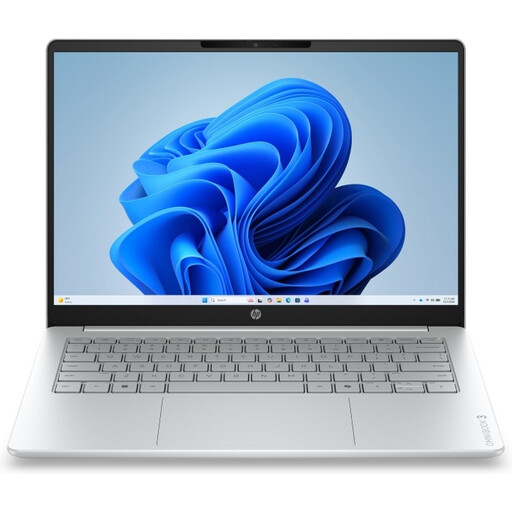 Image unavailable
The 17.3-inch screen gives you plenty of space to view scans; bear in mind that the laptop weighs around 2.01 kg according to the stated specifications.
AMD Ryzen 5; 8 GB of memory; 512 GB SSD; 17.3-inch Full HD IPS screen; two USB-A and two USB-C ports; Windows 11 Home.
The product description states that the mains adapter is not included.
 Image unavailable
A Windows 11 Pro configuration with a 16-inch screen and plenty of stated storage; the SSD is not a separate backup.
32 GB of memory; 1 TB SSD; 16-inch 3K OLED touchscreen with 120 Hz; USB-A and USB-C connections; QWERTY keyboard.
 Image unavailable
This configuration has a 2 TB SSD for local files; plan a separate backup too, and check that your scanning workflow is compatible.
128 GB of memory; 2 TB SSD; 16-inch 3K OLED touchscreen with 120 Hz; USB-A and USB-C connections; Windows 11 Pro; QWERTY keyboard.
No, you also need a separate copy. VeiligInternetten suggests an external drive as one option; regularly check that you can restore files from it.
Microsoft explains how to connect a USB scanner to an available USB port and install it manually if automatic installation does not happen. Also check that your scanner model and required software are supported.
Windows File History can use an external drive or network location; Apple describes automatic backups to external storage with Time Machine. Set up the feature and check that the drive is available when the backup runs.
Some Drive files can be made available offline, but Google warns that certain apps may not work offline. Check in advance that your scan files, index and required software can be used without a connection.
The Dutch Data Protection Authority does not prescribe a particular type of laptop. The regulator says that processing carried out solely for personal or household use falls outside the GDPR; review the situation again if, for example, the use becomes professional or you want to publish documents.