
Testers who prioritise app compatibility
You want to test a specific desktop app, plug-ins, drivers or the installation process. So first check which operating system and processor architecture are required.


First, choose a laptop that supports the app you want to test, the required drivers and any test equipment. Then compare its noise levels under your test workload. A fanless MacBook Air could suit tests of a supported macOS app, while a Windows laptop is the more logical choice for Windows-specific testing. Bear in mind that Windows on Arm won’t meet every driver requirement, and the MacBook Air tested may be thermally throttled under sustained load.
You want to test a specific desktop app, plug-ins, drivers or the installation process. So first check which operating system and processor architecture are required.
You want to avoid the cooling system becoming distracting during testing. Also consider the potential trade-off between fan noise and sustained performance.
For example, you may keep the app, test documentation and other windows open. Compare the memory, storage and screen space of the exact configuration.
Suitable for: testing the macOS version of an app when keeping fan noise to a minimum is important.
Trade-off: Apple documents Boot Camp for Intel Macs, not the M5 model. Notebookcheck reported thermal throttling under sustained load on the M5 configuration it tested.
Suitable for: Windows-specific apps, tools or test setups, provided the configuration you choose meets the requirements.
Trade-off: an Intel or AMD processor alone won’t tell you how noisy the laptop will be during testing. Look for measurements under a comparable workload.
Suitable for: testing Arm64 behaviour, or when you’ve confirmed in advance that the entire test environment works with Windows on Arm.
Trade-off: Windows can emulate many x86 and x64 apps, but kernel drivers need their own Arm64 version.
| What to consider | What to look for when buying | Who is this important to? |
|---|---|---|
| App and platform compatibility | Check the app version, supported operating systems, processor architecture, plug-ins, peripherals and virtualisation requirements. | I want to know first whether my app and test equipment will work on the laptop, because I can’t run the test without a suitable environment. Around 36% of consumers say compatibility is their main concern. |
| Noise during testing | Check whether the configuration has a fan and look for noise measurements under a workload similar to your tests. | In a quiet study, I want to know whether the cooling system will be audible when I run repeated or intensive tests. Around 29% of consumers prioritise quiet operation during testing. |
| Memory and storage | Compare the requirements of the app and other programmes you use at the same time with the capacity of the exact configuration. Also check whether it can be upgraded. | If I use the app, documentation and local test files at the same time, the capacity I choose needs to suit the way I work. Around 21% of consumers say capacity for running tests in parallel is their main concern. |
| Screen and ports | Check how many screens and devices you use, then compare the ports you need, display support and any adapters required. | For my test setup, I want enough workspace and suitable connections, for example for peripherals or an external monitor. Around 14% of consumers prioritise their test setup. |
A fanless Mac won’t solve a Windows-specific compatibility testing requirement. Windows on Arm may also have separate limitations with drivers or virtualisation.
First, note the required operating system, processor architecture, app dependencies and tools you need. Then compare the cooling systems.
Noise also depends on the workload. Notebookcheck reported thermal throttling under sustained load on the MacBook Air 13 M5 it tested.
Look for results for the exact configuration and a workload similar to your tests. Don’t judge noise levels by the processor alone.
For the Zenbook S 14 offer described by ASUS, the power adapter was not included. Notebookcheck describes the memory and storage on the MacBook Air 13 M5 it tested as non-upgradeable.
Before buying, check what’s in the box, the required charging power and whether the exact configuration can be upgraded.
Worth considering for tests of supported macOS apps where fan noise matters.
The XPS 13 DX13260 is a compact Windows option available in several configurations.
The ThinkPad X1 Carbon Gen 14 Aura Edition is a business Windows option to compare across configurations.
EliteBook 8 configurations are worth comparing if you’re considering a Windows test setup and business support.
The Zenbook S 14 UX5406 is a compact Windows option where the screen configuration and cooling are worth checking.
The Joybuy options below are Mac laptops running macOS, for tests where the app runs in that environment. Before buying, check that the app, its dependencies and your test equipment will work with the configuration you choose.
 No image available
A macOS option for testing an app that runs in that environment.
The product information lists 24 GB of memory, 1 TB of storage, a 13.6-inch screen and two Thunderbolt 4 ports. The power adapter is not included.
 No image available
A macOS option for testing an app that runs in that environment.
The product information lists 16 GB of memory, 512 GB of storage, a 13.6-inch screen and two Thunderbolt 4 ports. Notebookcheck tested a 13-inch M5 configuration with 16 GB of memory and 512 GB of storage, describing it as fanless and reporting thermal throttling under sustained load. The power adapter is not included.
 No image available
A macOS option for tests where you’d like more workspace on the built-in screen.
The product information lists 16 GB of memory, 512 GB of storage and a 15.3-inch screen. The power adapter is not included.
 No image available
A macOS option for tests where you need ports for external devices or displays.
The product information lists 24 GB of memory, 1 TB of storage, a 14.2-inch screen, Thunderbolt 4, HDMI and an SDXC card slot. Support for up to two external displays is listed.
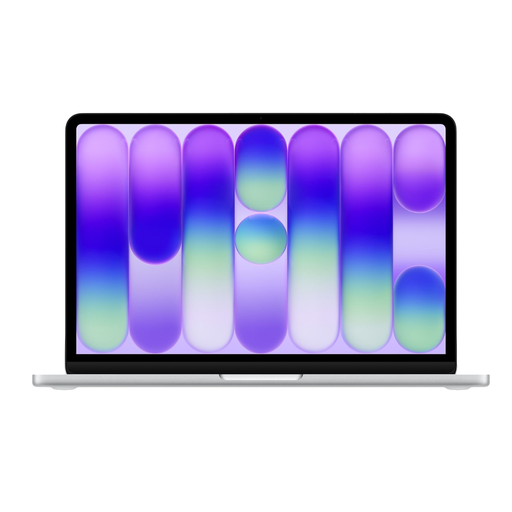 No image available
A macOS option for testing an app that runs in that environment.
The product information lists 8 GB of memory, 512 GB of storage, a 13-inch screen and two USB-C ports. This configuration requires a USB-C power adapter rated at least 20 W, which is not included.
Not if Windows itself needs to be part of the test: Apple documents Boot Camp for Intel Macs. Check which testing method and macOS or Windows environment the app actually requires.
Windows 11 on Arm can emulate x64 apps, but Microsoft says kernel drivers need their own Arm64 version. So also check the drivers, plug-ins and virtualisation required for your test.
According to Microsoft, you need to switch out of S mode to use an app from outside the Microsoft Store. You can’t switch back afterwards, and on a managed device your organisation may block the change.
Compare noise levels under the workload you actually use, and keep the cooling vents clear. More demanding tasks may make the fan more noticeable; the processor name alone isn’t a noise measurement.