Start with the software your course uses, then compare the memory, SSD capacity and screen with your own projects and working style. Adobe recommends 16 GB of RAM for InDesign 21.3 and later on Windows; 8 GB is the minimum, but that guidance does not automatically apply to all design software. A larger SSD gives you more local storage, but it is no substitute for version history or a separate backup. A more compact model is easier to carry, while a larger screen gives you more workspace built in.
Who this is for
Student working through lots of revisions
Works on portfolio layouts, images and exports side by side, choosing a laptop to suit the software they use and the scale of their projects. Lenovo describes revisions and exports as part of graphic design work.
Student building a growing project archive
Keeps sketches, source files and previous submission versions, and needs both enough local storage and a way to retrieve older files. Microsoft describes version history for files in OneDrive or SharePoint.
Student working between classes and home
Regularly takes their laptop with them and weighs portability against the screen space needed to review designs. The compact MacBook Air is one example of a model where screen size and ports form part of that decision.
What to prioritise when buying a laptop for your portfolio
When editing and saving portfolio versions, your course software, project archive, screen space and how often you carry your laptop each play a part.
| What to consider |
What should you check? |
Who is it most relevant to? |
| Switching between design tasks |
Check the software and versions used on your course, then compare their requirements with the memory in the exact configuration. |
When I switch between layouts, images and exports during revisions, I want the software and memory to suit the way I work. Around 36% of consumers prioritise switching smoothly between design tasks. |
| Keeping project versions |
Compare the SSD capacity with your files, and separately check how you can restore older versions. |
I want to be able to keep and find source files and previous submission versions. Around 29% of consumers give managing a project archive top priority. |
| Reviewing designs on screen |
Compare screen size and resolution; don’t treat stated colour coverage as an independent measurement of colour accuracy. |
When I compare layouts and variations on the built-in screen, the available workspace matters. Around 21% of consumers prioritise reviewing work on screen. |
| Carrying it between classes and home |
Check the size, weight and ports, as well as the conditions under which any battery-life figures were measured. |
I take my laptop with me regularly and want to weigh portability against screen space and ports. Around 14% of consumers give portability top priority. |
Common buying mistakes
-
Assuming a large SSD gives you version control
Extra local storage won’t automatically make older, overwritten or lost files recoverable. Version history may also depend on the service you use and your account settings.
Compare the free space you need with your project folders, test whether you can retrieve an earlier version, and keep a separate backup of important work.
A separate backup may require extra storage or another solution.
-
Taking a minimum requirement as advice for all design work
For InDesign 21.3 and later on Windows, Adobe lists 8 GB of RAM as the minimum and 16 GB as the recommendation. This is not a general requirement for every design course or working with several projects open at once.
Check your course’s software list and compare its requirements with the specifications of the exact laptop model.
-
Confusing screen size or OLED with proven colour accuracy
A larger screen gives you more space, but it doesn’t guarantee better colour reproduction. Stated colour coverage is not an independent measurement of colour accuracy.
Check the screen specifications for the exact configuration. For colour-critical assignments, ask which review or calibration process your course uses.
-
Confusing an extended warranty with your statutory rights
According to the Dutch government, you’re entitled to a statutory guarantee with a product without buying an additional package; the Netherlands does not have one fixed statutory guarantee period for all products.
Check what an extended warranty adds, and compare its terms with your rights when buying from the retailer.
Brands to compare
Apple
The MacBook Air is a compact macOS option. Apple lists 16 GB of memory and a 512 GB SSD for the 13-inch M5 base configuration.
- Apple lists a 13.6-inch screen and two Thunderbolt 4 ports for this configuration.
- Check that your course software supports macOS. Apple’s stated battery life is based on specific video and web tests, not a design session.
Lenovo
For the Yoga Pro 7 configuration 83HN0034MH, Lenovo lists 32 GB of soldered memory, a 1 TB SSD and a 14.5-inch OLED screen.
- Lenovo specifies 100% DCI-P3 for this configuration.
- The soldered memory cannot be upgraded. Stated colour coverage is not an independent measurement of colour accuracy.
HP
HP also describes a 16-inch laptop option in the OmniBook 5 range.
- A larger screen can be a useful point of comparison when looking at models for portfolio work.
- Screen features and configurations vary by model; don’t assume they are the same as those of another HP range or model name.
ASUS
For the Vivobook Pro 15 OLED K3500, ASUS describes a 15.6-inch Full HD OLED screen and an RTX 3050.
- The screen size and configuration of this specific model give you concrete points to compare.
- These details apply to the K3500 configuration mentioned and don’t prove that other or current Vivobook models have the same specifications.
Dell
The XPS 14 DA14260 is a compact Windows range to compare with other models.
- Dell positions portability as one of the range’s key features.
- Check the screen, memory and storage for the exact configuration. Stated battery life depends on the manufacturer’s test conditions.
Joybuy laptops for portfolio and design work
These Windows laptops offer relatively generous local workspace, making them worth considering if you edit portfolios on the built-in screen and store project files locally. Compare the screen specifications, memory, SSD capacity and included or required accessories for each configuration.
 No image available
Thunderobot 16, i7-14700HX, RTX 5070, 32 GB RAM, 1 TB SSD
A 16-inch configuration to compare if you review portfolios on the built-in screen and store project files locally.
The title lists a 2560 × 1600 IPS screen, 100% DCI-P3, 240 Hz, 32 GB RAM and a 1 TB SSD. Stated colour coverage is not an independent measurement of colour accuracy.
The title lists a UK RGB keyboard.
View at Joybuy
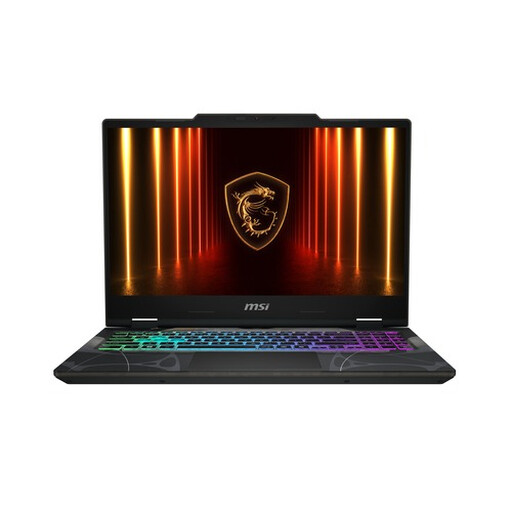 No image available
MSI Cyborg 15 B13WEKG-1223NL, Core i5-13420H, RTX 5050 8 GB
A 15.6-inch Windows option to compare if you make revisions on your laptop screen and store files locally.
This configuration lists a 15.6-inch Full HD IPS screen with 144 Hz, 16 GB DDR5 and a 512 GB SSD.
According to the product information, the power adapter must be purchased separately.
View at Joybuy
 No image available
HP OmniBook Ultra Next Gen AI 16-bk0001nd, 32 GB RAM, 1 TB SSD
A 16-inch configuration to compare if you view several parts of your portfolio on the built-in screen.
The product information lists a 16-inch 3K OLED touchscreen with 120 Hz, 32 GB RAM and a 1 TB SSD.
The keyboard layout is QWERTY.
View at Joybuy
 No image available
HP OmniBook Ultra Next Gen AI 16-bk0004nd, 128 GB RAM, 2 TB SSD
This model is worth comparing if you need plenty of local storage for project files and review portfolio work on screen.
The product information lists a 16-inch 3K OLED touchscreen with 120 Hz, 128 GB RAM and a 2 TB SSD.
The keyboard layout is QWERTY.
View at Joybuy
 No image available
Lenovo Yoga Pro 9 15N1X11 83SR002XMH, 32 GB RAM, 512 GB SSD
A configuration to compare if screen space and local memory matter when editing portfolio projects.
The product information lists a 15.3-inch OLED screen with 2560 × 1600 resolution and a 16:10 aspect ratio, 32 GB RAM and a 512 GB SSD.
The keyboard layout is QWERTY.
View at Joybuy
Frequently asked questions
Is 8 GB of RAM enough for my portfolio?
It depends on the software and projects you use at the same time. For InDesign 21.3 and later on Windows, Adobe lists 8 GB as the minimum and 16 GB as the recommendation. Check which software versions your course uses, too.
How can I avoid losing an earlier version of a project?
Save clearly labelled versions and check whether your storage service offers version history and whether it’s enabled. Microsoft describes how to restore older versions of files in OneDrive or SharePoint; an administrator may disable this feature on a school account. Also keep a separate backup of important source files.
Do I need to arrange anything else besides the laptop?
Check your course’s software list and any required licences, and make sure the ports suit your screen and peripherals. Adobe says an internet connection and registration are required for InDesign activation, membership validation and online services. Don’t assume software or adapters are included with the laptop.
What are my rights to return an online laptop purchase and claim under the guarantee in the Netherlands?
According to the Dutch government, distance purchases often come with a 14-day cooling-off period, but the same terms do not apply to every purchase. You’re also entitled to a statutory guarantee with a product; the Netherlands does not have one fixed statutory guarantee period for all products. If there’s a problem, contact the retailer.


