
Map and report reader
You compare maps, legends and research reports during the workshop and want enough screen space to read comfortably, without carrying unnecessarily heavy hardware.


Start by thinking about what you’ll actually use during the workshop. For reports and maps, readability and portability are key, while local GIS software calls for careful checks on compatibility, memory and storage. Before buying, check the exact configuration and make sure you can access your files and required software without a network connection.
You compare maps, legends and research reports during the workshop and want enough screen space to read comfortably, without carrying unnecessarily heavy hardware.
You need to open or edit a local map project on the spot. The application, version and files you need will determine which laptop is right for you.
You move between sessions or can’t always get to a power socket, so size, weight and charging are all worth considering.
First decide whether you’ll just be viewing documents and maps or also running GIS software locally. Then compare screen space and portability, and check which files you’ll need offline.
| What to consider | What to look for | Who is this for? |
|---|---|---|
| Software and memory | Check the operating system and the requirements for the software version you’ll use. The Consumers’ Association recommends 16 GB where possible for running several programmes at once; this isn’t a universal minimum requirement for GIS. | If I need to use GIS locally, I first want to know whether the required application will work on my laptop. Around 33% of consumers say compatibility with local software is their top priority. |
| Screen space | Compare the screen size, resolution and finish of the exact configuration you’re considering. | If I want to view map details, the legend and report text at the same time, I prioritise usable screen space. Around 25% of consumers put readability of maps and reports first. |
| Portability and charging | Compare the weight and size, check the terms behind any battery-life claims, and see what’s included. | If I’m moving between workshop rooms or can’t always sit near a power socket, I consider the size and charging options. Around 25% of consumers make portability their main priority. |
| Offline files | Check how much storage you need and test the complete project, including the relevant files, without a network connection. QGIS documents an offline workflow for selected vector layers; this doesn’t mean every project will work offline automatically. | If I need to work without a network connection, I want to make sure the required map layers are available locally too. Around 17% of consumers give offline files top priority. |
QGIS can be installed on Windows and macOS, while Esri’s system requirements for ArcGIS Pro 3.7 list supported Windows systems. Compatibility with one doesn’t automatically mean compatibility with the other.
Find out which application and version you’ll use, and what you’ll be doing with it. Then check the system requirements for the exact configuration you’re considering.
A project may link to data sources that need to be available separately. QGIS describes a separate offline feature for copying selected layers.
Before the workshop, test the project, layers and source files with the network connection turned off.
Configurations in the ASUS Vivobook S16 S3607 range can have different processors, screens and memory configurations.
Compare the full model number with the specifications for the exact configuration on offer.
The ThinkPad E14 Gen 7 configuration 21SXCTO1WWNL5 is a compact Windows option with a 14-inch anti-glare IPS screen.
The ProBook 4 G1i 16 configuration A23QQEA#ABH is a larger Windows model for anyone who wants more screen space.
The 13-inch MacBook Air with M5 is a compact macOS option, provided the software you need is available for macOS.
The Vivobook S16 S3607 range includes configurations with a 16-inch screen.
These laptop picks have larger screens, giving you more room to view maps and reports. Also check that the exact configuration is suitable for the software and files you’ll use at the workshop.
 Image unavailable
A 16-inch model for viewing maps and reports on a larger screen.
The screen has a resolution of 2560 × 1600, a 16:10 aspect ratio and an anti-glare IPS finish. This configuration comes with 16 GB of memory and a 1 TB SSD. The power adapter must be purchased separately.
 Image unavailable
A 15.3-inch model for viewing reports and maps with more screen space.
The WUXGA screen has a 16:10 aspect ratio. This configuration comes with 16 GB of memory and a 512 GB SSD. A charger isn’t included as standard.
 Image unavailable
A 16-inch model for viewing maps and reports on a larger screen.
This configuration comes with a WUXGA OLED screen, a Snapdragon X processor, 16 GB of LPDDR5X memory, a 512 GB SSD and Windows 11 Home.
 Image unavailable
A 15.6-inch model for viewing research maps and reports on a larger screen.
The specifications list a Full HD IPS-level screen with an anti-glare finish and a 144 Hz refresh rate. This configuration has an AMD Ryzen 9 270 8-Core processor, an RTX 5070 8GB GDDR7, 16 GB of DDR5 memory, a 512 GB SSD and Windows 11 Home.
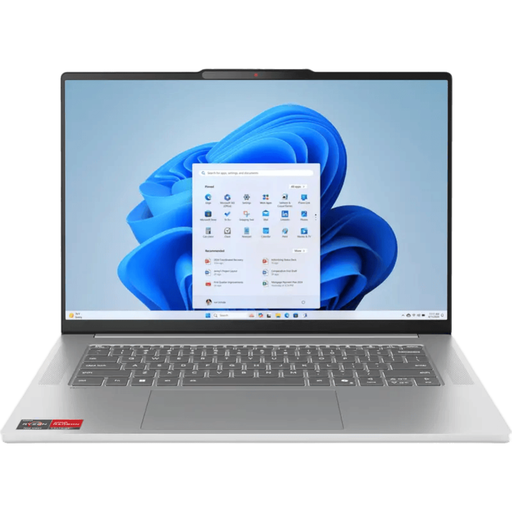 Image unavailable
A 15.3-inch model for viewing documents and maps with extra vertical screen space.
The screen has a resolution of 1920 × 1200 and a 16:10 aspect ratio. This configuration comes with 16 GB of memory and a 512 GB SSD. A charger isn’t included as standard.
Not just for viewing research maps and reports. First work out whether you’ll be opening documents or carrying out analyses locally. If it’s the latter, check the requirements for the software and version you’ll be using.
Not automatically. QGIS documents an offline feature that copies selected vector layers to GeoPackage or SpatiaLite. Also check that all your project files and layers are available locally and can be opened in advance.
According to the Dutch regulator ACM, when you buy at a distance you’ll generally have a statutory cooling-off period of up to 14 days after delivery. Check whether a legal exception applies to your purchase; this is separate from your rights if the product is faulty.
No. ACM ConsuWijzer explains that your statutory guarantee exists alongside any manufacturer’s or seller’s guarantee, and depends on what you could reasonably expect from the product with normal use. If the product is faulty, contact the seller.