
Writer working with lots of sources
You build your arguments with several documents or browser windows open and want to weigh up memory against screen space.


Start with the documents and programmes you need for your debate. If you write with several sources open, having enough memory is important, while a larger screen gives you more room to read texts side by side. The Consumentenbond recommends 16 GB of memory for using several programmes at once. A Chromebook is only suitable if the software you need works in a browser and you make the necessary files available offline in advance.
You build your arguments with several documents or browser windows open and want to weigh up memory against screen space.
You read articles and notes side by side and want a screen that’s easy to read without taking up too much table space.
You regularly set up your laptop and put it away again after use, so its size, connections and your workspace all matter.
First, check that the laptop supports the programmes and document features used by your debate group. Then compare memory, reading space and size to find the right fit for your table.
| What to consider | What should you check? | Who will this matter most to? |
|---|---|---|
| Keeping several sources open | Compare the memory with the number of programmes you use at the same time. The Consumentenbond recommends 16 GB for using several programmes at once. | When I’m writing my argument with several sources and windows open, I want to switch smoothly between tasks. That’s why around 33% of consumers prioritise memory for multitasking. |
| Room to read sources | Weigh up the screen size and any anti-glare features against the space available on your table. | I want to read quotations and notes side by side without the laptop taking up too much table space. For around 27% of consumers, room to read sources and notes is the top priority. |
| Software and documents | Check that the programmes and features you need work with the operating system. Microsoft states that the desktop versions of Microsoft 365 for Windows and Mac can’t be installed on a Chromebook. | If my debate group uses specific document software, I want to know whether it works on the laptop and whether I can use files offline. Compatibility is the main concern for around 20% of consumers. |
| Size and storage | Compare the laptop’s size with the space on your table, and check which connections the specific version has. | I put my laptop away after a work session and want its size and connections to suit my table and other workspaces. Ease of handling is the top priority for around 20% of consumers. |
Being able to open documents in a browser doesn’t mean that all the desktop programmes you need are available. Microsoft states that the Windows and Mac desktop versions of Microsoft 365 can’t be installed on a Chromebook.
Find out which applications and features your debate group uses, and test in advance how to make the files you need available offline.
A larger screen can give you more room to read, but the laptop also needs to fit on your kitchen table and suit the way you work there.
Compare the screen space with the room available on your table, and consider whether a separate monitor or keyboard would work better for longer sessions.
Memory, storage, screen and keyboard can vary between versions. So a product name alone doesn’t always tell you which configuration you’re looking at.
Compare the full model or part number and check the specifications for the exact version.
The IdeaPad Slim 3 82XN008RMH is an example of a 14-inch Windows laptop for working with documents and sources.
According to Apple, the MacBook Air with M5 is available with either a 13-inch or 15-inch screen.
The Aspire Go 15 AG15-72P, part number NX.JRREH.00M, is an example of a larger Windows laptop.
The Chromebook CM1402FM2A-EC0215 is a 14-inch Chromebook for work that mainly takes place in a browser.
This selection features laptops to compare for writing arguments and consulting sources at the table. When choosing, consider the screen size, the listed configuration and the software you need.
 No image available
An option to compare if you use several sources and programmes while writing.
The product name lists 16 GB DDR4 memory, a 512 GB SSD and a 3050E processor.
 No image available
Compare this version if you’re looking for a laptop with a 15-inch screen for your writing and sources.
The product name lists 16 GB of memory and 512 GB of storage. Check that the exact software you need works with this version.
 No image available
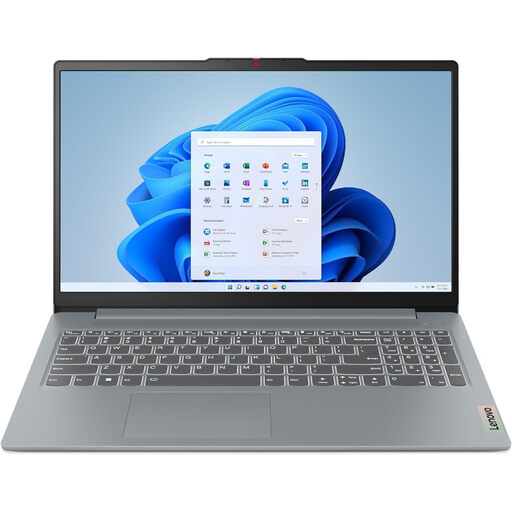
Consider this version as part of your comparison if you want to refer to lots of sources alongside your writing.
The product name lists a 15.3-inch WUXGA screen, 16 GB DDR5 memory and a 512 GB SSD.
 No image available
Compare this version if extra screen space is important when reading sources and writing arguments.
The product name lists a 16-inch WUXGA anti-glare IPS screen, 16 GB DDR5 memory and a 512 GB SSD.
 No image available
This version is worth comparing if you’re looking for a 16-inch screen and extra memory for working with several sources open.
The product name lists 32 GB DDR5 memory and a 512 GB SSD. According to the product information, this configuration is supplied without a power adapter. Check which adapter you’ll need.
Not necessarily. The Consumentenbond says 8 GB is enough for light use and recommends 16 GB if you use lots of programmes at once. So consider how many windows and applications you usually have open.
Some Google Drive files, including documents, can be used offline if you make them available offline in advance. Google says that some apps don’t work offline, so test the tools you need for researching sources too.
The Arboportaal highlights an adjustable workspace and changing your posture as things to consider. Employees who spend more than 2 hours a day working with a screen have specific considerations, including the option to use a separate monitor or keyboard with a laptop. This requirement for employees isn’t a general buying rule for everyone preparing for a debate.
According to the Dutch government, the seller must provide a solution if there’s a problem with a product. So contact the seller if your laptop develops a fault.
According to the Dutch government, consumers buying at a distance are usually entitled to a 14-day cooling-off period. Check the terms of your purchase, as there are exceptions to this right.