
Debater working with lots of sources
You write arguments with several documents and browser windows open. Screen, memory and the software you need are important considerations.


First, choose a laptop that runs the apps you need and can open your documents. Then decide how much screen space and portability matter to you. A compact Windows laptop gives you several configurations to choose from, while a MacBook Air suits an existing macOS workflow. A Chromebook is best for browser-based work, provided you make files available offline in advance. Check the exact configuration and have a secure alternative ready for hotel Wi-Fi.
You write arguments with several documents and browser windows open. Screen, memory and the software you need are important considerations.
You take your laptop with you regularly and weigh its size and weight against the workspace its screen provides.
You want to access important documents during your hotel stay. Check in advance what works offline and how to connect securely.
A good fit if: you need Windows software or want a compact workspace with a 14-inch screen.
Bear in mind: specifications vary by configuration, so check the memory and ports in particular.
A good fit if: the software you need runs on macOS and you often take your laptop with you.
Bear in mind: check that the apps and ports meet your needs. Apple lists two Thunderbolt 4 ports for the model mentioned.
A good fit if: you mainly work in a browser and with Google documents, and can make the files you need available offline in advance.
Bear in mind: test the apps and features you need. Using Microsoft 365 on the web does not mean every desktop feature is available.
Start by considering the apps and documents you need. Then compare the screen space and weight of the exact configuration, and check whether you can access important files without an internet connection.
| What to consider | What to look for | Who should prioritise this? |
|---|---|---|
| Screen and memory | Compare screen size and finish. Check the memory in the specific configuration; the Consumentenbond recommends 16 GB RAM where possible if you run several programmes at once. | If you want to view sources and arguments side by side, both screen space and memory matter. Around 31% of consumers prioritise working with sources and writing. |
| Portability | Compare the weight and usable screen size of the same configuration. | If you regularly carry your laptop between locations, weigh portability against the space available for documents. Around 25% of consumers make portability their top priority. |
| Apps and offline files | Test the software you need, and open and edit important documents without an internet connection. | If your connection may vary during your stay, you’ll want to know in advance that you can still access your apps and files. Around 25% of consumers prioritise software and offline access. |
| How much capacity you need | Compare the memory and storage in the exact configuration with the demands of your own work. Don’t buy based only on a general capacity specification. | If you mainly write text and read sources, avoid choosing a capacity without first working out whether you need it. Around 19% of consumers prioritise balancing cost against the features they need. |
Being able to access an office service online does not mean every feature you need or every file will work offline.
Before you leave, open and edit a representative debate document without an internet connection, and check that the features you need work.
Apple and Acer measure battery life under different conditions, so their figures won’t necessarily tell you how long your own work session will last.
Compare the test conditions where they’re listed, and take a suitable way to charge your laptop for an important session.
The Dutch government says there is no fixed statutory warranty period in the Netherlands, and the seller remains responsible for faulty products.
Before paying for extra cover, check what useful protection it actually adds.
ThinkPad E14 configurations are worth comparing if you’re looking for a compact Windows laptop. The Dutch E14 Gen 8 configuration reviewed has a 14-inch anti-glare screen.
The 13-inch MacBook Air with M5 is an option if the software you need runs on macOS and you want a lightweight laptop to take with you.
The Chromebook Plus 514 reviewed, part number NX.JKAEH.001, is a ChromeOS option for browser-based research and writing.
The selection below includes Windows laptops and MacBook Air configurations for working with sources and writing arguments, with different trade-offs between screen space, memory and portability.
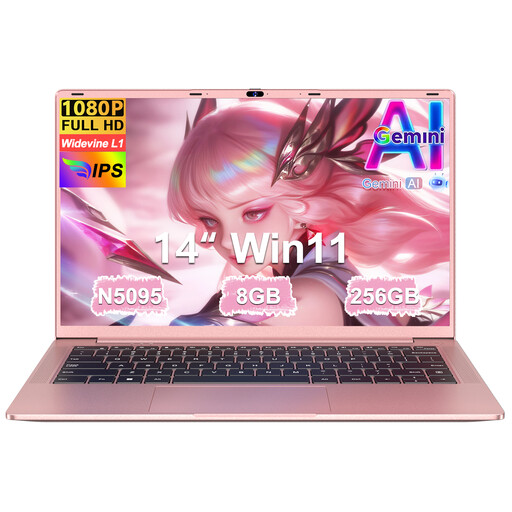 No image available
A 14-inch model for working on documents while you’re out and about. Bear in mind that 8 GB RAM may be limiting if you want to run lots of programmes at once.
14-inch FHD screen; 8 GB RAM; 256 GB SSD, expandable to 1 TB; N5095 processor up to 2.9 GHz; stated weight approx. 1.39 kg.
 No image available
The larger workspace may suit you if you want to view sources and arguments side by side. Bear in mind the stated weight of approx. 1.70 kg when carrying it around.
16-inch WUXGA IPS screen, anti-glare and 16:10; 16 GB DDR5 RAM; 512 GB SSD; Intel Core Ultra 5 135H; Windows 11 Pro; QWERTY keyboard.
 No image available
A macOS model with a larger screen, ideal if you use software that runs on macOS and would like more screen space.
15.3-inch Liquid Retina screen; 16 GB memory; 512 GB storage; two Thunderbolt 4 ports; stated weight approx. 1.51 kg. USB-C power adapter not included.
 No image available
The 15.3-inch workspace may suit you if you want to work with several documents side by side. Consider the larger screen size when deciding how easy it will be to carry.
15.3-inch WUXGA screen, anti-glare and 16:10; Ryzen 5 7535HS; 16 GB RAM; 512 GB SSD; Windows 11 Home; stated weight approx. 1.50 kg. A compatible 45–65 W USB-C Power Delivery adapter is required and not included.
 No image available
This 14-inch model is worth considering if you want to work with documents and browser windows while travelling, and a low stated weight matters to you.
14-inch WUXGA OLED screen with a 16:10 ratio; Snapdragon X; 16 GB RAM; 512 GB SSD; stated weight approx. 0.98 kg; Dutch QWERTY keyboard. A compatible 65 W USB-C Power Delivery charger is required and not included.
That depends on your apps and files. Google explains that you can select Drive files for offline use on a Chromebook. Set this up in advance and test the documents and features you need. Don’t assume every web app will be available offline.
Veilig Internetten recommends using a VPN on public Wi-Fi, or a hotspot using your mobile data. Choose the connection that suits your situation.
Before buying, check the end-of-update date for the specific device. Google explains where to find this information in ChromeOS. After the final update, there will be no further ChromeOS or browser updates.
According to ACM ConsuWijzer, online consumer purchases generally come with a cooling-off period that ends 14 days after delivery; check for any exceptions. A product must also meet the standard you could reasonably expect under normal use. The Dutch government says there is no fixed statutory warranty period, and the seller is your point of contact if the product is faulty.