Choose a laptop that lets you test both text size and your own writing software. A larger screen can give you more room when you enlarge the display, but it may be less convenient to carry around. For writing and proofreading, a configuration designed for everyday office work is a sensible starting point. Also consider more RAM if you use lots of programmes at once, and enough storage if you want to keep photos on your laptop.
Who is this choice relevant to?
Writer who needs larger text
You want to write and proofread chapters with text and interface elements at a comfortable size. Test this in your own writing software, not just on the home screen. Koninklijke Visio explains how to adjust text and other elements separately in Windows.
Writer who works for long periods
You spend long stretches working on recipes and memories, and want a clear view, a comfortable keyboard and a workspace you can adapt to suit you. The Consumers’ Association highlights RAM as something to consider when choosing between light office work and running several programmes at once.
Writer with a photo archive
You may also want to keep photos of food and family alongside your writing. How much local storage you need depends on the size and type of files you want to keep yourself.
What should you look for when choosing?
Windows laptop
A good fit if: you want to keep using your existing Windows writing software or adjust text, the interface and the pointer separately.
Bear in mind: try your document and magnification settings on the screen you’re considering; high magnification can change the layout.
MacBook
A good fit if: you want to use macOS and its magnification and text settings.
Bear in mind: check in advance that your writing software and existing files work with macOS.
Chromebook
A good fit if: the writing software you use is available on ChromeOS; Google explains how to magnify pages and the screen.
Bear in mind: for a specific model, check the end date for automatic updates and whether your desktop software will run on it.
| What to consider |
What should you check? |
Who should consider this most? |
| Readability when magnified |
Open your own document, enlarge the text and interface, and see how much text and how many buttons remain visible. |
If I want to read my manuscript in larger text, the page also needs to remain easy to navigate in my writing software. Around 38% of consumers in this writing scenario put readability first. |
| Comfortable for long writing sessions |
Try the keyboard with a longer piece of writing; match the RAM to the number of programmes you use at once. |
When I spend a long time writing recipes and memories, I want a keyboard and workspace that suit the way I work. Around 31% of consumers give long writing sessions top priority. |
| Storage for photos |
Check how much space your photo archive takes up and which original files you need to keep available locally. The Consumers’ Association recommends 512 GB or more for regular use of large photo or video files. |
If I want to keep lots of food and family photos with my manuscript, my storage needs depend on those files. Around 16% of consumers put their photo archive first. |
| Taking it to different places |
Consider screen size and portability together, and test your usual magnification without an external monitor. |
When I want to write in different places, I’m looking for a size I can carry and that still works well with enlarged text. Around 15% of consumers give portability top priority. |
Common buying mistakes
-
Focusing only on the screen size
A large screen doesn’t guarantee that you’ll be able to use your enlarged document, menus and pointer comfortably together.
Try your preferred magnification in your own writing software on the screen you’re thinking of buying.
-
Buying 8 GB of RAM on the assumption you can upgrade later
Not every configuration can be upgraded. According to the product documentation, the Acer Aspire Go 15 AG15-31P has a maximum of 8 GB of memory.
Check whether the full model number is upgradeable, and choose enough memory from the outset if you often use several programmes at once.
-
Assuming the manufacturer’s warranty is your only right
In the Netherlands, your statutory rights are separate from a manufacturer’s or additional warranty. If a product is faulty, the seller is responsible for providing an appropriate solution.
Compare what a paid extended warranty adds, and check how it relates to your statutory rights.
Brands to consider
Lenovo
The ThinkBook 16 G8 IAL, model 21SK00EBMH, is a Windows configuration with a 16-inch anti-glare IPS screen and a resolution of 1920 × 1200 pixels. Lenovo PSREF lists 16 GB of RAM and a 512 GB SSD for this model.
- The 16-inch screen is a specific option to try with enlarged text on the built-in display.
- Check that the English (EU) keyboard layout suits you; these specifications apply to this model, not all ThinkBooks.
Acer
According to the product documentation, the Aspire Go 15 AG15-31P, part number NX.KRPEH.00E, is a Windows 11 laptop with a matte 15.6-inch IPS screen.
- The documented configuration has 8 GB of RAM and a 512 GB SSD, making it one to compare for lighter writing work.
- This configuration is listed with a maximum of 8 GB of memory, so don’t assume you’ll be able to upgrade to 16 GB later.
Apple
Apple describes a 15-inch version of the MacBook Air, as well as macOS settings for screen magnification and larger text.
- A possible choice if macOS and the writing apps you use suit your needs; Apple Support explains the accessibility settings.
- Check the exact configuration and make sure your apps and files work with it; features of one configuration don’t automatically apply to the whole range.
Laptops at Joybuy
These laptops are suited to writing and proofreading with enlarged text on Windows or macOS; the configurations listed vary in screen size, memory and storage.
 No image available
ASUS Vivobook S16 S3607QA-SH109W, 16-inch
A Windows laptop with a 16-inch screen, giving you the option to enlarge text on the built-in display.
16-inch WUXGA OLED screen; Snapdragon X; 16 GB LPDDR5X; 512 GB SSD; Windows 11 Home.
View at Joybuy
 No image available
MSI Venture 16 AI A2HMG-068NL
A Windows laptop with 32 GB of RAM and a 512 GB SSD to compare if you use several programmes or work with lots of files.
16-inch screen; 1920 × 1200; 144 Hz; Intel Core Ultra 7 255H; Windows 11 Pro. The power adapter must be purchased separately.
View at Joybuy
 No image available
Apple MacBook Air 15-inch M5, Starlight, QWERTY
A macOS option if your writing software and files work with it; macOS has settings for larger text and screen magnification.
15-inch; 16 GB memory; 512 GB storage. A USB-C power adapter is required separately.
View at Joybuy
 No image available
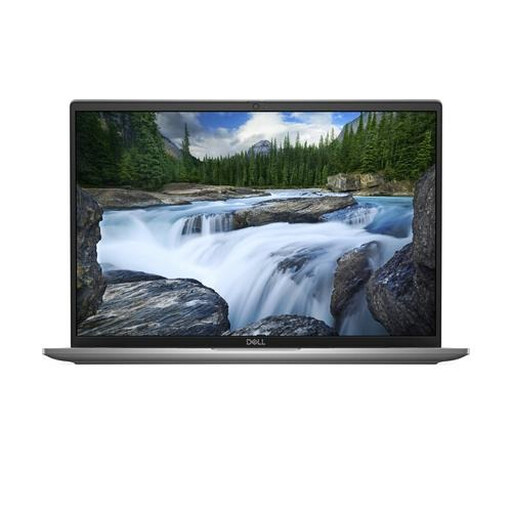
DELL Latitude 7650, Intel Core Ultra 7 155U
A Windows 11 Pro laptop with a 16-inch screen to try out with your own magnification settings.
16 GB LPDDR5x; 512 GB SSD; QWERTY keyboard. The power adapter must be purchased separately.
View at Joybuy
 No image available
Lenovo IdeaPad Slim 5 15ARP10
A Windows laptop with a 15.3-inch screen, offering an option for testing writing and proofreading with enlarged text.
15.3-inch WUXGA IPS screen; Ryzen 5 7535HS; 16 GB RAM; 512 GB SSD; QWERTY keyboard. A USB-C power adapter is required separately.
View at Joybuy
Frequently asked questions
Do you need to save your manuscript in a different font to make the text larger?
Not necessarily: Windows has settings for text and display, while Word also lets you change the font size of selected text. Decide whether you simply want to view the text at a larger size or change the formatting of your document too.
How do you set magnification on your laptop?
It depends on the operating system: in Windows 11, you can adjust text size or the scale of interface elements; macOS has screen magnification under Accessibility, while Chromebooks offer page and screen magnification. Then test the setting in your own writing software, as some magnification settings can move elements off-screen.
When do you need more storage?
It mainly depends on your files. The Consumers’ Association suggests 256 GB as a starting point for everyday office work and recommends 512 GB or more if you regularly use large photo or video files. Check how much space your own photo archive takes up and where you keep a separate copy of your manuscript.
How do warranties and the cooling-off period work when buying online in the Netherlands?
When you buy as a consumer, you’re entitled to a product that is fit for purpose. The Netherlands has no fixed statutory warranty period, and the seller is your point of contact if there’s a problem. For many online distance purchases from a business, a 14-day cooling-off period applies. Check the terms of the specific order; this cooling-off period is separate from your rights if a product is faulty.


