
Collectors with duplicate records
You want to find data-entry errors without accidentally deleting a record for a second coin that really is in your collection. Microsoft Support recommends reviewing flagged values before taking action.


First, decide how you’ll assess duplicate records: a spreadsheet can flag matching values, while coin software lets you keep track of information and photos for each individual coin. Then choose a screen and ports to suit your workspace, check that your software works with the operating system you choose, and keep a separate backup. A faster laptop won’t identify duplicate coins for you.
You want to find data-entry errors without accidentally deleting a record for a second coin that really is in your collection. Microsoft Support recommends reviewing flagged values before taking action.
You want to manage photos and descriptions for each coin, and be able to restore your collection from a backup. OpenNumismat describes features for coin photos and backups; VeiligInternetten also lists external storage and the cloud as possible places to keep a copy.
You move your laptop between your storage area and worktable, and may want to connect a camera, card reader or backup drive. So check the ports on the exact configuration you’re considering.
Start by deciding how you want to assess duplicate records. Then choose storage, a screen and ports to suit your collection and where you enter information.
Choose this if: you already have a row-based overview and want to review possible duplicate values yourself.
Bear in mind: deleting can permanently remove data from the selected range. Check which columns are selected and make a copy first.
Choose this if: you want to manage records, photos and descriptions for each coin; the developer says it supports Windows, macOS and Linux.
Bear in mind: a feature for duplicating a coin record doesn’t mean that accidental duplicate entries will be detected automatically.
Choose this if: the Windows desktop features for quantities and coin records described by the provider suit the way you work.
Bear in mind: according to the provider, cloning creates an extra record, so check that this approach suits your collection.
| What to consider | What to look for | Who should pay particular attention? |
|---|---|---|
| Reviewing duplicate records | Check that your application works with your operating system and see which fields you can compare. | I want to avoid losing a genuine second coin when records with matching values are flagged. Around 40% of consumers prioritise reliable checks for duplicate entries. |
| Storing photos and information | Check the storage capacity, ports for your image source, and where the catalogue and backups will be stored. | I want to keep photos and information for each coin and restore them if the laptop file is lost. Around 30% of consumers say this is their main need. |
| Screen and portability | Compare the screen size and resolution with your workspace; don’t judge the weight or battery life by the model range alone. | I want to enter information in different places, so I’d prefer a size I can carry around. Around 20% of consumers prioritise being able to work in different locations. |
| What’s included | Check what comes with the laptop and what software requirements apply. | I want to know in advance what I’ll need to arrange myself, such as a charger or the software I want to use. Around 10% of consumers prioritise having a clear picture of everything they need to get started. |
A flag for matching values is a prompt to check, not proof that you only have one coin. Deleting can permanently erase the selected data.
Decide which fields identify a type of coin and how you’ll record individual examples or quantities. Review flagged records before deleting anything.
A copy on the same laptop won’t help if the device or collection file is lost or damaged.
Check which files contain your catalogue and photos, and keep a recent copy in a second location.
The software and power supply you need can vary depending on what you choose. For example, HP says that the charger is sold separately for the OmniBook 3 14-hy0620ndx reviewed here.
Check what’s included with the specific laptop bundle and the requirements of the software you want to use.
These examples can help you compare product ranges and configurations. A brand name alone doesn’t indicate whether a specific laptop is available.
The product ranges mentioned here include both compact and larger screen sizes.
The Inspiron 15 3530 is an example of a 15.6-inch Windows range designed for use at a fixed workstation.
The IdeaPad Slim 3 15IRH10 is an example of a laptop where the ports may matter when transferring files and photos.
These laptop options are suited to catalogue work with Windows 11 Home, and include models with 14- or 16-inch screens for different working setups.
 Image unavailable
A good fit for cataloguing at a table if you’d also like to use the screen in different positions. The product description lists Windows 11 Home, a 16-inch touchscreen, and laptop, tablet, tent and stand modes.
 Image unavailable
The 16-inch screen gives you more space to view records and photos. The product description lists Windows 11 Home, a 1920 × 1200 IPS screen, 8 GB RAM, a 512 GB SSD and a weight of around 1.64 kg. The charger is not included.
 Image unavailable
The 14-inch size suits anyone who wants to carry their laptop between workspaces. The product description lists Windows 11 Home, an AMD Ryzen 5 7520U, 8 GB RAM and a 512 GB SSD; the stated weight is around 1.42 kg. The charger is not included.
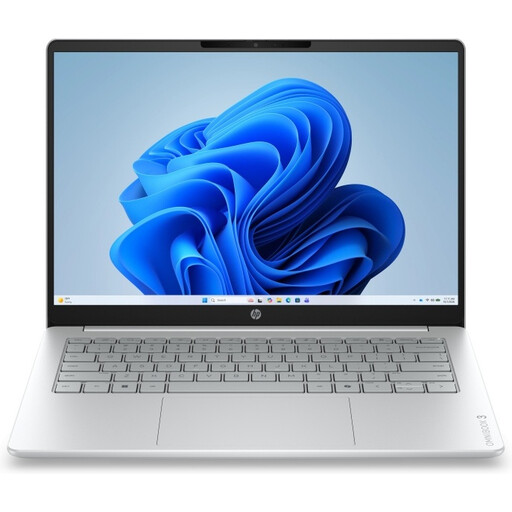 Image unavailable
This 14-inch configuration has a compact screen for entering information in different places. The product description lists Windows 11 Home, an AMD Ryzen 5 130, 12 GB RAM, a 512 GB SSD and a 1920 × 1200 IPS screen. The charger is not included.
 Image unavailable
The 16-inch screen gives you plenty of room for records and images. The product description lists Windows 11 Home, a WUXGA OLED screen, a Snapdragon X processor, 16 GB LPDDR5X and a 512 GB SSD; the stated weight is 1.70 kg.
No. A flag highlights values for you to review; it doesn’t tell you whether you own two genuine examples. Microsoft Support warns that deleting can permanently remove data from the selected range. Copy your data and check the selected columns before continuing.
Keep a recent copy of the files containing your collection and photos in a second location. OpenNumismat describes a command for creating a dated copy of a collection; VeiligInternetten lists options including an external drive and the cloud.
First, check your version of Windows and the app’s requirements. According to Microsoft Support, users of Windows in S mode can only install apps from the Microsoft Store. To install an app from elsewhere, you’ll need to permanently switch out of S mode.
No, not automatically. ACM ConsuWijzer explains that your legal guarantee depends on what you could reasonably expect from the product under normal use. A shorter guarantee from the seller or manufacturer doesn’t remove that right.
For distance purchases from a business, you’ll often have a 14-day cooling-off period, though there are exceptions. The Dutch government advises checking the terms of the specific purchase; a purchase from a private individual doesn’t fall under the same definition of a distance purchase.