Start with the DAW and plug-ins you actually use, then compare the exact laptop configuration for memory, storage and connections for your audio interface. Ableton points out that the processing power you need depends on the number of tracks and plug-ins. With a compact screen, it’s also worth considering how you want to view your mixer and timeline, and whether you’ll use an external display.
Who is this choice relevant to?
Choir mixer with a small desk
You mainly mix in a compact workspace and want to check that your DAW, screen and connections will work well together. Apple lists a 13.6-inch screen for the 13-inch MacBook Air; Ableton points out that the processing power you need depends on your workflow.
Mixer working with lots of tracks and plug-ins
Your projects may put greater demands on memory, storage and the processor. Compare the configuration of the specific model with your own sessions; Ableton identifies the number of tracks and the type of plug-ins as factors that affect the processing power you need.
Recording during rehearsals
You connect an audio interface and sometimes work close to microphones. Check the driver for your interface; Ableton explains that an ASIO driver generally allows lower buffer settings when using Ableton Live on Windows.
What should you look for when choosing?
First, choose based on the DAW and plug-ins you want to use. Then check that the exact configuration suits your audio interface, project size, and available desk and storage space.
| What to consider |
What to look for |
Who should prioritise this? |
| DAW and plug-in compatibility |
Check the exact DAW and operating system version, your plug-ins and your interface driver. Logic Pro for Mac is not available for Windows. |
I want to keep using my existing DAW, plug-ins and project files; otherwise, the laptop won’t fit my workflow. Compatibility is the main priority for around 26% of consumers. |
| Desk space and visibility of the mix |
Measure the space available and compare it with the dimensions of the configuration. Also consider how you want to view the mixer and timeline. |
I want to keep enough space free on a small desk and have a clear view of my mix. Around 21% of consumers prioritise desk space. |
| Capacity for tracks and effects |
Compare your own sessions with your DAW’s requirements, and check the memory and SSD specifications of the exact model. |
For larger sessions, I want enough room for tracks, plug-ins and project files. Session capacity is the top priority for around 21% of consumers. |
| Interface, ports and noise during recording |
Count the ports you need to use at the same time, and check your interface’s connections and driver. When recording, consider how the laptop will be positioned in relation to microphones. |
If I also record during rehearsals, I want to be able to connect my interface and take fan noise into account. Recording and connections are the main concern for around 16% of consumers. |
| Project files and backups |
Include your project files when calculating how much storage you need, and plan a separate backup. When transferring a project, check that all the necessary audio files are included. |
I want to store and transfer project files without missing any important media. Storage and backups are the main buying concern for around 16% of consumers. |
Buying points not to overlook
-
Taking general music production advice as a guarantee for your project
Ableton says that the processing power you need depends on the number of tracks and the type of plug-ins. So, advice for a particular DAW configuration won’t necessarily predict how your choir session will run.
Compare the requirements of your own DAW and plug-ins with the configuration of the exact model.
-
Counting the ports but forgetting about the driver
Having the right connection doesn’t, by itself, mean that your audio interface’s driver will work with your chosen laptop and software.
Check with your interface manufacturer which driver is available for your operating system, and count how many devices you want to connect at the same time.
If you don’t have enough connections, you may need a suitable adapter or hub for your setup.
-
Mistaking a saved project file for a complete backup
Ableton notes that Live may refer to audio files stored outside a project, and that plug-ins aren’t copied into the project folder.
When transferring a project, collect the required media in the project, make sure the plug-ins are available separately and keep a separate backup.
A separate backup location also requires a suitable drive and connection.
-
Assuming every configuration includes a power adapter
ASUS states that the Dutch eShop configuration of the Zenbook 14 OLED UX3405 mentioned here doesn’t include a power adapter.
Check what’s in the box and the charging wattage required for the exact configuration before you order.
This specific ASUS configuration requires a separate 65 W adapter.
Laptop brands to consider
Apple
The 13-inch MacBook Air M5 is a compact macOS option, particularly if you use Logic Pro for Mac.
- Apple lists a 13.6-inch screen, starting from 16 GB of memory and two Thunderbolt 4 ports for the 13-inch configuration.
- With two ports, you’ll need to consider the connections required by your interface and other equipment. The specifications don’t tell you how many tracks your mix can handle.
ASUS
The Zenbook 14 OLED UX3405 series is a compact Windows option for comparing different built-in connections.
- ASUS lists Thunderbolt 4, USB-A and HDMI for the Dutch series. For one specific configuration, ASUS lists 32 GB of memory and a 1 TB SSD.
- These memory and storage specifications don’t apply to every UX3405 configuration. For the configuration mentioned, ASUS states that the required 65 W power adapter isn’t included.
Dell
The 14-inch DC14255 is a configurable Windows option if you want to compare memory and storage across different configurations.
- Dell lists a configuration with 16 GB of RAM and a 512 GB SSD.
- Dell also offers other options; changing the configuration may affect other specifications. So, check the final product you’ve configured.
HP
The 14-inch EliteBook 8 G1i is a business range worth comparing if service terms are important to you.
- For configuration A26ZMEA#ABH, HP lists 32 GB of RAM, a 1 TB SSD and three years of on-site support.
- These specifications and service terms apply to the configuration mentioned; check the details of the model you’re actually considering.
Joybuy laptops for mixing in compact spaces
This selection features compact Windows laptops for mixing at a small desk. Check that your DAW, plug-ins and audio interface driver are compatible with each model.
 No image available
MSI Modern 14 F1MG-867NL
This 14-inch configuration is a compact Windows option for a desk with limited space.
Intel Core 7 150U, Intel Graphics, 16 GB DDR4, 512 GB SSD, Full HD IPS-Level screen and Windows 11 Home.
The description lists USB-C with Power Delivery and DisplayPort, USB-A, USB 2.0, HDMI and microSD.
View at Joybuy
 No image available
ASUS Zenbook A14 UX3407QA-QD479W
This 14-inch Windows laptop is a compact option if you want to connect several types of peripheral.
Snapdragon X, 16 GB RAM, 512 GB SSD, WUXGA OLED screen and Dutch QWERTY keyboard.
The description lists two USB4 Type-C ports, USB-A, HDMI and a 3.5 mm audio jack. Check that your DAW, plug-ins and interface driver work with this Snapdragon configuration. The required 65 W USB-C Power Delivery adapter isn’t included.
View at Joybuy
 No image available
HP OmniBook 3 AI PC 14-ht0013nd
This 14-inch Windows laptop is a compact option; compare its memory carefully with the requirements of your mixing software.
Intel Core 3 304, 8 GB RAM, 512 GB SSD and Windows 11 Home. Ableton recommends 16 GB or more for Live; this isn’t a universal minimum requirement for every DAW.
The description lists two USB-C ports, two USB-A ports, HDMI and an audio combo jack.
View at Joybuy
 No image available
HP OmniBook 3 14-hy0058ndx
This 14-inch Windows laptop is a compact option; check that its memory suits your DAW and projects.
AMD Ryzen 5 7520U, 8 GB RAM, 512 GB SSD and Windows 11 Home. Ableton recommends 16 GB or more for Ableton Live; this isn’t a general minimum requirement for every DAW.
The description lists USB-A, USB-C, HDMI and a combined headphone and microphone jack. According to the description, a charger isn’t included.
View at Joybuy
 No image available
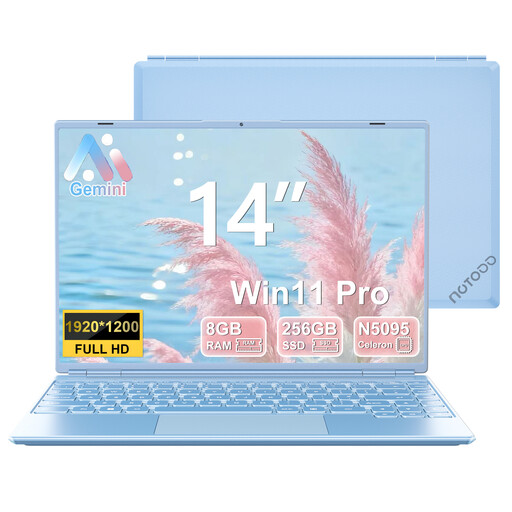
NOTODD Laptop 14-inch Celeron N5095
The 14-inch size may suit a small workspace; also check that the configuration meets the needs of your mixing software and projects.
Intel Celeron N5095, 8 GB RAM, 256 GB SSD and Windows 11. For Ableton Live, Ableton recommends 16 GB RAM and a 500 GB to 2 TB SSD; these recommendations aren’t universal for every DAW.
The description lists mini-HDMI for connecting an external display.
View at Joybuy
Frequently asked questions
Do I need 32 GB of RAM to mix a choir recording?
Not as a general requirement. Ableton lists 8 GB as the requirement for Live and 16 GB or more as the recommendation; according to Ableton, the amount of memory you need depends on the number of tracks and plug-ins. Check your own DAW’s requirements too.
What should I check before connecting a Windows audio interface?
Check whether your interface manufacturer provides a driver for the version of Windows you’ve chosen. Ableton recommends an ASIO driver for Ableton Live; this usually needs to be installed separately.
How can I avoid missing audio files when someone else takes over the mix?
If you use Ableton Live, you can use Collect All and Save and transfer the entire project folder. Ableton notes that this feature doesn’t include plug-ins; these need to be available separately.
When I buy a laptop online in the Netherlands, do I have a cooling-off period and a legal guarantee?
According to ACM ConsuWijzer, online consumer purchases generally come with a 14-day cooling-off period after delivery, with some exceptions. You’re also entitled to a legal guarantee if a product doesn’t perform as you could reasonably expect under normal use; a shorter manufacturer’s warranty doesn’t take away this right.
Can your choir simply publish the mixed recording online?
First, consider music rights and, if people can be identified in the recording, privacy rules. The Dutch government states that copyrighted music can’t be made public without permission. The Dutch Data Protection Authority considers identifiable audio recordings to be personal data, which requires a legal basis under the GDPR when it is processed. The permissions and legal basis that apply to your repertoire and recording depend on the specific circumstances.


