When choosing a laptop for designing a calendar beside a bright window, don’t rely on the stated brightness alone. Check the finish of the exact screen and, if possible, position your workstation so that your line of sight is parallel to the window, as Arboportaal advises. Then choose the screen space, colour reproduction, memory and portability to suit your software and files. Always check the specifications for the exact configuration.
Who should consider this laptop advice?
Designer working beside a bright window
You usually create your calendar in one bright workspace and want to check text and layout without distracting reflections. The screen finish and its position in relation to the window are important. Arboportaal advises positioning your line of sight parallel to the window.
Creator of print or visual materials
You combine calendar design with images or other colour-sensitive materials. Screen characteristics and your design software’s requirements matter more than an attractive-looking display alone. Adobe publishes system requirements for InDesign that vary by version.
Designer working in different locations
You work on your calendar at home and elsewhere, and weigh up screen space, connections and portability. The screen size and ports on your chosen configuration will affect how well it suits your workspaces.
What should you look for in a laptop beside a bright window?
Start with the light and screen finish, then compare the workspace, colour reproduction, performance and portability you need for your software and working style.
| What to consider |
What should you check? |
Who should give this more weight? |
| Readability in light from a window |
Check the screen finish and brightness of the exact configuration. If possible, see whether you can position your workstation so that your line of sight is parallel to the window; Arboportaal recommends this for workstation setup. |
If bright light from the window falls on your screen, you’ll want to read text without distracting reflections. Around 40% of consumers say readability in light from a window is their main buying priority. |
| Colour reproduction and space for layout work |
Compare screen size, resolution and colour gamut. For colour-critical work, a wide colour gamut alone doesn’t prove that colours are accurate; also check calibration data for the specific model. |
If you review images and calendar layouts together, you’ll want enough space and reliable colour information. Around 30% of consumers give colour reproduction and layout space top priority. |
| Software and files |
Compare your software and version requirements with the laptop’s memory, storage and operating system. For InDesign 21.3 and later on Windows, Adobe lists 8 GB RAM as the minimum and 16 GB as the recommended amount. |
If your software and design files are the deciding factors, you’ll want to choose a configuration that suits them. Around 20% of consumers put software and file requirements first. |
| Portability and connections |
Check the weight, screen size and ports of the exact configuration, as well as the connections for your external display and peripherals. |
If you work in different locations, you’ll want a laptop that suits your travel and connection needs. Around 10% of consumers choose portability as their main buying priority. |
Laptop-buying pitfalls
-
Mistaking peak HDR brightness for standard screen brightness
ASUS lists different screen variants within the UX3405 family. The advertised peak HDR brightness of another variant doesn’t automatically apply to the WUXGA configuration reviewed here, which has a glossy finish.
Compare the specifications for the exact configuration and assess reflections separately from HDR claims.
-
Assuming a wide colour gamut means accurate colours
RTINGS explains that a wide colour gamut alone doesn’t guarantee good factory calibration. For colour-sensitive print work, you’ll also need to consider the colour space required for production.
Check both the colour gamut you need and the calibration data available for the exact model.
-
Assuming every configuration comes with a power adapter
The ASUS configuration reviewed here and one Dell Pro 14 Plus configuration don’t include a power adapter. What’s in the box can therefore vary between configurations.
Before buying, check what’s included and which adapter is suitable for your chosen configuration.
For some configurations, you’ll need to arrange a suitable power adapter yourself.
Brands to compare
Lenovo
The ThinkPad T14s Gen 7 is worth considering if managing reflections is a priority in a workspace that’s difficult to move. Lenovo publishes specifications for individual configurations, so don’t assume they apply to other models in the range.
- For configuration 21YUCTO1WWNL1, Lenovo lists a 14-inch anti-glare OLED screen, 500 nits and 32 GB soldered memory.
- These specifications apply to this configuration; it has an English (EU) keyboard and soldered memory.
ASUS
The Zenbook 14 OLED UX3405 is an option to compare if you’re looking for a compact Windows laptop with a colour-focused screen. The exact screen variant matters, especially when using it beside a bright window.
- For the Dutch WUXGA configuration reviewed here, ASUS specifies a glossy OLED screen with 100% DCI-P3 and 32 GB memory.
- The UX3405 family includes other screen variants; peak HDR brightness for another variant doesn’t automatically apply to this configuration.
Apple
The 13-inch MacBook Air with M5 is a macOS option if you’re looking for a compact laptop with wide P3 colour reproduction. Check that your design software and preferred connections are supported by the configuration.
- For the base configuration described, Apple specifies a brightness of 500 nits and 16 GB memory.
- A brightness specification alone doesn’t tell you how distracting reflections will be in your workspace.
HP
The EliteBook 8 G1i is a business Windows range worth comparing if layout work and connections are part of your working day.
- The A26ZMEA#ABH configuration reviewed here lists a 14-inch WUXGA screen, 32 GB RAM and a 1 TB SSD.
- The available product specifications don’t confirm that this configuration is suitable for working beside distracting window reflections.
Dell
The Dell Pro 14 Plus PB14250 is a business Windows option available in several configurations. Check the screen and power specifications for each one.
- Dell lists, among others, a configuration with a 14-inch IPS screen, 1920 × 1200 pixels and 16 GB memory.
- Screen and power specifications vary by configuration; no confirmed brightness or anti-glare specification is available for this option.
Joybuy laptops for design work beside a bright window
These Joybuy options are worth comparing if you’re looking for a laptop for calendar design and screen use in light from a window.
 No image available
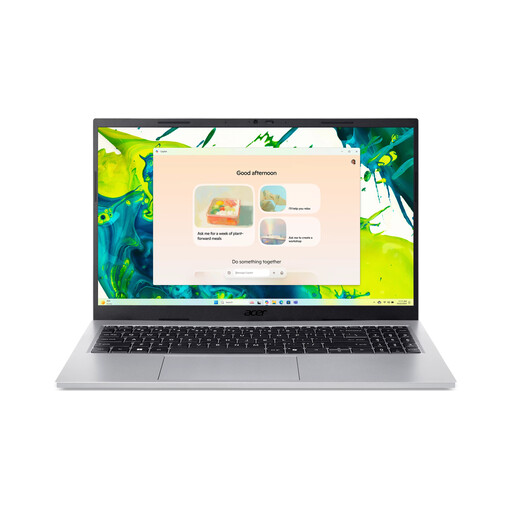
Acer Aspire Go 15 AG15-72P-56BJ, 15.6-inch
The product information lists a matte ComfyView finish. Consider this if you want to reduce reflections beside a window, while bearing the light in your workspace in mind.
The product name lists Full HD, Intel Core 5 120U, 16 GB RAM, 512 GB SSD, Wi-Fi 6 and Windows 11 Home. This configuration has an AZERTY keyboard and is supplied without a power adapter.
View at Joybuy
 No image available
ASUS Vivobook S16 S3607QA-SH109W, 16-inch
The product information lists an anti-reflective screen, which is worth considering if you use the laptop beside a bright window.
The product name lists a 16-inch WUXGA OLED screen, Snapdragon X processor, 16 GB LPDDR5X, 512 GB SSD and Windows 11 Home.
View at Joybuy
 No image available
MSI Cyborg A15 AI B2HWGKG-248NL, 15.6-inch
The product information lists an anti-reflective IPS screen. Compare the exact screen configuration with the light in your workspace.
The product name lists Full HD at 144 Hz, AMD Ryzen 9 270, RTX 5070 with 8 GB GDDR7, 16 GB DDR5, 512 GB SSD and Windows 11 Home.
View at Joybuy
 No image available
MSI Venture 16 AI A2HMG-068NL, 16-inch
The product information lists an anti-reflective screen. Consider this when using the laptop beside a window, taking the actual light in your workspace into account.
The product name lists a 1920 × 1200 screen at 144 Hz, Intel Core Ultra 7 255H, 32 GB DDR5, 512 GB PCIe 4.0 SSD, Intel Arc Graphics and Windows 11 Pro. No power adapter is included.
View at Joybuy
 No image available
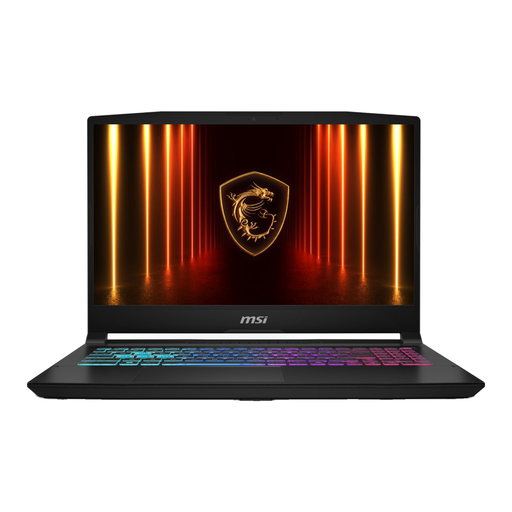
MSI Cyborg 15 B13WFKG-804NL, 16G 512GB SSD, QWERTY
The product information lists an anti-reflective coating, which is worth considering if you use the screen beside a bright window.
The product name lists 16G, 512GB SSD and a QWERTY keyboard. You’ll need to buy a power adapter separately for this configuration.
View at Joybuy
Frequently asked questions
Does a brighter screen always help with reflections beside a window?
No. A brighter screen doesn’t automatically prevent reflections. Check the finish of the exact configuration too, and try positioning your line of sight parallel to the window or using blinds; Arboportaal recommends the viewing angle as a workstation guideline.
Do you need to buy at least 16 GB RAM for InDesign?
Not as a general rule. For InDesign 21.3 and later on Windows, Adobe lists 8 GB RAM as the minimum and 16 GB as the recommended amount. Check the requirements for the version and operating system you use.
How should you set up your laptop for design work beside a window?
If possible, position your workstation so that your line of sight is parallel to the window. Arboportaal recommends this as a workstation setup guideline; the best position also depends on the light and your space.
What are your rights when buying a laptop online in the Netherlands?
For a standard online purchase, you’re generally entitled to a statutory cooling-off period, with some exceptions. ACM ConsuWijzer states that this period ends 14 days after delivery. Your statutory guarantee is separate from any manufacturer’s warranty: with normal use, a product must meet the expectations you could reasonably have.


