Choose based on your DAW, the number of tracks and effects you use at once, and how much space your source files and project copies take up. A lightweight laptop may suit a straightforward mix on the go, while larger sessions may benefit from more memory and storage. Then check software support and ports on the exact configuration: a more powerful graphics card is not, in itself, a proven necessity for audio mixing.
Who is this choice relevant to?
Creator of layered language lesson mixes
You combine voice, examples and other audio tracks, and want to minimise interruptions while mixing. The space you need also depends on the number of tracks and plug-ins in your DAW project, as Ableton explains.
Manager of large source files
You store recordings, edits and project copies, and want to keep your files well organised. Ableton recommends keeping space free on the system drive for Live and including project media when transferring projects.
Mobile recording enthusiast with existing equipment
You work in different locations and want to use your DAW and audio interface with your chosen laptop. For Ableton Live on Windows, Ableton recommends using a suitable ASIO driver.
What should you look for?
Start with your DAW workload and the storage space your projects need. Then check software support, your audio interface and the available ports. If you often work on location, factor in portability too.
| Priority |
What should you check? |
Who is this important for? |
| Mixing without interruptions |
Compare the processor and memory in the exact configuration with your DAW, track count and effects. Meeting the minimum requirements to install software does not guarantee that a large session will play smoothly. |
If you edit several tracks at once, you’ll want your session to remain workable. Around 36% of consumers prioritise uninterrupted mixing. |
| Space for source files |
Factor in your existing project files and expected growth when comparing SSDs. Ableton recommends keeping at least 10% of the system drive free for Live. |
If you store lots of recordings and project copies, you’ll want to organise them without losing sight of the space available for your work. Around 29% of consumers prioritise storage space. |
| Software and equipment |
Check that your DAW, plug-ins and audio interface driver support the operating system. Also count the ports you need to use at the same time. For Live on Windows, Ableton recommends a suitable ASIO driver. |
If you already use a DAW and interface, you’ll want to use them with your new laptop without any surprises. Around 21% of consumers base their choice on compatibility. |
| Working on location |
Compare the weight, screen size and ports of the specific configuration. Also consider which interface, storage and other equipment you’ll need to take with you. |
If you travel between locations, a laptop suited to the way you work may be more practical than simply having more internal storage. Around 14% of consumers prioritise portability. |
Common pitfalls
-
Focusing only on the DAW’s minimum requirements
A programme starting up doesn’t tell you whether a project with several tracks and effects will play comfortably. According to Ableton, the actual workload depends on your workflow, tracks and plug-ins.
Compare your DAW’s requirements with your own projects, and don’t treat the minimum specification as a performance test for a large session.
-
Assuming a larger SSD can replace backups
Extra storage on its own won’t protect your source files from loss or damage. Projects may also contain references to the media they use.
Plan for a separate backup and check that the project media has been included when transferring files.
If you don’t already have a backup solution, you may need additional storage equipment.
-
Choosing a faster laptop without checking the audio connection
Alongside the laptop, the driver, interface and buffer settings all play a part in your audio workflow and latency.
First check that your interface is supported, which type of port you need and which DAW version you’re using. For Ableton Live on Windows, Ableton recommends a suitable ASIO driver.
-
Assuming a product range name means a fixed configuration
Memory, SSD and ports can vary between configurations in the same product range.
Compare the full model code and configuration before deciding whether a laptop is right for your projects.
Brands to consider for this type of laptop
Apple
The MacBook Air and MacBook Pro ranges offer different configurations for those who want to work with macOS.
- Apple Netherlands lists MacBook Air M5 configurations starting with 16 GB of memory and a 512 GB SSD, with two Thunderbolt 4 ports.
- The Pro range has different configurations. These are official specifications, not independent audio performance measurements, so check DAW and interface support.
ASUS
The Zenbook 14 OLED and ProArt P16 are different Windows ranges. Check the exact configuration rather than relying on the product range name alone.
- The Zenbook listing reviewed specifies 32 GB of memory and a 1 TB SSD. ASUS positions the ProArt P16 H7607 for creative and AI tasks.
- That positioning doesn’t prove an advantage for audio mixing. A graphics configuration is only relevant if you have another need for it.
Dell
Dell describes the XPS 14 as a slim laptop for creative work on the go.
- The XPS 14 is a Windows option worth comparing if you’re looking for a compact laptop.
- The manufacturer’s description isn’t an audio test. Compare the memory, SSD and ports on your chosen configuration.
Lenovo
The ThinkPad P14s Gen 7 is a configurable range of Windows workstations.
- Lenovo lists 16 GB of memory and a 512 GB SSD for one Dutch configuration viewed.
- The product range name alone doesn’t tell you whether a specific configuration has enough space for your source files, so check the specifications.
HP
The EliteBook Ultra G1i appears in an external ranking of laptops for music production.
- Techboer included the model in a ranking updated on 21 October 2026.
- Its position reflects the publisher’s judgement, not a verified audio performance test. Check the full model code and configuration.
Laptops for audio mixing
This selection of Joybuy products includes Windows laptops and a MacBook Air for audio mixing with large source files.
 No image available
ASUS ProArt P16 H7607BA-SE030X, 64 GB RAM, 1 TB SSD
This Windows configuration may be worth considering if you want to compare laptops with plenty of memory and storage for your project files; the specifications aren’t an audio performance test.
64 GB RAM and 1 TB SSD. The description lists two USB4 Type-C ports, USB-A, HDMI and a 3.5mm combo jack.
View at Joybuy
 No image available
ASUS ProArt P16 H7607BA-SE181X, 128 GB RAM, 1 TB SSD
This Windows configuration offers a different memory option to compare with your DAW workload and storage needs; the specifications don’t guarantee audio performance.
128 GB RAM and 1 TB SSD. The description lists three USB4 Type-C ports, USB-A, HDMI and an SD Express card reader.
View at Joybuy
 No image available
Lenovo ThinkBook 16 G8 IAL 21SK00EBMH, 16 GB RAM, 512 GB SSD
This Windows laptop may suit you if you’re looking for a 16-inch model with ports for audio equipment and storage.
Intel Core Ultra 5 135H, 16 GB DDR5 and 512 GB SSD. The description lists two M.2 slots, Thunderbolt 4, USB-C and USB-A, with memory upgradeable to 64 GB.
View at Joybuy
 No image available
Apple MacBook Air 13-inch M5, 24 GB, 1 TB SSD
This MacBook Air may suit you if you want to work on the go and your DAW and plug-ins support macOS. Check that your interface will connect too.
M5 chip, 24 GB memory and 1 TB SSD. The description lists a 13-inch screen, a weight of 1.23 kg, two Thunderbolt 4 ports and a headphone jack.
View at Joybuy
 No image available
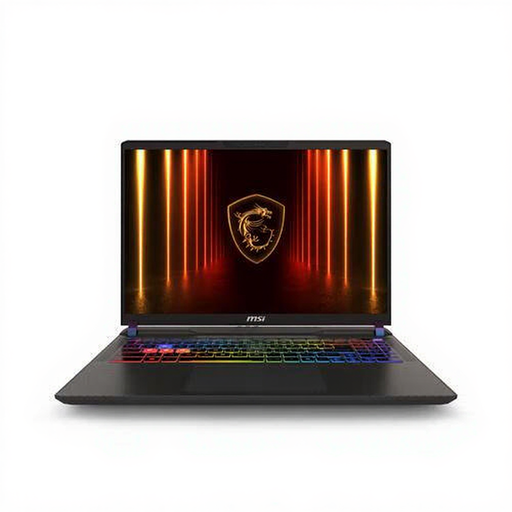
MSI Vector A16 HX A8WIG-025NL, Ryzen 9 8940HX, 16 GB RAM, 1 TB SSD
This Windows laptop may be worth comparing if you’re looking for a 16-inch model with a 1 TB SSD to handle a workflow involving large project files.
AMD Ryzen 9 8940HX, 16 GB RAM and 1 TB SSD. The model has a 16-inch Quad HD+ screen.
View at Joybuy
Frequently asked questions
Is 16 GB of memory enough for my language lesson project?
It depends on your DAW project and can’t be determined from the subject matter alone. Ableton recommends 16 GB or more for Live, but your actual needs also depend on factors such as the number of tracks and plug-ins. Compare your project with your DAW’s requirements and check the laptop’s memory configuration.
Can I store large source files on an external drive?
Yes, Ableton Live can use external storage for samples and other files. Ableton recommends installing the application on the system drive. You should also plan a separate backup and check that the media in use has been included when transferring a project.
What should I check when using a Windows audio interface?
Check that your interface has a suitable driver for your DAW and version of Windows. For Ableton Live, Ableton recommends a suitable ASIO driver; the buffer setting affects the balance between latency and interruptions.
Who should I contact if there’s a fault, and do I need an extended warranty?
For a consumer purchase in the Netherlands, the retailer is your point of contact for the statutory guarantee. According to the Dutch government, there is no fixed statutory guarantee period in the Netherlands. Compare the terms of any paid extended warranty with your existing rights before deciding whether to buy one.
Do I have a cooling-off period when buying a laptop online?
According to the Dutch government, online distance purchases from a business generally come with a 14-day cooling-off period. Check the terms that apply to your purchase; buying from a private seller is not the same type of distance purchase.


