Who is this laptop guide for?

Student editing audio locally

You cut and combine recordings in audio software installed on your device. So first check that the software and any plug-ins work with the operating system. Audacity and Cockos, the maker of REAPER, both offer software for multiple operating systems.

Collector of harbour recordings

You transfer files from a field recorder and want to keep an editable project. Audacity recommends fast, uninterrupted access to storage and advises against using external drives, USB sticks or network storage for active projects.

Student preparing and presenting on the go

You take your laptop between your study space and the exhibition. Check in advance which connectors your recorder, headphones and presentation equipment use, and make sure they’re compatible with the laptop.

What should you consider when choosing?

What to considerWhat should you check?Who is this important for?
Editing software Make a note of the software, version, operating system and any plug-ins. Test your complete workflow on a school Chromebook. If I want to edit locally, I want to know in advance that my software and plug-ins will work. Around 33% of consumers give compatibility with editing software top priority.
Storage for projects Allow for your own recordings, the active project and the export. Check the SSD configuration of the exact model. Suitable local storage is useful if you want to keep raw recordings and editable projects. Around 27% of consumers put project and storage space first.
Connections Compare the connectors on your recorder, headphones and presentation equipment with the ports on the exact model. If my existing equipment is the deciding factor, I want to know in advance which connections will fit directly. Around 20% of consumers make ports for recording and playback equipment their top priority.
Screen and portability Compare the screen size and weight of the exact model. Also consider whether you’ll have access to a socket or external screen at the exhibition venue. If you’re taking your laptop between lessons, your editing space and the exhibition, you’ll need to balance portability with enough room for the timeline. Around 20% of consumers prioritise working and presenting on the go.

Buying pitfalls

  • Choosing an external drive as the workspace for your active project

    Audacity warns that active projects need fast, uninterrupted access to storage, and advises against using external drives, USB sticks or network storage for this purpose.

    Work on your active project using suitable local storage, and keep separate backup copies as well.

  • Looking only at screen size

    Connections vary between laptop models. As a result, your recorder or presentation screen may not connect directly to the model you’re considering.

    Before buying, check the connectors on your equipment and the full list of ports on the exact laptop model.

    You may need a suitable adapter for equipment with a different connector.

  • Assuming every Chromebook is suitable for local audio editing

    Audacity describes installation for Windows, macOS and Linux. Google warns that Linux may not be available on a Chromebook managed by a school.

    Check on the device you’re considering whether you can install your editing software, and whether file sharing and recording equipment work.

Brands to compare as a guide

Lenovo

The IdeaPad Slim 5 15ARP10 is a Windows model range with a 15.3-inch screen.

  • Lenovo lists USB-A, USB-C, HDMI and a 3.5mm combo jack for this model range.
  • Configurations can vary. Check the memory, storage and keyboard on the specific model.

Apple

The 13-inch MacBook Air with M5 is a compact macOS option for local audio apps.

  • Apple lists 16 GB of memory and a 512 GB SSD for the base model. The port list includes two Thunderbolt 4 ports and a headphone jack.
  • Check whether your recorder or presentation equipment needs an adapter. The stated battery life is not a measure of performance during audio editing.

HP

The OmniBook X Flip 14-kc0600ndx is a Windows option in the 14-inch class.

  • HP Netherlands lists 16 GB of RAM and a 512 GB SSD for this model.
  • Check the full list of ports to make sure your recorder and presentation equipment will connect.

ASUS

The Vivobook S14 (S3407) is a 14-inch Windows model range to consider if portability is important.

  • ASUS lists a starting weight of 1.4 kg for this model range.
  • The processor and other features depend on the model. ASUS’s stated battery life is not a measured editing runtime.

Joybuy laptops for local audio editing

These laptops are designed for local editing with Windows or macOS. Compare their software compatibility, storage and connections with your own recording and presentation workflow.
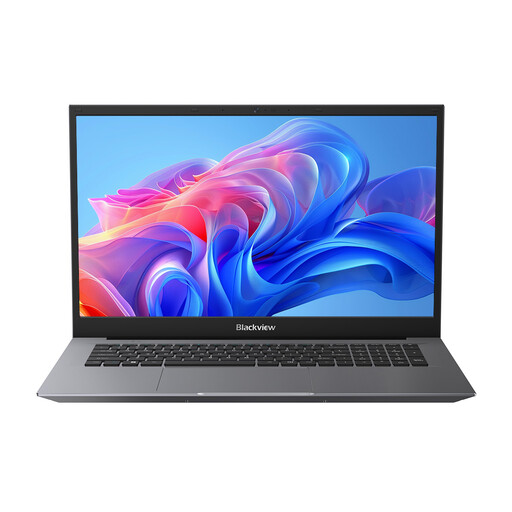
Blackview AceBook 10 laptop with 18.5-inch LCD screen

Blackview AceBook 10, 18.5-inch, 16 GB RAM, 512 GB SSD, Windows 11 Pro

A Windows option to compare if you want to edit locally. Check that the screen size and connections suit your workspace and equipment.

18.5-inch LCD screen; Intel Pentium Silver N6000; 16 GB DDR4 RAM; 512 GB SSD; Windows 11 Pro.

View at Joybuy

Apple MacBook Air 13-inch with M5, 16 GB memory, 512 GB SSD, Midnight, QWERTY keyboard

Apple MacBook Air 13-inch M5, 16 GB, 512 GB, Midnight, QWERTY keyboard

A compact macOS option for local editing. Check that your recording equipment and any plug-ins work with your workflow.

M5 chip; 16 GB memory; 512 GB SSD; QWERTY keyboard.

View at Joybuy

Apple MacBook Air 15-inch with M5, 16 GB memory, 512 GB SSD, Starlight, QWERTY keyboard

Apple MacBook Air 15-inch M5, 16 GB, 512 GB, Starlight, QWERTY keyboard

A macOS option with a larger screen than the 13-inch model. Check which size suits your editing space and how you’ll connect your equipment.

M5 chip; 16 GB memory; 512 GB SSD; QWERTY keyboard.

View at Joybuy

Frequently asked questions

Do I need a powerful graphics card for Audacity?

Audacity doesn’t specify a particular CPU or GPU requirement for the Windows version, but it does require fast, uninterrupted access to storage. This doesn’t guarantee that every combination of large projects and plug-ins will run smoothly.

Can I keep an active audio editing project on an external drive?

Audacity advises against using external drives, USB sticks or network storage for active projects, as the software needs fast, uninterrupted access to storage. Work on the project locally and keep backup copies as well.

How should I prepare the sound diary for the exhibition?

Keep the editable project and also export the agreed playback file. Ask the organiser which file format the installation accepts, and test the file there in advance.

Will a school Chromebook work for local audio editing?

It depends on the specific Chromebook and the workflow it allows. Google warns that Linux may not be available on a school-managed device, so check software installation, file sharing and access to your recording equipment.

Can I play recognisable conversations or existing music at the exhibition?

Consider this for each recording and each way you make the exhibition accessible. According to the Dutch Data Protection Authority, processing personal data requires a lawful basis under the GDPR; consent is one possible basis. Auteursrecht.nl states that permission is generally required to use protected music outside a private setting, although exceptions may apply under certain conditions. Which rules apply to your recordings depends on the specific circumstances.
