
Developer with a local test environment
You’re building the portal and want to use your code editor, browser and possibly containers side by side. Choose a configuration based on the tools you’ll actually be running.


For an art submission portal with browser previews, you don’t automatically need a creative laptop with dedicated graphics; a development laptop could be suitable if it works with your local tools. If you run development software and containers at the same time, check the configuration and the requirements of your chosen environment. If you also edit submitted images in Photoshop, factor in the relevant software requirements, screen and storage.
You’re building the portal and want to use your code editor, browser and possibly containers side by side. Choose a configuration based on the tools you’ll actually be running.
You’re developing the portal and editing submitted images as well. In that case, the requirements of your image-editing software, along with the screen and storage, all matter.
You’re weighing portability against screen space and connectivity, as well as suitability for your local development environment.
Choose this if: You mainly write code, check browser previews and often work in different places.
Consider: Compare the available screen space and check that the ports on your chosen configuration suit your peripherals.
Choose this if: Windows and, for example, local containers, external screens or wired equipment are part of your workflow.
Consider: Check the exact configuration and, for Docker Desktop, the relevant installation requirements and backend.
Choose this if: You regularly edit submitted images as well as working on the portal itself.
Consider: A larger creator-focused screen or extra graphics hardware isn’t necessarily needed for browser previews alone; compare the full configuration with the software you use.
| What to consider | What should you check? | Who should pay extra attention? |
|---|---|---|
| Local development and testing | Make a note of your development tools and check that the exact configuration and any Docker backend are suitable. | If I use my editor, browser and possibly containers at the same time, I want a laptop that works with my tools. Around 36% of consumers put local development and testing at the top of their list. |
| Editing images yourself | Check the requirements of your image-editing software and compare the screen and storage with your workflow. For Photoshop 27.x and later, Adobe recommends 16 GB RAM or more. | When I edit submitted images myself, I want a laptop that suits my software and files. Around 29% of consumers put image editing first. |
| Workspace and portability | Compare the screen size of the specific configuration and consider whether you want to view code and a preview side by side on the laptop screen. | If I work in different places, I’m looking for the right balance between portability and enough screen space. Around 21% of consumers put mobility at the top of their list. |
| Ports and maintenance | Check the ports and any maintenance options on the exact configuration, not just the product range. | When my setup depends on peripherals or maintenance, I want to know what the specific version actually offers. Around 14% of consumers put connectivity and maintenance first. |
A browser can display image files selected by a user; that doesn’t automatically make a dedicated graphics card a requirement. Photoshop has its own system requirements.
Distinguish between building previews and editing images yourself before choosing a configuration. MDN explains how web applications can use local files; Adobe publishes separate system requirements for Photoshop.
Ports, screens and other features can vary between configurations. So the model name alone doesn’t always tell you what the version on offer includes.
Before buying, check the configuration, memory, storage and ports of the specific model. Lenovo notes that some features are available only on selected configurations.
Any additional manufacturer’s or seller’s warranty is separate from your statutory rights to goods that conform to the contract. The Dutch government’s information describes the right to a product that meets the required standard as a legal entitlement.
Keep your proof of purchase and, if something goes wrong, check both the terms of any additional warranty and your rights against the seller. Business.gov.nl explains statutory conformity in the Netherlands.
The MacBook Air M5 is a macOS option that combines portability with web development.
The ThinkPad T14 Gen 6 (Intel) is a Windows range worth comparing if configuration choice and business connectivity matter to you.
The ProArt P16 H7606 is designed for creative tasks alongside development, such as working on a larger screen.
Dell describes the XPS 14 DA14260 in the Netherlands as a compact laptop for creative work on the move.
This selection includes laptops for local portal work, with options for different screen sizes and workspaces. Check the configuration and included accessories for the model you choose.
 Image unavailable
An option to compare for local portal work and use in different places.
AMD Ryzen AI 5 processor, 13.3-inch IPS screen, Windows 11, 16 GB memory, 512 GB SSD and a stated weight of 1.46 kg.
 Image unavailable
A larger-screen option to include in your comparison if you want to view images alongside your development work.
16-inch OLED screen, 100% DCI-P3, RTX 5060, 16 GB RAM, 1 TB SSD and Windows 11 Home. The description states that the charger must be purchased separately.
 Image unavailable
A 16-inch option to compare if you want more room on the built-in screen for code and a browser preview.
AMD Ryzen 5 7520U, 8 GB memory, 512 GB SSD, 16-inch IPS screen with a 16:10 aspect ratio and Windows 11 Home. The description states that no charger is included in the box.
 Image unavailable
An option for local portal work if you’re considering a 14-inch screen and a stated weight of around 1.42 kg.
AMD Ryzen 5 7520U, 8 GB memory, 512 GB SSD, 14-inch IPS screen with a 1920 × 1200 resolution and Windows 11 Home. According to the product description, the laptop is supplied without a charger.
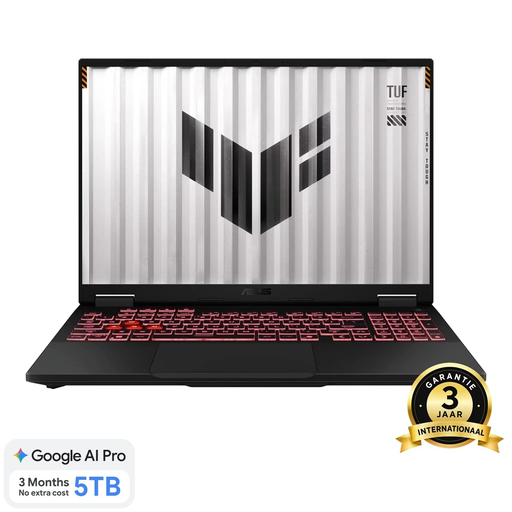 Image unavailable
A large-screen option to compare if portability isn’t a major priority for your workspace.
AMD Ryzen 7 260, 18-inch WUXGA screen with a 16:10 aspect ratio and 144 Hz, RTX 5060 with 8 GB, 16 GB DDR5, 512 GB SSD and Windows 11 Home.
Not necessarily. MDN explains how web content can use the browser’s File API to read a local file selected by the user. The right laptop for you will also depend on your other local tools and whether you edit images yourself.
Check the current system requirements and the backend for the Windows installation and laptop configuration you’re using. Docker lists WSL 2 as the default backend and says it works for most users; don’t assume compatibility based on the product name alone.
For an eligible online consumer purchase, Business.gov.nl describes a 14-day cooling-off period that starts the day after delivery. Your statutory rights to goods that conform to the contract are separate: if a product is faulty, repair or replacement may be available, and if the problem isn’t resolved appropriately, you may be entitled to a refund. The exact rules depend on factors including the purchase and whether you’re buying as a consumer.
Don’t assume that you can. The Dutch Data Protection Authority notes that identifiable people in photos and videos are personal data; the rules for publication depend on who processes the data and for what purpose. Keep this separate from your choice of laptop specifications.