
Archive reader with a small desk
You read digitised newspapers or scans and take notes at the same time, with little room for your laptop and paper sources. The KB describes Delpher as a collection of scans with searchable text.


First, choose a laptop that runs the archive website and any required study software. Then decide which screen size will fit your desk and bag. A compact Windows laptop gives you access to Windows software, a Chromebook is best suited to browser-based work, and a Mac is an option if your programmes run on macOS. For the exact model, also check the ports and whether a power adapter is included.
You read digitised newspapers or scans and take notes at the same time, with little room for your laptop and paper sources. The KB describes Delpher as a collection of scans with searchable text.
You use course software as well as online archives. The University of Amsterdam points out that some courses have specific laptop requirements, so check which software and operating systems your course requires.
You take your laptop with you and want to read or write on the go. Size, suitable ports and making files available offline in advance may all be worth considering.
A good fit if: your course requires Windows software or you want to connect peripherals directly. The University of Amsterdam recommends checking the requirements for your own course.
The trade-off: specifications vary by model, so check the full model number and its corresponding specifications.
A good fit if: you do most of your archive work in a browser and your required study programmes run on ChromeOS.
The trade-off: to work offline with Google Drive files, you’ll need to make them available offline in advance. Also check the update schedule for the model you choose.
A good fit if: your required programmes run on macOS and you’re looking for a compact model.
The trade-off: according to Apple, the 13-inch MacBook Air with M5 has two Thunderbolt 4 ports. You may need an adapter for devices with a different connection.
Start with your course’s software requirements. Then compare screen space with the space available to you, and finally check that the ports suit your own equipment.
| What to consider | What to look for | Who it matters to |
|---|---|---|
| Reading scans and taking notes | Compare the screen size, resolution and aspect ratio of the exact model. Think about whether you want to view scans and notes side by side. | When I read scans and take notes at the same time, I want to be able to see the text and images clearly. Around 36% of consumers give readability and screen space top priority. |
| Size for your room and bag | Check the dimensions and weight of the model, and measure the space on your desk. | When my desk is small and I take my laptop with me, I want it to fit in both places. Around 29% of consumers make size and portability their top priority. |
| Software and ports | Ask your course provider which programmes and operating systems you’ll need. Compare the ports on the model with your own devices. | When my course requires specific software or I need to connect peripherals, I want to know in advance whether they’ll work together. Around 21% of consumers prioritise software compatibility or ports. |
| Accessories you’ll need | Check whether the model comes with a suitable power adapter and whether you’ll need an adapter for your peripherals. | When I want everything ready to use for my studies, I want to know which accessories I still need. Around 14% of consumers give required extras top priority. |
Some courses have specific laptop requirements. So a laptop that’s suitable for browsing won’t necessarily be suitable for all your assignments.
Ask your course provider which programmes and operating systems you’ll need before choosing a model.
Variants with similar names can differ in memory, touchscreen functionality and ports, among other things.
Compare the full model number with the specifications for the version on offer.
A version may be supplied without a charger. According to the product information, the HP OmniBook 5 Flip 14-fp0075nd C5VM5EA#ABH requires a compatible USB-C charger of at least 45 W, sold separately.
Check what’s included and compare the available ports with your own plugs before ordering.
The Vivobook 14 M1407 is a compact Windows option for reading and writing when desk space is limited.
The IdeaPad Slim 3 14IWC11 is worth considering if you need ports for study equipment.
The Chromebook Plus 514 range offers a ChromeOS option for archive work that’s mainly browser-based.
The 13-inch MacBook Air with M5 is a compact macOS option if your required software runs on macOS.
This selection features Windows laptops for reading archive material and studying. For each version, check that the software, ports and included accessories suit your needs.
 No image available
A 14-inch convertible for reading scans and taking notes on a compact device.
Screen: 1920 × 1200 pixels. Windows 11 Home, 16 GB memory and 512 GB SSD. The description lists USB-A, USB-C and HDMI. A compatible USB-C charger of at least 45 W is required separately.
 No image available
A 14-inch Windows laptop for studying and working with documents when desk space is limited.
Screen: 1920 × 1200 pixels. Windows 11 Home, 8 GB memory and 512 GB SSD. The description lists two USB-C ports, two USB-A ports and HDMI.
 No image available
A 14-inch Windows laptop for viewing archive pages and documents on a compact screen.
Screen: 1920 × 1200 pixels. AMD Ryzen 5 7520U, 8 GB memory, 512 GB SSD and Windows 11 Home. The description states that a charger must be purchased separately.
 No image available
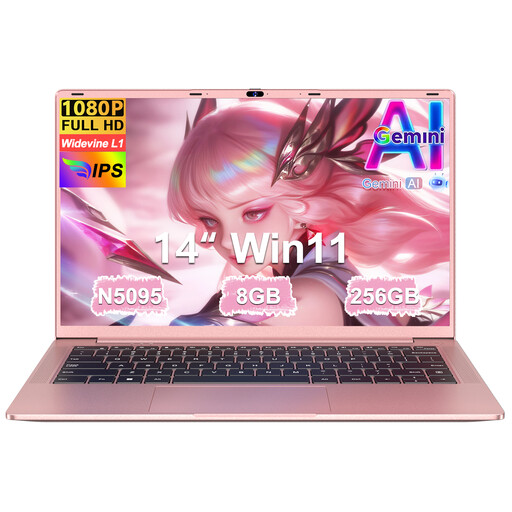
A 14-inch laptop for anyone looking for a device to use for studying and on the go.
The description lists an FHD IPS screen, 8 GB RAM, 256 GB SSD and a weight of 1,39 kg. Ports: USB 3.0, Type-C and Mini-HDMI.
 No image available
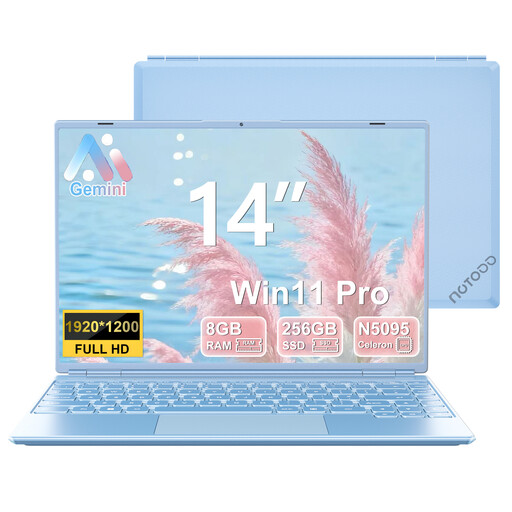
A 14-inch Windows laptop for anyone who needs to run study programmes on Windows.
Screen: 1920 × 1200 pixels. The title lists Windows 11, 8 GB RAM and 256 GB SSD. The description mentions an IPS screen, Mini-HDMI and a TF card slot.
No. The KB says that digitised texts in Delpher can be searched without an account. This is separate from your course’s software requirements, so check those separately.
On a Chromebook, you can make Google Drive files available offline in advance; changes will sync once the device is connected again. Also check whether you’re allowed to download the archive files you need, and save them before going offline.
Yes. Check the update schedule for the specific model. Google explains how to check this for a Chromebook; it’s particularly relevant if you’re considering an older or second-hand device.
According to ACM ConsuWijzer, if a product is faulty, you’re entitled to a remedy from the seller; a manufacturer’s warranty doesn’t replace this legal right. For a standard online product purchase, you generally have up to 14 days after delivery to change your mind, subject to legal exceptions.
Not automatically: check the rights and terms for the collection in question. The National Archives only marks its scans as free to reuse when the files have a download button and are labelled as public domain or CC0. The KB warns that more recent newspapers may be subject to copyright and privacy rights.