Who is this choice relevant to?

Student who also creates 3D designs

Wants to edit home designs on their own laptop using BIM or 3D software, so checks their course requirements and the versions of the programmes they use first. TU Delft’s advice for Architecture is specific to that course.

Student who discusses designs between lectures

Carries drawings, references and presentations, and weighs portability against having enough screen space. Lenovo describes design work for architecture students as a combination of designing, modelling, visualising and documenting.

Student who compares designs in detail

Wants to assess drawings and images side by side, and checks that the screen configuration and software suit the way they work.

What should you look for?

Lightweight for carrying around, mainly for viewing and presenting

A good fit when: you mainly view drawings and presentations, and run demanding design software on another computer.

Trade-off: a smaller device is easier to carry, but offers less room to view drawings and references side by side.

Windows laptop for local BIM and 3D work

A good fit when: your course requires you to run design software locally; compare the full configuration with your course requirements.

Trade-off: a larger screen and graphics hardware may make it less convenient to carry between locations. TU Delft’s advice applies to its own Architecture course, not as a nationwide minimum requirement.

Mac for a confirmed macOS workflow

A good fit when: your course and the programmes you actually use support macOS, and running Revit locally is not a requirement.

Trade-off: Autodesk specifies Windows for a standard Revit 2026 installation, while SketchUp also has a macOS version. Check compatibility for each programme and course.

Consideration What to look for Who should prioritise this?
Software compatibility Check the programme version, operating system, RAM requirements and graphics hardware for the exact configuration. Follow TU Delft’s advice only if it applies to your course. If I have to run the required design software locally, I want to know first whether the laptop can handle it. Around 33% of consumers put software compatibility first.
Portability Compare the weight of the complete configuration, screen size, charger required and the connections you need for presentations. If I often carry my laptop between lectures, I want to know how much weight and how many accessories I’ll be carrying every day. Around 27% of consumers give portability top priority.
Screen for reviewing designs Check the screen size, resolution and specific panel configuration; consider whether you usually work with an external screen. If I want to view drawings and references side by side, the space on the built-in screen matters. Around 20% of consumers name screen space as their top buying priority.
Total purchase and aftercare Compare complete configurations, check whether the required adapter is included, and read any additional service terms alongside your statutory rights. When I’m weighing up the full purchase and help if something goes wrong, I want to know what comes with the laptop and what a service plan adds. Around 20% of consumers prioritise total cost and aftercare.

Common buying mistakes

  • Assuming a laptop for note-taking is also suitable for BIM

    TU Delft’s laptop project states that its mid-range model is not suitable for the graphics software used in Architecture. So a laptop that works well for documents and presentations won’t necessarily be suitable for running design software locally.

    Before buying, check the advice from your own course and the requirements for the exact software versions you’ll need to use.

  • Judging a GPU or screen by the product range alone

    Specifications can vary between configurations. The name of a workstation or creator range doesn’t, by itself, tell you which configuration you’re actually buying.

    Compare the full model code and configuration, including RAM, GPU, video memory, screen and operating system.

  • Assuming the right adapter is included

    For the ASUS ProArt P16 H7606GP, ASUS states that the required 380W adapter is not included.

    Check what’s included in the specific offer and which adapter is needed for that configuration.

    You’ll also need to factor in the practicalities of arranging and carrying a separate adapter for this configuration.

  • Confusing an extended warranty plan with your statutory rights

    The Dutch government states that the Netherlands has no fixed statutory warranty period. An additional warranty does not replace your right to receive a product that conforms to the contract.

    Check what an additional service plan covers, and contact the seller if the product is faulty.

Brands and product ranges to consider

ASUS

The Dutch ProArt P16 H7606GP is an example of a creator laptop with Windows 11 Pro and a 16-inch OLED screen.

  • The H7606GP configuration mentioned has 32 GB RAM and an RTX 5070 Laptop GPU with 8 GB of video memory.
  • These are configuration details, not independently measured performance figures for the ProArt range. ASUS states that the RAM in this configuration is not upgradeable and that the required 380W adapter is not included.

Lenovo

The ThinkPad P16 is a mobile workstation range. Configuration 21RQCTO1WWNL1 is a specific example for anyone comparing laptops with graphics hardware for local use.

  • That configuration lists 32 GB RAM and an RTX PRO 3000 Blackwell Laptop GPU with 12 GB of video memory.
  • These specifications apply to this configuration. Also compare the screen, weight and service terms; Lenovo’s general performance descriptions are not independent tests.

HP

HP presents the ZBook Power 16 G11 and G11 A as mobile workstations for professional workflows.

  • This product range could be worth comparing if you’re looking for a mobile workstation.
  • HP states that features vary by configuration, so you’ll need to assess the suitability of each specific configuration separately.

Dell

The Dell Pro Max 16 Plus MB16250 is a configurable mobile workstation for design work carried out locally.

  • You can choose the processor and operating system.
  • Assess your chosen configuration against the software requirements. Dell’s performance descriptions are manufacturer claims.

Joybuy product picks

These product picks include laptops for viewing design files between lectures and Windows laptops for design software. For local BIM or 3D work, always compare the exact configuration with your course and software requirements.
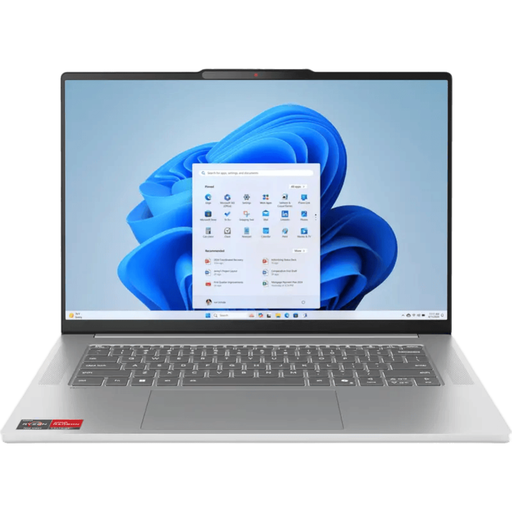
Lenovo IdeaPad Slim 5 NB IPS5 15ARP10

Lenovo IdeaPad Slim 5 NB IPS5 15ARP10, R7, 16 GB, 512 GB, 11H, QWERTY keyboard

An option to take with you and use to view design files on the built-in screen; check your course requirements before using it for design work locally.

15.3-inch IPS screen with 1920 × 1200 resolution; 16 GB LPDDR5x; 512 GB SSD; listed weight 1.49 kg. The description states that the charger must be purchased separately.

Joybuy

ASUS ProArt P16 H7607BA-SE181X

ASUS ProArt P16 H7607BA-SE181X, 128 GB RAM, 1 TB SSD, Windows 11 Pro

A Windows configuration to compare if you want to review design files on a generous built-in screen; check the exact hardware against the software you use.

The product information lists a 16-inch 4K OLED screen, 128 GB RAM, 1 TB SSD and a stated weight of 1.77 kg. The title mentions NVIDIA RTX Spark N1X and an NVIDIA Blackwell RTX GPU; check the exact GPU configuration before comparing it with software requirements.

Joybuy
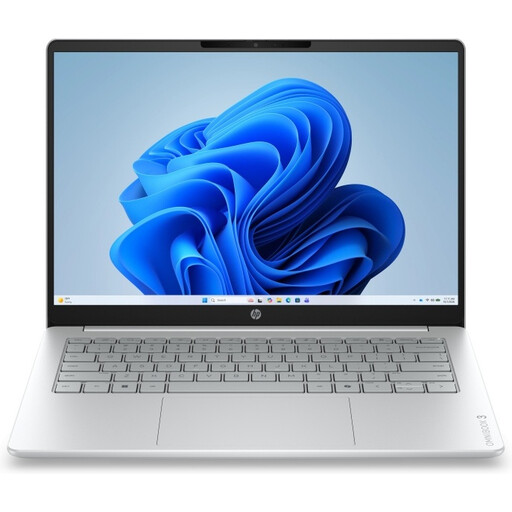
HP OmniBook 3 14-HY0005NDX

HP OmniBook 3 14-HY0005NDX, Ryzen 5 130, 12 GB RAM, 512 GB SSD, Windows 11 Home

A 14-inch Windows laptop to compare for studying and viewing files between lectures.

The product information lists a 1920 × 1200 screen and a weight of around 1.42 kg. Its graphics are described as integrated; SketchUp’s desktop requirements specify a dedicated graphics card. The description states that the charger must be purchased separately.

Joybuy

Lenovo IdeaPad Slim 3 15AHP10

Lenovo IdeaPad Slim 3 15AHP10, Ryzen 7 8840HS, 16 GB RAM, 512 GB SSD

A Windows laptop with a 15.3-inch screen for viewing drawings and references alongside documents.

The product information lists a 1920 × 1200 resolution and integrated AMD Radeon 780M graphics. SketchUp’s desktop requirements specify a dedicated graphics card, so check compatibility with the software used on your course. The description states that the charger must be purchased separately.

Joybuy

HP OmniBook 3 16-by0058ndx

HP OmniBook 3 16-by0058ndx, Ryzen 5 7520U, 8 GB RAM, 512 GB SSD, Windows 11 Home

A Windows laptop with a larger built-in screen for viewing design drawings and references.

The product information lists a 16-inch IPS screen with 1920 × 1200 resolution and integrated graphics. SketchUp’s desktop requirements specify a dedicated graphics card, so check your software requirements. The description states that the charger must be purchased separately.

Joybuy

Frequently asked questions

Can I simply choose a MacBook for Architecture?

No, check the software used on your own course first. TU Delft considers a Mac less suitable for its standard Architecture recommendations and mentions an exception for the Geomatics master’s course. Autodesk specifies Windows for a standard Revit 2026 installation, while SketchUp also supports macOS.

What should I look for when using Revit and SketchUp?

Check the programme version and operating system before installing. Autodesk specifies an internet connection for Revit licence registration and required downloads. SketchUp requires internet access for installation and authorisation, and recommends a three-button mouse with a scroll wheel for desktop use.

Are a charger and an extended warranty automatically included?

No, check what’s included and the terms of the exact offer. ASUS states that the required adapter is not included with the ProArt P16 H7606GP. The Dutch government clarifies that an additional warranty is separate from your rights to a product that meets the required standard.

What cooling-off period applies to online purchases in the Netherlands?

For a distance purchase from a business, the Dutch government says you’ll usually have a 14-day cooling-off period. There are exceptions, and an online purchase from a private individual is not covered by the same distance-selling rules, so check who you’re buying from.

Do I always get exactly two years’ statutory warranty on a laptop in the Netherlands?

No. The Dutch government states that the Netherlands has no fixed statutory warranty period. What you can expect from a product depends, among other things, on the product, its price and the information provided by the seller. If the product is faulty, contact the seller.
