
iPhone app testers
If you run iOS tests locally with Xcode simulators, you’ll need a suitable Mac. Also check which macOS version is required for your project’s version of Xcode; Apple Developer publishes these system requirements.


For local iOS simulators, a suitable Mac is the way to go, as Xcode simulators run on macOS. Android testing is possible on several computer platforms, provided they meet the requirements of your development tools. Then compare the exact screen configuration and the memory and storage you need. A high peak HDR brightness rating alone doesn’t prove that a screen will be easy to read by your window: reflections and the way you position it matter too.
If you run iOS tests locally with Xcode simulators, you’ll need a suitable Mac. Also check which macOS version is required for your project’s version of Xcode; Apple Developer publishes these system requirements.
If you use Android Studio and one or more virtual devices, compare the software requirements with the processor architecture and available memory and storage. Google also explains hardware acceleration for the Android Emulator.
If reflections by the window are your biggest problem, compare the screen configuration and see whether a different position or window blind might help. Arboportaal offers advice on reducing reflections in the workplace.
Choose this option: if you want to use Xcode and iOS simulators on your own laptop.
Bear in mind: check the required macOS version, and don’t treat a peak HDR brightness figure as proof that the screen will be readable in light from a window.
Choose this option: if Android Studio and Android devices or emulators are central to your local testing, and you don’t need a local iOS simulator.
Bear in mind: check the processor architecture and Google’s current requirements. Google does not currently support Windows computers with ARM processors for Android Studio.
Try this: if the main issue is the position of your screen in relation to the window.
Keep in mind: changing your setup or using a blind won’t replace the software compatibility or computing power your testing requires.
| What to consider | What should you check? | Who is this relevant to? |
|---|---|---|
| Screen readability by a window | Check the finish and brightness of the exact panel configuration; compare brightness figures only on the same basis. Also see whether a different position or window blind might help. | If reflections make code or test results hard to read, you’ll want to know whether a different screen configuration or workspace could help. Around 36% of consumers give screen readability their top priority. |
| Local iOS testing | Check which versions of Xcode and the simulator your project needs, and whether the Mac supports the corresponding macOS version. | If you want to run iOS simulators locally, your computer platform needs to be compatible with Xcode. Around 29% of consumers give local iOS testing their top priority. |
| Android Studio and emulators | Check the system requirements for your computer, its processor architecture and hardware acceleration. Compare its memory and available storage with your project and the number of virtual devices you use. | If you use Android Studio with virtual devices, you’ll want to know whether your laptop meets the requirements; testing on a physical device could also be an alternative. Around 21% of consumers give capacity for Android testing their top priority. |
| Portability and connections | Make a list of your test devices and peripherals, then check the ports, weight and included power supply for the exact configuration. | If you move your testing setup around, you’ll want to be able to connect your devices and any peripherals easily. Around 14% of consumers give portability and connections their top priority. |
HDR and SDR brightness figures describe different conditions. Reflections and the position of the window also affect how comfortable a screen is to use.
Compare brightness claims on the same basis and check the finish of the exact screen configuration. If possible, try it in similar lighting conditions.
Google’s Android Studio installation requirements currently state that Windows computers with an ARM processor are not supported.
Before buying, check the processor architecture of the exact laptop and compare it with the current requirements of your development tools.
Panel, memory and connections can vary between configurations. For example, Lenovo lists these details for the ThinkPad T14 Gen 6 (AMD), model 21QJ005EMH.
Compare the full model code with the specifications of the configuration you want to buy.
Arboportaal sets out workplace requirements for employees who spend more than two hours a day working with display screens. These include using a separate keyboard or screen with a laptop.
If you’re employed, discuss your workspace with your employer and check which peripherals you need.
A suitable option if you need to run Xcode and iOS simulator tests locally. Compare the specific MacBook Pro configuration and the macOS requirements for your version of Xcode.
The ThinkPad T14 Gen 6 (AMD) is a Windows model worth comparing for an Android testing setup. Check the exact model code.
The EliteBook 8 is a business Windows range worth comparing if Android testing and a mobile workspace are important to you.
The Latitude 5455 shows why you should check both the processor architecture and screen configuration when choosing a business Windows laptop.
Compare these Joybuy laptops by screen size, listed configuration and suitability for your testing. For Android Studio, always check the processor architecture and current software requirements; the product title alone doesn’t confirm compatibility.
 No image available
One option to compare for laptop-based testing; check your development tools’ system requirements before choosing a configuration.
The title lists an Intel Core i7-14700HX, 32 GB RAM, a 1 TB SSD and a 16-inch IPS screen with a 2560 × 1600 resolution and 240 Hz refresh rate.
 No image available
A Windows configuration to consider if you’ve checked that your development tools are compatible with its processor architecture.
The title lists Windows 11 Home, a Snapdragon X processor, 16 GB memory, 512 GB SSD storage and a 16-inch WUXGA OLED screen.
 No image available
Compare this configuration with your development tools’ requirements; the product title alone doesn’t confirm that its processor architecture is suitable for your testing software.
The title lists Windows 11 Pro, 32 GB RAM, 1 TB SSD storage and a 16-inch 3K OLED touchscreen with a 120 Hz refresh rate.
 No image available
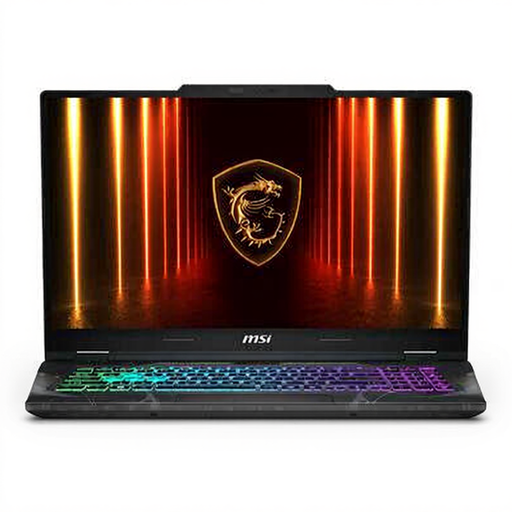
A model to include when comparing screen size and the listed configuration; check the software requirements and operating system of the exact configuration.
The title lists an Intel Core i7-13650HX, RTX 5060, 16 GB DDR5 RAM, a 1 TB SSD and a 16-inch QHD+ screen with a 240 Hz refresh rate.
 No image available
This Windows configuration is one option to compare for your testing. Check the current software requirements before choosing the laptop.
The title lists an Intel Core 7 240H, 16 GB DDR5 RAM, 512 GB SSD storage, RTX 5050, Wi-Fi 6E and a 17.3-inch Full HD screen.
Not for the local Xcode setup described here: Apple describes iOS simulators as part of Xcode on macOS. Check which version of Xcode your project needs and which macOS versions Apple supports for it.
No. You can also test with a physical Android device or a streaming service. If you run an emulator locally, check the system requirements and hardware acceleration for your computer and development environment.
If reflections are a problem, Arboportaal recommends moving your workspace further from the window or using a blind. Also check the finish of the exact laptop screen configuration.
According to the Dutch government, consumer purchases must be of satisfactory quality. The Netherlands has no fixed statutory warranty period, and if a product develops a fault, the retailer is your point of contact. For distance purchases from a business, a 14-day cooling-off period applies in many cases. Check the terms and exceptions; the cooling-off period may differ for a business purchase.
For employees who spend more than two hours a day working with display screens, Arboportaal describes workplace requirements. These include the option of using a separate screen or keyboard with a laptop, and measures to reduce reflections. These employment rules depend on the working context and aren’t a general requirement for every personal laptop buyer.