
Recording an ensemble cast
Wants to record and monitor characters speaking at the same time on separate tracks. Check the number of complete microphone chains and usable recording tracks.


Match the number of microphones and separate recording tracks to the number of actors speaking at the same time, and check exactly what the chosen set includes. A wired option may suit fixed positions and a compatible connection; choose wireless if actors need to move, but test the connection and check the frequency for the venue when using a UHF system.
Wants to record and monitor characters speaking at the same time on separate tracks. Check the number of complete microphone chains and usable recording tracks.
Has actors moving around the room and needs a mounting solution that can handle movement without clothing or cable noise being picked up by the microphone.
Can safely route cables around fixed performance positions and wants a connection that works with their existing recorder, mixer or phone.
First, count the voices that will be heard at the same time. Then decide whether the actors need to move freely or stay in fixed positions. For any option, check that the microphone, connection and recording equipment form a complete chain.
Suitable when: actors mostly stay in one place and the recorder, mixer or phone has a compatible connection.
Bear in mind: the cable route, power requirements and connector; a TRRS microphone for mobile devices will not automatically work with a different input.
Suitable when: actors move around and the number of voices speaking at the same time matches the complete transmitter set and the available receiver channels.
Bear in mind: batteries, signal connection and the number of separate lavalier microphones included; transmitters are not automatically complete lapel microphone chains.
Suitable when: you want to put together separate bodypacks and receivers, and the frequency version can be used at the venue.
Bear in mind: each simultaneous recording needs compatible channels and components. According to the Dutch Authority for Digital Infrastructure, available UHF frequencies vary by location, and some bands require a licence.
| What to consider | What to check before buying | Who it matters most to |
|---|---|---|
| Recording simultaneous voices separately | Count the actors, separate lavalier microphones, receiver channels and individual recording tracks. | If several actors speak at once, I want to be able to edit their voices separately and know in advance how many complete chains the set provides. Around 33% of consumers prioritise recording ensemble members separately. |
| Freedom of movement | Test the full route and check how cables, transmitters and any internal recordings are used. | When actors move around the room, I want the microphone to stay in place and the recording not to rely on a long cable. Around 27% of consumers put freedom of movement first. |
| Clarity and clothing noise | Try the placement with the actual costumes and listen to a test scene that includes head movements. | For dialogue, I want clear voices without rustling that drowns out the lines. Around 27% of consumers give clear dialogue and minimal clothing noise top priority. |
| Connection and recording chain | Compare the microphone version’s connector and power requirements, and any necessary adaptors, with the exact input on your device. | If I want to use my existing phone, recorder or mixer, the complete connection needs to work with it. Around 13% of consumers start with the connection and the equipment they already own. |
The number of transmitters does not tell you how many separate lavalier microphones and complete recording chains the bundle includes.
Check each version for the microphones included, microphone inputs and number of separate recording tracks.
TRRS, bodypack connectors and power requirements are not automatically interchangeable.
Compare the full model variant with the exact input and power requirements of your recording device.
According to the Dutch Authority for Digital Infrastructure, not every UHF frequency is available at every location in the Netherlands; some bands require a licence.
Before use, check the frequency version and venue using the information from the Dutch Authority for Digital Infrastructure.
RØDE states that 32-bit float on the Wireless PRO applies to internal recordings on the transmitters, not automatically to audio sent to a camera.
Check that internal recording is enabled, and listen back to the recording from the connected recorder too.
According to RØDE, the Wireless PRO is a compact wireless set with two transmitters and two Lavalier II microphones included.
The Mic 2 is a compact wireless transmitter set with internal recording features.
The wired AT899 may be suitable for fixed performance positions where the cable route and connection work.
The EW-DP ME 2 is a UHF set with a bodypack and lavalier for a separate wireless microphone chain.
The MVL is a wired lavalier for compatible mobile devices; Shure also provides guidance on microphone placement for theatre.
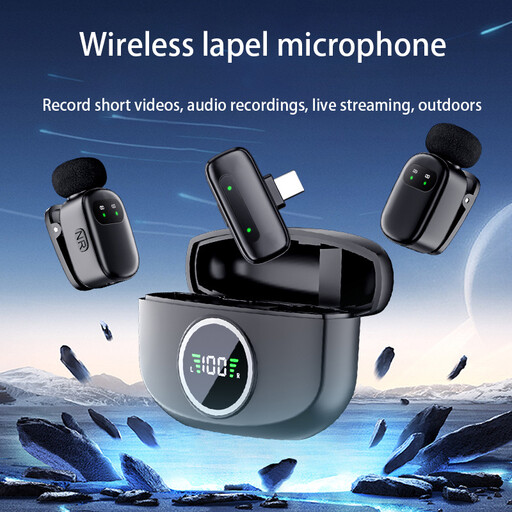
This selection includes wireless lapel microphone systems, including versions for mobile devices. Before buying, check which recording devices and connections are compatible with the set you choose.
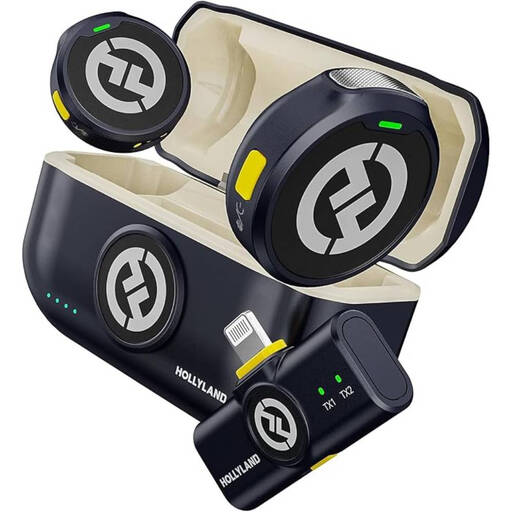 No image available
A wireless system to consider if actors need to move; check that the receiver version works with your recorder.
Listed features: transmitter weight of 9 g and a camera receiver with a 3.5mm connection. The product name lists 48 kHz/24-bit audio and a transmission range of 300 m.
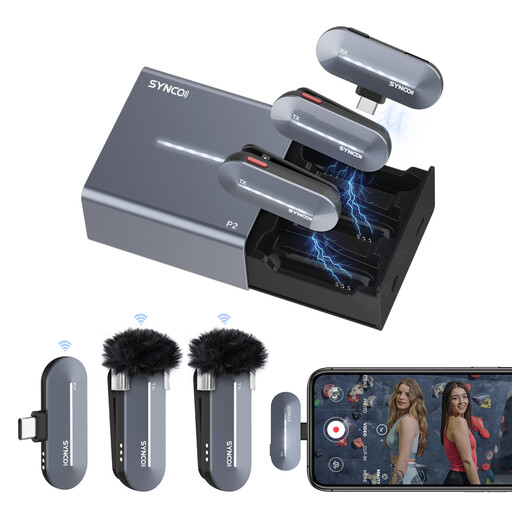 No image available
The dual-mic version may suit a recording with two actors if your recording device is compatible with USB-C.
The product name lists 2.4 GHz and a charging case; the product description mentions monitoring via the USB-C receiver.
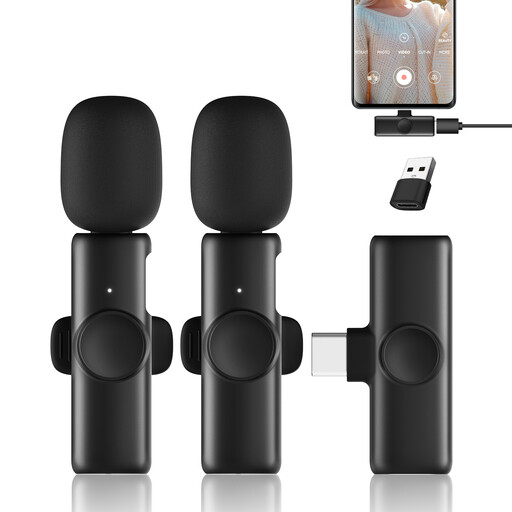 No image available
This set is designed for use with a USB-C Android phone; check that the connection is compatible with your recording device.
The product name lists two transmitters, one receiver and 2.4 GHz. The product description mentions clip-on microphones.
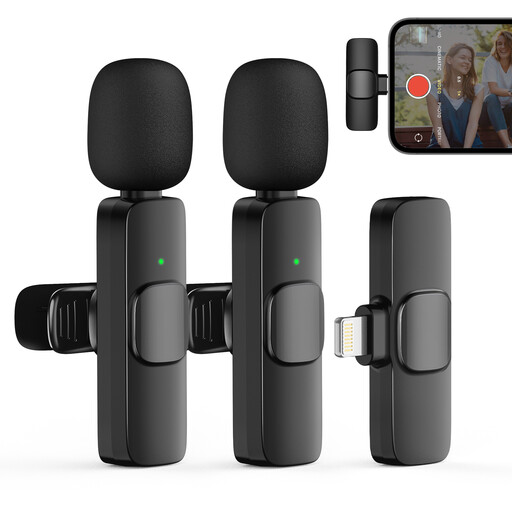 No image available
The product name specifies an iPhone system for wireless clip-on recording; check that the connection works with your intended recording device.
The product name lists two transmitters and one receiver. The product description mentions an omnidirectional microphone.
 No image available
This wireless dual-mic version is designed for use with an iOS interface; check that it works with your recording equipment.
The product description lists a magnetic charging case.
Not if you want to record more than two worn microphones separately at the same time with the set described. Count the voices that will be heard simultaneously and check how many complete recording chains and tracks are available.
Test the microphone with the costume that will be worn during recording. Shure recommends avoiding contact between fabric and the capsule or cable, and securing the cable to prevent strain; do not apply gaffer tape directly to the skin.
Not for every frequency band. According to the Dutch Authority for Digital Infrastructure, you generally do not need a licence to use suitable frequency space, but available UHF frequencies vary by location and some bands do require a licence. Check the frequency version you have chosen for the venue.
According to ACM Consumer Information, the seller must provide an appropriate, free solution if a product does not meet what you could reasonably expect from it under normal use. These statutory rights are separate from any additional manufacturer’s warranty.
It depends on who can be identified and how the recording is used or shared. The Dutch Data Protection Authority describes consent as one possible legal basis under the GDPR, not the only one. Discuss recording and publication with the people involved in advance; the applicable legal basis depends on the circumstances.