Start with a microphone positioned close to your mouth. RØDE recommends placing it on your chest, around 20–30 cm from your mouth, so your voice stands out more clearly against sounds further away. A cardioid lavalier is worth considering if room noise is your main concern and you can position the microphone carefully. For a fixed recording spot, a wired option may be enough, while a wireless system gives you more freedom to move. Before buying, check the connection and what’s included. If you’re considering UHF equipment, also check whether its frequency can be used in your location.
Who is this for?
Home voice actor dealing with noticeable background noise
If you record dialogue while sounds from other rooms or outside are audible, look for a microphone that sits close to your mouth and consider its pickup pattern. Shure, RØDE and Sennheiser all highlight microphone placement and direction as important factors when recording voices.
Creator with a fixed recording spot
If you record character voices in one place and want to avoid unnecessary wireless equipment, factor the connection and clothing noise into your choice. RØDE and Shure specify different connector types for their lavalier microphones.
Gamer who moves during dialogue
If you change position during a take or switch between soft and loud voices, compare the freedom to move with features such as monitoring or internal recording. Check which features are actually included with the specific version of each system.
What should you look for when buying?
Start with your main concern: room noise, a compatible connection, changes in vocal volume or freedom to move.
Cardioid lavalier
Choose this option: if you want to reduce room noise and can point the capsule towards the speaker.
Bear in mind: the direction and connection; a standalone microphone isn’t automatically a complete recording setup.
Wired omnidirectional lavalier
Choose this option: if you usually record in one place and can connect the microphone to your recording device.
Bear in mind: the cable and the right input; an omnidirectional capsule doesn’t guarantee that background noise will disappear.
Wireless system
Choose this option: if being able to move during a take is important, or you need features such as monitoring and internal recording.
Bear in mind: the exact system version, power supply and any frequency restrictions; going wireless won’t prevent clothing noise.
| What to consider |
What should you check? |
Who is this important for? |
| Clarity with room noise |
Compare cardioid and omnidirectional capsules, then make a test recording where you plan to wear the microphone, with the sounds you’d normally hear there. |
If sounds from other rooms or outside are audible, I want my voice to come through more clearly. Around 33% of consumers give clarity in the presence of room noise top priority. |
| Connection and recording setup |
Check the exact connector, input and any adapter, transmitter or receiver you may need. Also check what’s included in the box. |
If I’m recording with a dedicated recorder or phone, I want to know in advance whether the microphone will actually connect. Around 27% of consumers prioritise a compatible connection and a working recording setup. |
| Changes in vocal volume |
Check whether the system you’re considering has internal recording, monitoring or a safety channel, and test both a quiet and a loud line. |
When character voices vary greatly in volume, I want to be able to check my takes or have a backup recording. Around 20% of consumers give this priority. |
| Freedom to move |
Check the attachment and monitoring. If you’re looking at a UHF system, also check whether its frequency can be used in your location. |
If I move during a take, I don’t want to be restricted by a cable. Around 20% of consumers rank freedom to move above their other recording priorities. |
Common buying mistakes
-
Assuming ‘noise reduction’ means silent recordings
A feature claim doesn’t guarantee that sounds in a noisy flat will disappear. The result also depends on microphone placement and the recording environment.
Make a test recording with the sounds you normally hear, then listen back to assess both clarity and the character of the voice.
A failed take may mean extra recording or editing work.
-
Assuming a standalone lavalier is a complete system
A microphone with a connector for a bodypack won’t necessarily connect directly to a phone or recorder. Different models may also use different connections.
Check the exact product version, connector, input and box contents before ordering.
-
Choosing a UHF system based only on its frequency band
According to the Dutch Authority for Digital Infrastructure (RDI), not every shared UHF frequency is available in every location in the Netherlands.
Before use, check the band, conditions of use and availability in your location with the RDI.
Brands to compare
Sennheiser
Sennheiser offers both the standalone cardioid ME 4 and the separate EW-D ME4 SET wireless system.
- Sennheiser describes the ME 4 as a microphone for speech in noisy environments.
- The standalone ME 4 isn’t a complete wireless system. For an EW-D system, check that the frequency version is suitable for your recording location.
Shure
Shure offers a range of lavalier microphones and connection options, including the cardioid WL185m and the omnidirectional MVL.
- Shure specifies versions of the WL185m with TA4F and LEMO connectors.
- According to the manual, the MVL has a 3.5 mm TRRS connector for use with a compatible mobile recording device. Check the exact version and input.
RØDE
RØDE describes the Lavalier II as an omnidirectional microphone with a 3.5 mm TRS connection, and the Wireless PRO as a more advanced wireless system.
- According to RØDE, the Wireless PRO comes with two Lavalier II microphones. The manufacturer also specifies internal recording, monitoring and a safety channel for the system.
- These system features don’t prove that the lavalier itself removes background noise.
DJI
The DJI Mic 2 is a wireless option to compare if internal recording and adjustable processing are important to you.
- DJI lists noise reduction and internal 32-bit float recording as features of the Mic 2.
- These are features as described by DJI, not an independent measure of clarity or how well the character voice you want is preserved in your room.
SYNCO
SYNCO describes the G2 Pro as a wireless option with an external lavalier and monitoring.
- SYNCO lists one-button noise reduction and a safety channel.
- Check whether you’re looking at the 1-to-1 or 1-to-2 version and which components are included. The manufacturer’s description doesn’t guarantee a particular effect on room noise.
Products at Joybuy
These products include wireless recording options and a wired omnidirectional lavalier. Check that each model’s connection is compatible with your recording device.
 No image available
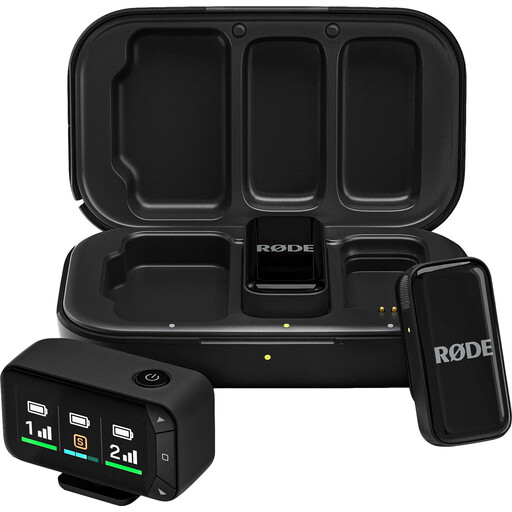
RØDE Wireless Micro, USB-C kit with camera and smartphone receiver
A wireless kit with two microphones to consider if you need room to move or want to record two speakers.
The product name lists a camera receiver, smartphone receiver and USB-C.
View at Joybuy
 No image available
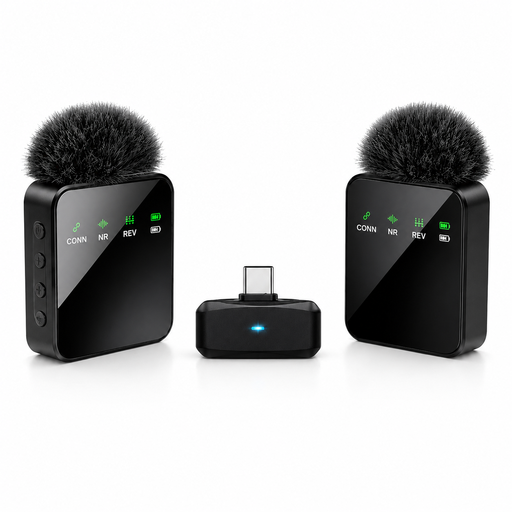
Verbex ST5 wireless dual-mic lavalier microphone, Type-C
A wireless option with two microphones to consider if you want to record two voices and use a Type-C connection.
Check that the Type-C interface is compatible with your recording device.
View at Joybuy
 No image available
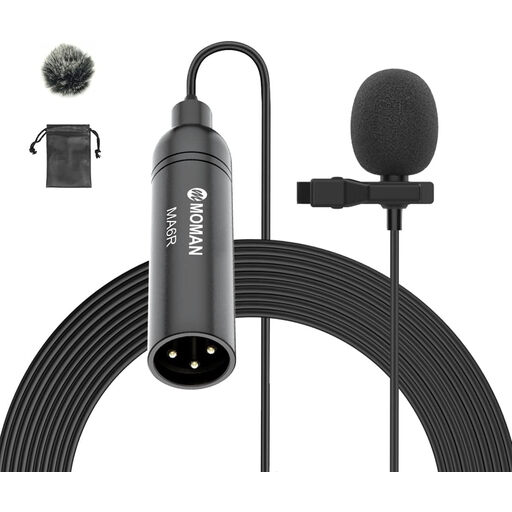
Moman MA6 omnidirectional lavalier microphone, 3.5 mm, 6 m cable
A wired option to consider for a fixed recording spot if your recording device has a compatible 3.5 mm input.
The product name lists an omnidirectional capsule, a 6 m cable and smartphone compatibility. Check that the plug is suitable for your device.
View at Joybuy
Frequently asked questions
Where should you attach a lavalier for a voice test?
As a general guideline, RØDE recommends placing it on your chest, around 20–30 cm from your mouth. Test the position with your own clothing and in your own room, then listen back to the recording. This is the manufacturer’s advice, not a set distance for every model.
Will every 3.5 mm lapel microphone work with a phone or camera?
No. The connection must match the device’s input. RØDE specifies a 3.5 mm TRS connection for the Lavalier II, while Shure specifies a 3.5 mm TRRS plug for the MVL. Also check whether you need a compatible adapter.
Can you use a wireless UHF microphone in the Netherlands without a licence?
It depends on the frequency band and your location. The Dutch Authority for Digital Infrastructure publishes information about licence-exempt bands and notes that available UHF frequencies vary by region. Check your system’s band and availability in your location.
What are your rights if a microphone bought online isn’t suitable or breaks soon after purchase?
According to ACM ConsuWijzer, online purchases generally come with a statutory cooling-off period of up to 14 days after delivery, although exceptions apply. The statutory guarantee is separate from a manufacturer’s warranty. If there’s a problem, contact the seller about what you could reasonably expect from the product.
Can you publish a recognisable neighbour online if they were recorded by accident?
Not automatically. Whether you can publish it depends, among other things, on whether the person is recognisable and the circumstances. The Dutch Data Protection Authority explains that an applicable legal basis may be needed to publish personal data publicly. The exemption for personal or household use has limits.


