
Meditation narrator recording while seated
Usually records in one place and wants to capture their voice clearly with as few connection steps as possible.


If you mainly record in one place, a wired lapel microphone is a good fit as long as its connector works with your recording device. If you move around the room, a wireless set is worth considering. To avoid relying on a wireless connection, look for a lavalier microphone with a standalone recorder. Whichever option you choose, position the microphone close to your mouth, avoid rubbing against clothing and make a test recording first. RØDE gives around 20–30 cm from the mouth as a general guideline.
Usually records in one place and wants to capture their voice clearly with as few connection steps as possible.
Moves around while recording, so needs freedom of movement without a rubbing cable or a connection that drops out.
Wants to avoid discovering only after a long session that the connection was interrupted or the recording was missed.
Start with the recording setup that suits your meditation: staying still, moving around or recording locally with a standalone recorder.
Choose this when: you’ll be sitting still for most of the session and want a direct connection to your phone or computer.
Trade-off: the cable limits your movement; USB-C and 3.5 mm TRRS are different connectors.
Choose this when: you want to move around while guiding, without a cable between the transmitter and recording device.
Trade-off: charge the transmitter and receiver, and test the connection. Also check the frequency requirements for your chosen model.
Choose this when: you want to record locally without relying on a phone or camera during the session.
Trade-off: check the power supply, storage and how you’ll transfer the file afterwards before the session.
| What matters when buying | What to look for | Who is this important for? |
|---|---|---|
| Clear speech | As a general guideline, RØDE recommends positioning the microphone on your chest, around 20–30 cm from your mouth. Keep the capsule clear of clothing and make a test recording in the intended location. | If I speak quietly, I want to hear my voice clearly without clothing rustle overpowering it. Around 33% of consumers prioritise speech clarity and the sound of the room. |
| Connector | Check your device’s connector, any adapter you may need and your recording app. The Sennheiser XS Lav USB-C and the Shure MVL with 3.5 mm TRRS use different connectors. | If I use my phone or computer, I want to know in advance whether the microphone will work throughout the signal chain. Around 27% of consumers give compatibility top priority. |
| Freedom of movement | For a wireless set, check the receiver’s connector and the stated operating time under the specified conditions. The Dutch Authority for Digital Infrastructure notes that available UHF frequencies can vary by location. | If I walk around the room while guiding, I don’t want to be restricted by a connecting cable. Around 20% of consumers prioritise freedom of movement. |
| Recording reliability | Check whether the exact model records internally or requires a separate recorder, and test starting, saving and playing back a recording. RØDE lists internal recording for Wireless GO (Gen 3), but not for Wireless Micro; the Zoom F2 is a standalone recorder. | For a long session, I want to be able to check where the recording was saved afterwards. Around 20% of consumers give a local, checkable recording setup top priority. |
A microphone close to the speaker can capture their voice, but clothing noise will still be audible. A specification doesn’t prove that it will remove echo or other sounds in the rehearsal room.
Make a test recording in the actual location and listen to both quiet passages and any clothing movement.
According to RØDE, the Wireless GO (Gen 3) records internally, while the Wireless Micro does not have internal transmitter recording.
Check the full model name, switch on the recording feature you intend to use and play back a test file before the session.
The Shure MVL uses 3.5 mm TRRS, while the Sennheiser XS Lav USB-C uses USB-C. A plug that physically fits doesn’t prove that your device, any adapter and your recording app will work together.
Check the entire signal chain and test the microphone with the app you plan to use for recording.
The XS Lav USB-C is a wired option for a recording device with a suitable USB-C connection.
The MVL is a wired lavalier for a compatible mobile device.
Compare the recording features of the Wireless GO (Gen 3) and Wireless Micro model by model.
The F2 pairs a lavalier with a standalone recorder for local recording.
The Mic Mini is a wireless option, provided the set and receiver you choose connect to your recording device.
This selection includes wired and wireless lapel microphones for different recording setups. Check that each model’s connector and version are suitable for your device.
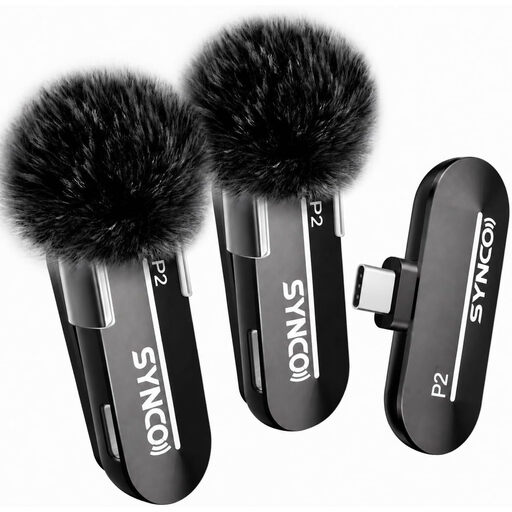 Image unavailable
A wireless lavalier setup with a USB-C receiver for a recording device with a compatible connection.
The product description states up to 6 hours of use after a full charge.
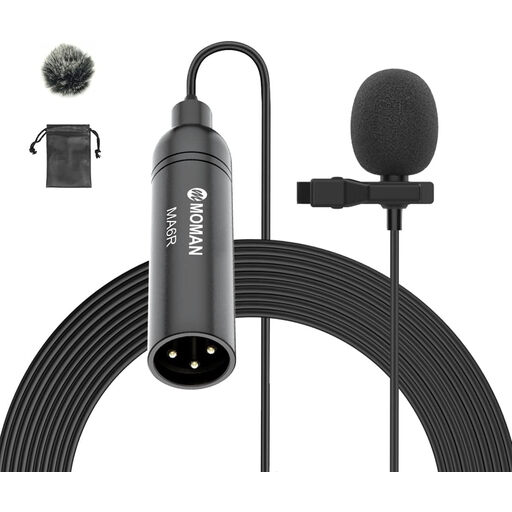 Image unavailable
A good fit if you’re looking for a clip-on microphone with a 3.5 mm connector and the stated cable length suits your setup.
The product name specifies an omnidirectional microphone and a 6 m cable. Check that the connector works with your device and recording app.
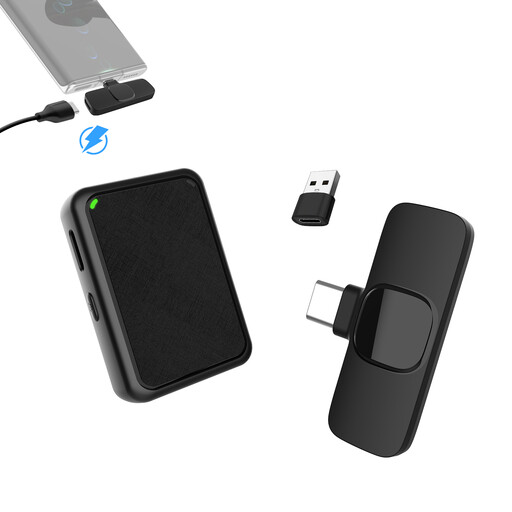 Image unavailable
A wireless set with one transmitter and one receiver for the iPhone models listed in the product name.
The product name specifies a USB-C receiver. Check that the set works with your device and recording app.
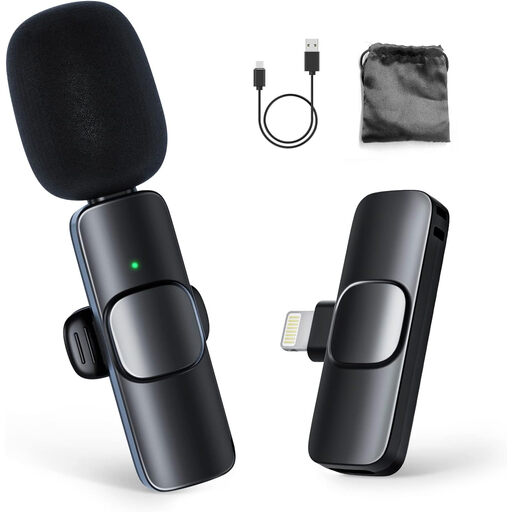 Image unavailable
A wireless lavalier setup with one transmitter and one receiver for anyone looking for a microphone for iPhone.
The product description states up to 8 hours of use; check that it connects and works with your recording device.
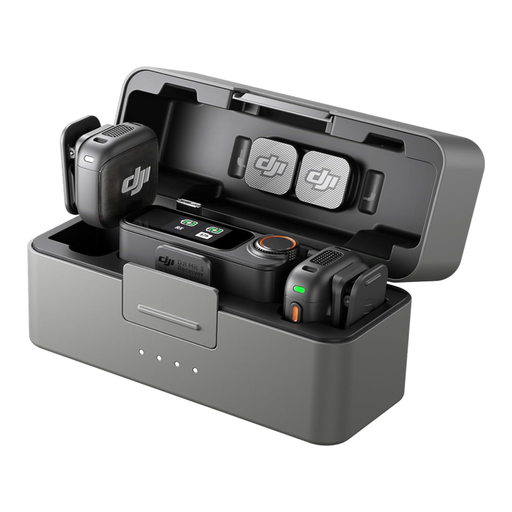 Image unavailable
A wireless set with two transmitters and one receiver; the product description states that the transmitters have built-in microphones.
The product name specifies a charging case. Check that the receiver connects to your recording device before buying.
As a general guideline, RØDE suggests positioning it on your chest, around 20–30 cm from your mouth. Keep the capsule clear of clothing that might rub against it, and listen back to a short test recording. The best position can vary with each garment.
No, it depends on your device’s connector and support. The Shure MVL uses 3.5 mm TRRS and, according to Shure, works with compatible mobile connections or a suitable CTIA adapter. Also check that your recording app uses the external microphone input.
No, recording features vary by model. RØDE lists internal transmitter recording for the Wireless GO (Gen 3), but not for the Wireless Micro. Check the full model name and test where the file is saved.
Usually, yes, but only within the conditions for the frequency used. The Dutch Authority for Digital Infrastructure lists licence-exempt frequency bands and notes that available UHF frequencies can vary by location; some bands require a licence. So check the frequency and transmission power of the specific set and, where relevant, the location.
When a consumer buys online, there is generally a statutory cooling-off period of up to 14 days after delivery, with some exceptions. ACM ConsuWijzer also states that, under the statutory guarantee, the seller must resolve issues if a product used normally doesn’t do what you could reasonably expect. The seller is your point of contact.