Who is this guide for?

Recording a single voice

You want to record a greeting that’s easy to understand in a potentially reverberant hall, and the speaker can stay close to the microphone. A quiet spot and careful microphone placement are important; Shure recommends placing the microphone close to the speaker.

Recording with a phone or laptop

You want a reliable connection without the wrong plug, and need to choose between USB-C, TRRS or a compatible wireless receiver system. Check that your device and recording app use the external microphone.

Recording speakers who move or several voices

You need freedom of movement or more than one microphone. For a wireless set, check which transmitters, receiver and cables are included, and what frequency restrictions apply.

What should you look for?

What to consider What to look for Who is this important for?
Clear speech in a reverberant hall Choose a quiet recording spot, follow the placement instructions and listen back to a test recording. If I want the welcome message to be easy to understand, I focus first on the location and the distance from the speaker; around 36% of consumers prioritise speech clarity.
Connection to the recording device Check whether you need a USB-C, 3.5 mm TRRS or other compatible input, and whether an adapter is required. If I’m recording with my own phone or laptop, I want to make sure the external microphone is recognised; around 29% of consumers put a compatible connection first.
Freedom of movement or several voices Check the number of transmitters and the receiver. The RDI notes that some frequency bands require a licence. If the speaker needs to move or you’re recording several voices, a wireless set may be more practical; around 21% of consumers prioritise this need.
A simple, complete set-up Check that the chosen version includes the clip, cable, receiver and any adapter you need. If I want as few separate parts and set-up steps as possible for a short recording, I look at the complete signal chain; around 14% of consumers prioritise a simple set-up.

Common buying mistakes

  • Assuming TRS and TRRS are interchangeable

    A microphone with a TRS output won’t necessarily work with a smartphone input that requires TRRS. For the Lavalier GO, RØDE specifies a TRS-to-TRRS adapter for this situation.

    Before buying, check the microphone connection, any adapter and the input on your recording device.

    You may need a compatible adapter or have to choose a different microphone.

  • Expecting noise reduction to solve all room reverberation

    A microphone can’t improve the acoustics of a room, so you may still hear reverberation even when using a noise-reducing microphone.

    Record close to the speaker and listen back to the greeting before using the recording.

    A test recording may show that you need to record again in a quieter spot.

  • Mistaking a standalone microphone or transmitter for a complete recording set-up

    A wired microphone and a wireless set may need different connections and components.

    Compare what’s included in the exact version with your recording device, and check which cables, receiver and adapters you’ll need.

    A missing receiver, cable or adapter may mean extra preparation before you can record.

Brands to consider

Sennheiser

XS Lav USB-C is a wired option for a compatible device with a USB-C microphone input; XS Lav Mobile is a separate TRRS version.

  • According to the product specifications, XS Lav USB-C has a 2 m cable and comes with a clip and windshield.
  • USB-C and TRRS are different connections. Check which version and input you need.

Shure

The MVL is a wired lapel microphone with a 3.5 mm TRRS connection for a compatible recording device.

  • Shure includes a clip and windshield, and recommends positioning the MVL 15–25 cm from your mouth.
  • The TRRS plug won’t necessarily fit a device that only has USB-C.

RØDE

smartLav+ is a wired TRRS option; Wireless ME is a wireless system with a transmitter and receiver.

  • According to RØDE, the smartLav+ has a 1.2 m cable. The manufacturer says Wireless ME comes with connection cables.
  • With a wireless system, you’ll also need to charge and connect the set.

DJI

Mic Mini is a wireless clip-on system; a version with two transmitters may be useful if you want to record several speakers.

  • DJI describes a receiver that can work with two transmitters.
  • The features described are product specifications, not a guarantee of good sound in a reverberant hall. Check the exact version and frequency restrictions.

Joybuy products

These Joybuy picks are wireless microphone systems that may suit recordings where freedom of movement or multiple microphones are important. Check the connection, what’s included and any frequency restrictions for each version; the RDI notes that some frequency bands require a licence.

DJI Mic 3 with 2 TX, 1 RX and Charging Case

DJI Mic 3 (2 TX + 1 RX + Charging Case)

Worth considering if you need two transmitters for a recording with several speakers.

The product name lists two transmitters, one receiver and a Charging Case.

View at Joybuy

Verbex ST5 dual-microphone wireless lapel microphone with Type-C interface

Verbex ST5 Dual-Mic Type-C

Worth considering if you’re looking at a wireless lapel microphone with two microphones.

The product name lists a Type-C interface; check that it’s compatible with your recording device.

View at Joybuy

Verbex K9-Black wireless mini lapel microphone with Type-C interface

Verbex K9-Black Wireless Mini Microphone

A wireless mini microphone worth considering if you want to record without a cable running to the speaker.

The product name lists a Type-C interface; check the connection on your recording device.

View at Joybuy
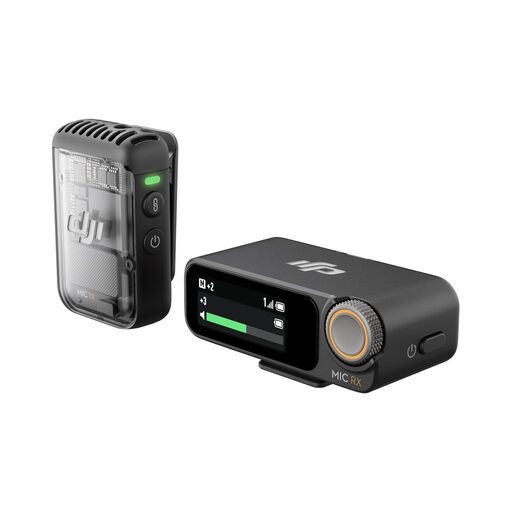
DJI Mic 2 with 1 TX and 1 RX

DJI Mic 2 (1 TX + 1 RX)

Worth considering for a recording set-up with one transmitter and one receiver.

Check which connections and any adapters are compatible with your recording device and this version.

View at Joybuy

DJI Mic Mini 2S with 2 TX, 1 RX and Charging Case

DJI Mic Mini 2S (2 TX + 1 RX + Charging Case)

Worth considering if you need two transmitters for a recording with several speakers.

The product name lists two transmitters, one receiver and a Charging Case. Check that the connections are compatible with your recording device.

View at Joybuy

Frequently asked questions

Does noise reduction help with reverberation in the hall?

Don’t rely on noise reduction to fix the acoustics of a reverberant hall. Shure explains that a microphone can’t improve room acoustics. DJI describes noise reduction for the Mic Mini, but make a test recording in your own space too, and listen back to the result.

Can I plug a 3.5 mm lapel microphone straight into my phone?

Only if the plug and microphone input are compatible. For example, RØDE says that the Lavalier GO, which has a TRS output, needs a TRS-to-TRRS adapter when used with a smartphone input that requires TRRS. Also check that your phone has a compatible connection or requires a suitable phone adapter.

What should I check before recording the greeting?

Make a test recording and listen to it before using the greeting. Check that the external microphone is active, and ask the phone system’s administrator which file format and submission method are required; microphone specifications don’t determine these requirements.

Can I use a wireless lapel microphone without a licence?

It depends on the frequency used and the conditions that apply to it. The Netherlands Authority for Digital Infrastructure (RDI) notes that some frequency bands are licence-exempt, while others may require a licence. Check the frequency of your chosen version against the latest RDI information.

Can the community centre record identifiable voices of people present?

A sound recording that identifies someone may contain personal data. The Dutch Data Protection Authority describes consent as one possible GDPR lawful basis, but not the only one. So discuss the recording with the administrator and, where possible, avoid including bystanders in the greeting.
