If you usually record in the same place on your own, a wired lapel microphone is the obvious choice, provided the plug, input and any power requirements are compatible; BOYA, Shure and RØDE use different connection options. If you have two or more speakers, or want more freedom to move around, a wireless kit with the right receiver may be a better fit. Check what’s included and make a test recording, as clothing rustle and possible wireless interference are still worth considering.
Who is this for?
Solo speaker recording in one place
You want to record a short spoken intro without an unnecessary wireless system. The connection, microphone placement and clothing rustle will help you decide. RØDE recommends starting with the microphone on your chest, around 20–30 cm from your mouth.
Recording with a phone or laptop
You want to record straight away, so first check that TRRS, TRS, USB-C or Lightning is actually compatible with your recording device. Shure and RØDE specify different connection requirements for their microphones and receivers.
Creating an intro with two voices
You want to position two speakers separately, so check what’s included in the kit and whether it supports separate recordings. RØDE and DJI describe kits with two transmitters; just be sure to check the exact version and receiver.
What should you look for when buying?
Wired recording
A good fit if: you usually speak on your own in one place and your recording device has a suitable microphone input.
Bear in mind: you’ll be connected by a cable, and TRS and TRRS are not interchangeable.
Wireless recording
A good fit if: you want more freedom to move around or are recording two speakers, and the receiver is compatible with your phone or camera.
Bear in mind: you’ll need to choose the right kit, keep the equipment charged and allow for possible interference.
| What to consider |
What should you check? |
Who should pay particular attention? |
| Clarity and clothing rustle |
RØDE recommends starting with the microphone on your chest, around 20–30 cm from your mouth. Record a test intro and listen back to see whether your clothing touches the capsule. |
When I record a short intro, I want my voice to sound clear without clothing rustle; around 36% of consumers put clarity and placement first. |
| Connection |
Check the plug type, input and any power requirements. The Shure MVL uses TRRS; the RØDE Lavalier GO needs a suitable TRS microphone input with plug-in power. |
When I want to connect my phone, laptop or recorder, the microphone must be compatible with the input; around 29% of consumers prioritise compatibility with their recording device. |
| Two speakers or freedom to move |
Check the number of transmitters, the receiver and whether your device can record voices separately. The RØDE Wireless Micro has two transmitters; DJI says the Mic Mini receiver can pair with two transmitters. |
If I want to record two voices or move around during an intro, a compatible kit is more useful than a single wired microphone; around 21% of consumers put this kind of flexibility first. |
| What’s included and help if something goes wrong |
Check the exact kit contents and whether a battery or adapter is included. If a product develops a fault during normal use, you can ask the seller about your statutory rights. |
When I want to know in advance which parts I’ll need and who to contact if something develops a fault, I check both the kit contents and the seller; around 14% of consumers put what’s included and after-sales support first. |
What to watch out for when buying
-
Assuming all 3.5mm plugs are interchangeable
A TRRS microphone for a phone and a TRS microphone for a suitable microphone input do not automatically have the same connection requirements.
Before you order, compare the plug type and any power requirements with the input on your recording device.
-
Confusing noise cancellation with preventing clothing rustle
Clothing rubbing against the microphone can be audible in your recording; a feature that reduces background noise won’t make up for poor placement.
Attach the capsule so that fabric doesn’t rub against it, then listen to a test intro before recording the full piece.
-
Comparing a standalone microphone with a complete two-transmitter kit
A standalone microphone for a compatible bodypack transmitter is not the same as a complete kit with transmitters and a receiver.
Check the exact version and box contents. If a receiver, transmitter or adapter isn’t included, you may need to buy an extra part.
Brands to compare
BOYA
The BY-M1 is a wired option for a compatible camera, phone or recorder setup.
- BOYA says the BY-M1 has switchable camera and smartphone modes and a 6 m cable.
- The BY-M1 model reviewed here uses an LR44 battery. Don’t confuse it with the battery-free BY-M1S version.
Shure
The MVL is a wired lapel microphone designed for compatible smartphones with a 3.5mm TRRS connection.
- Shure lists a clip and windscreen in the box, and support for compatible phones or a CTIA-compliant adapter.
- This doesn’t mean the MVL will work directly with every TRS recorder or a phone without the right input.
RØDE
RØDE offers the Lavalier GO for a suitable TRS input, as well as the Wireless Micro for a phone setup with two transmitters.
- The Lavalier GO is designed for a suitable TRS input with plug-in power. The Wireless Micro has built-in microphones in its transmitters.
- The Wireless Micro is available in separate USB-C and Lightning versions; check the version you choose and your phone’s connection.
DJI
The Mic Mini could suit anyone looking for a wireless setup with two transmitters.
- DJI says the receiver can pair with two transmitters and supports combined or separate output.
- The exact kit contents and connection determine whether the set is compatible with your recording device.
Sennheiser
The ME 2 is a standalone lapel microphone for use with certain evolution Wireless bodypack transmitters.
- Sennheiser specifies that the ME 2 is for use with certain of its own bodypack transmitters.
- The listed plug size alone doesn’t prove that the microphone will work directly with a phone or any recorder.
Joybuy products
This Joybuy selection focuses on wireless microphones for podcast intros, from single-transmitter options to kits for two speakers. Check the connection and kit contents for each model.
 No image available
DJI Mic Mini 2S (2 TX + 1 RX + Charging Case)
A wireless kit for recording two speakers. The product name lists 2 TX, 1 RX and a charging case.
View at Joybuy
 No image available
SYNCO P2XT USB-C Wireless Microphone
An option for wireless recording with a compatible USB-C device. The product name lists USB-C.
View at Joybuy
 No image available
Moman M1CXT Wireless Lavalier Microphone, USB-C, 2TX+1RX
A wireless option for recording two speakers with a compatible USB-C device. The product name lists 2TX+1RX and USB-C.
View at Joybuy
 No image available
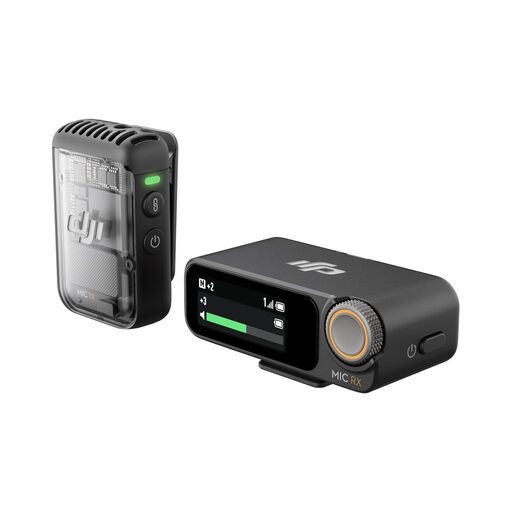
DJI Mic 2 (1 TX + 1 RX)
A wireless option for a solo intro. The product name lists one transmitter and one receiver; this isn’t a two-transmitter kit for two speakers recording at the same time.
View at Joybuy
 No image available
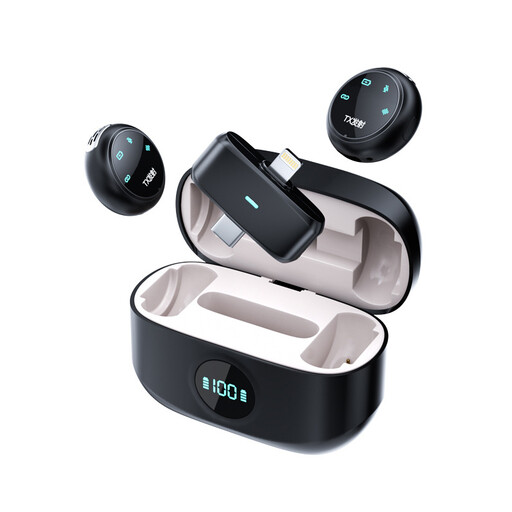
Verbex K31Pro-Black Dual Microphone Magnetic Wireless Button Clip-on Lavalier Microphone
A wireless dual-microphone option for recording two voices. The product name lists iOS and Type-C interfaces; check which connection is compatible with your device.
View at Joybuy
Frequently asked questions
Where should you attach a lapel microphone for a spoken intro?
As a starting point, place it on your chest, around 20–30 cm from your mouth, as RØDE recommends, and make sure your clothing doesn’t rub against the capsule. Record a short test and listen back; the best position will also depend on your clothes and voice.
Will a 3.5mm lapel microphone always work with my laptop or phone?
No. The plug type and input need to be compatible. The Shure MVL uses TRRS and needs a suitable input or CTIA-compliant adapter; the RØDE Lavalier GO uses TRS and needs a suitable microphone input with plug-in power. Check your device and any adapter before buying.
Do I need a licence for a wireless microphone in the Netherlands?
It depends on the frequency used and the conditions that apply. The Dutch Authority for Digital Infrastructure publishes the frequencies on which wireless microphones can be used without a licence, and notes that some other frequency bands require one. Check the Netherlands-specific frequency version of the kit; don’t assume it can be used without a licence just because it’s described as ‘wireless’.
What should I check when using wireless equipment at home?
Check that the equipment has the correct CE marking and follow the instructions. The Dutch Authority for Digital Infrastructure states that electrical and electronic equipment must have the correct CE marking; this marking doesn’t predict whether your recording location will be free from interference.
Who should I contact if my microphone develops a fault too soon during normal use?
Contact the seller about your statutory rights. According to ACM ConsuWijzer, the seller is responsible if a product doesn’t meet the standard you could reasonably expect. Depending on the situation, an appropriate solution could be a free repair, replacement or refund. Statutory rights aren’t simply a fixed two-year period.


