
Solo storyteller at a table
You’ll be recording your travel story mainly while seated and want a clear voice without an unnecessarily complicated setup.


If you’ll mainly be recording one person while seated, choose a wired lapel microphone with a connection that’s confirmed to work with your recording device. If you’ll be moving around the hall or recording two people, compare complete wireless systems with the right number of transmitters and a suitable receiver. Position the microphone close to the speaker, then make a test recording at the venue to check the room noise and any clothing rustle.
You’ll be recording your travel story mainly while seated and want a clear voice without an unnecessarily complicated setup.
You’ll be moving around the hall and don’t want to be tethered to your recording device by a cable.
You’ll be recording memories with someone else and want to check before buying whether the system can capture both speakers.
| What to consider | What should you check? | Who is this important for? |
|---|---|---|
| Clear speech | Make a test recording where you plan to sit. RØDE recommends positioning the microphone on your chest, around 20–30 cm from your mouth. Also listen for clothing rubbing against the capsule or cable. | I want to record my story clearly and minimise clothing rustle. Around 33% of consumers prioritise clear solo speech. |
| Connection to your device | Check the input on your phone, camera or computer, and whether you’ll need an adapter. USB-C and 3.5 mm TRRS are different connections. | I want a version that works with my own recording device, without an incompatible input or a missing adapter. Around 27% of consumers consider the device connection decisive. |
| Freedom to move and number of speakers | Decide whether you’ll be recording one or two people, then check how many transmitters and receivers the exact set includes. A cable limits how far you can move from the recording device. | If I’m moving around or recording with someone else, I don’t want to be tethered by a cable, and there need to be enough transmitters. Around 20% of consumers prioritise freedom of movement or a setup for two speakers. |
| Finishing the recording | Compare your expected session length with the stated operating time of the components, charge the system and test the complete recording setup in advance. | I want to finish my story without unexpected power or connection problems. Around 20% of consumers prioritise reliability and preparation. |
USB-C, 3.5 mm TRRS and a wireless receiver are different connection options. Having the right plug doesn’t necessarily mean the microphone will work with every device or recording app.
Before buying, check the full model name, your recording device’s input and its recording function. Also check whether you need a suitable adapter.
According to RØDE, the Wireless ME set includes one transmitter and one receiver. A standalone Wireless ME TX needs a compatible receiver and isn’t a complete set on its own.
Check how many transmitters and receivers are included in the exact version, and whether they’re suitable for the number of speakers.
Microphone placement and contact with clothing can affect your recording. The stated wireless range won’t necessarily apply in a hall with obstacles or interference.
Make a test recording in the intended location and listen for speech, background noise, clothing rustle and any connection issues.
Sennheiser offers wired options for direct recording with a compatible device.
The BY-M1 is a wired option if you want to switch between a compatible phone and camera setup.
The Wireless ME is a compact wireless system for anyone who wants freedom to move while recording.
DJI’s Mic Mini wireless versions may suit recordings where moving around or using two transmitters could be useful.
The MVL is a wired lapel microphone for a compatible mobile device with a 3.5 mm TRRS connection.
This selection focuses on wireless lapel and clip-on microphones for recording without a cable between the speaker and recording device. Models with two transmitters may suit conversations; always check the receiver and device connection for the exact set.
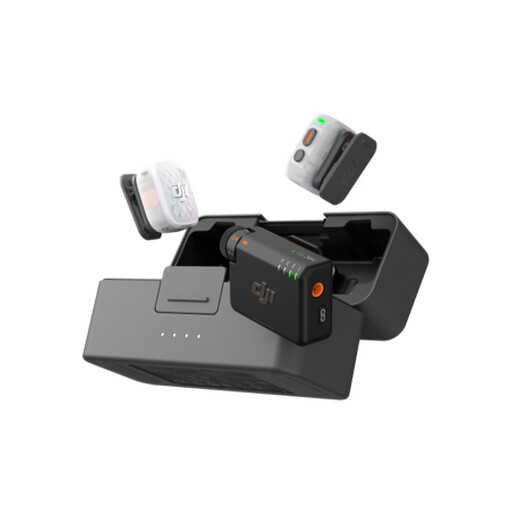 No image available
This wireless set is suited to recordings involving movement or two speakers.
The product title lists two transmitters, one receiver and a charging case. The description mentions connections to cameras, smartphones and PCs; check the connection for your exact device.
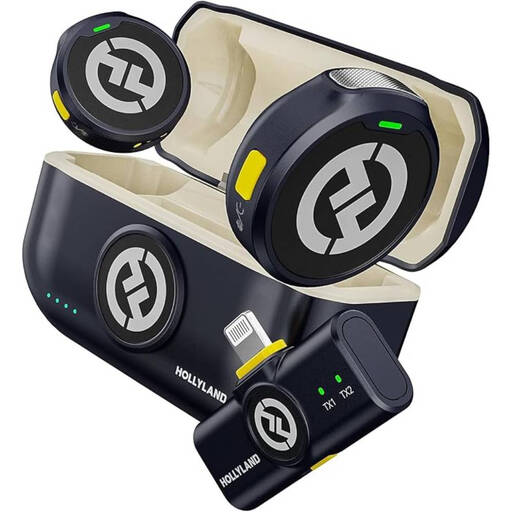 No image available
A wireless option if you don’t want to be tethered to your recording device by a cable.
The description lists a 9 g transmitter and a camera receiver with a 3.5 mm connection. Check that it’s compatible with your recording device.
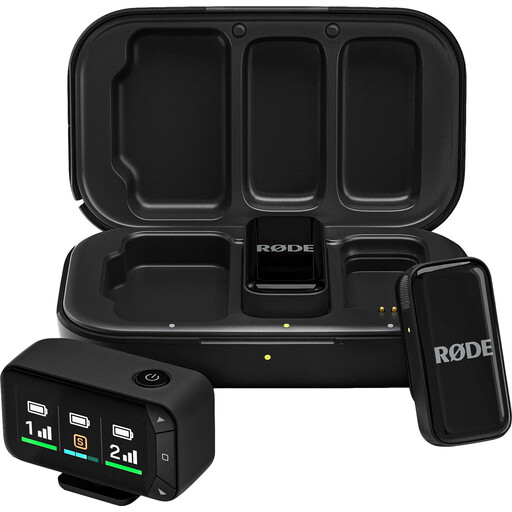 No image available
This version may suit a recording with two speakers.
The product title lists two microphones, a camera receiver, a smartphone receiver and a charging case. This version uses USB-C; check your device’s connection.
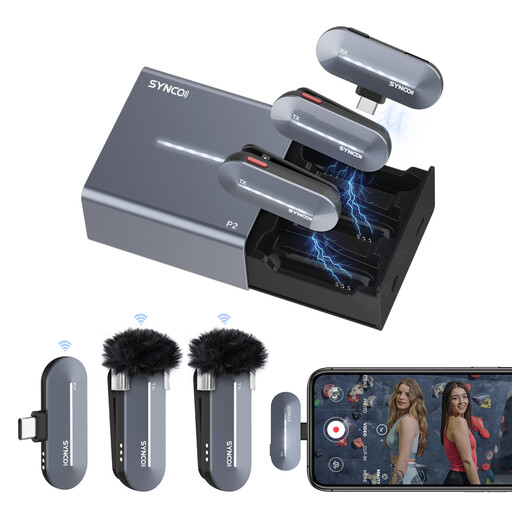 No image available
A wireless set with two microphones for recording with two speakers.
The product title lists a USB-C receiver, two microphones, 2.4 GHz and a charging case. Check that USB-C is compatible with your recording device.
 No image available
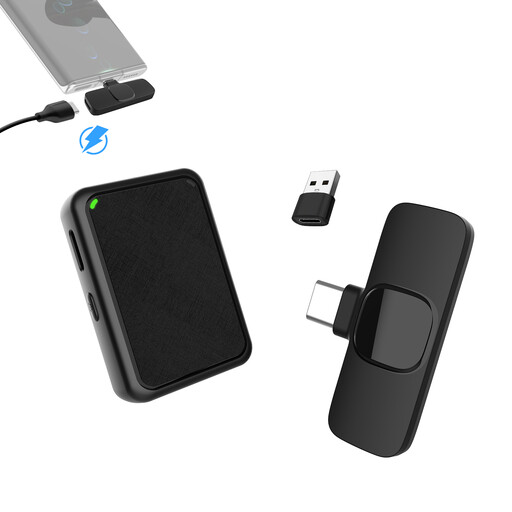
This clip-on microphone is designed for wireless solo recording with the stated iPhone models.
The product title lists one transmitter, one receiver and USB-C, for iPhone 18/17/16. Check that your device and recording app work with this version.
As a starting point, RØDE recommends placing it on your chest, around 20–30 cm from your mouth. Record a short sample of speech and movement where you plan to record, then listen for clothing rubbing against the capsule or cable. Adjust the position if needed.
No. The Shure MVL uses 3.5 mm TRRS for compatible mobile devices or a suitable CTIA adapter; the Sennheiser XS Lav USB-C is a separate USB-C version. Check your device’s input and recording function.
Compare the stated operating time of both the transmitter and receiver with the length of your session. DJI’s Mic Mini figures were measured with a short-range connection, no interference and noise cancellation switched off; test your chosen settings before the event.
A recording in which someone can be recognised may contain personal data. The Dutch Data Protection Authority says that, in most cases, consent is needed to publish it publicly under the GDPR; there is a limited exception for use that is purely personal or domestic. Before publishing, consider who can be recognised and whether that exception genuinely applies.
This depends on the frequency band used and the applicable conditions. The Dutch Authority for Digital Infrastructure says a licence is generally not needed, but you must use the correct frequency range; some bands do require a licence. Check the frequency of the exact version.