If the storyteller stays in roughly one place and your recording device has a compatible microphone input, a wired lapel microphone may be all you need. If they’ll be moving around the hall, a wireless set with a compatible receiver is more practical. Before buying, check the connection, how many transmitters you need, and the battery life or local recording function. None of these features alone guarantees clear recordings in a noisy hall.
Which microphone is right for you?
Recording a single storyteller
You want to capture the speaker’s voice while they stay in roughly one place. A compatible wired microphone could be a good option. Shure and IK Multimedia product information describes wired lapel microphones for compatible mobile devices.
Recording a storyteller on the move
You need freedom to move and must be able to connect the receiver to your own phone, camera or recorder. RØDE product specifications describe receivers for different devices and configurations, so check the exact set.
Organising a longer session
You’ll want to know in advance how many storytellers will speak at once and how to handle a dropped connection or a flat battery. Compare the session length with the stated usage time and its test conditions, and check how many transmitters are included.
What should you look for when choosing?
Wired connection to a phone or recorder
Choose this when: the storyteller stays in one place and your recording device has a compatible microphone input.
Bear in mind: the cable limits movement. Also check the plug wiring and whether you’ll need an adapter.
Wireless connection to a phone or camera
Choose this when: the storyteller will move around the hall or the recorder is some distance away.
Bear in mind: both transmitter and receiver need power, and a stated range in open space doesn’t guarantee reception inside the hall.
Local recording or venue sound system
Choose this when: you need a backup recording or the hall already has a microphone system.
Bear in mind: a recording on the transmitter won’t automatically capture audience questions. With UHF, the frequency must also be usable at the venue.
| What to consider |
What to look for when buying |
Who should consider this? |
| Clear speech |
Make a test recording with the microphone in the intended position, then listen back using your chosen recording device. |
If clear speech is my main priority, I test the microphone where it will be worn during the story. Around 33% of consumers put clear speech first. |
| Connection |
Check the input on your exact device, whether the wiring is TRS or TRRS, and whether the included receiver or adapter is compatible. |
If I want to use my existing phone, camera or recorder, I check in advance that the connection will actually work. Around 20% of consumers put device compatibility first. |
| Freedom to move |
Plan the route and test the wireless connection at the venue, including where the receiver will be placed. |
If the storyteller will move around the hall, I don’t want a cable crossing their route. Around 27% of consumers make freedom to move their top consideration. |
| Recording continuity |
Compare the session length with the stated usage time under the specified test conditions, and count the number of people speaking at once. |
If the session is long or several people will speak at once, I want to know in advance how many transmitters and recording options I’ll need. Around 20% of consumers put recording continuity first. |
Common buying mistakes
-
Assuming every 3.5 mm plug will fit
According to IK Multimedia, the iRig Mic Lav uses CTIA/AHJ TRRS wiring, while the RØDE Lavalier GO has a TRS plug. The plug diameter alone doesn’t tell you whether the microphone will work with your device’s input.
Compare the wiring with the microphone input on your exact recording device, and check that any adapter you need is suitable.
-
Assuming a wireless phone set is a complete camera kit
The standard RØDE Wireless Micro set has a USB-C or Lightning receiver. For a camera with a 3.5 mm input, RØDE lists a separate camera receiver.
Check which receiver comes with the version you’ve chosen and whether it connects to your camera.
-
Assuming the stated wireless range applies inside a hall
DJI measures the Mic 2’s maximum range outdoors, in an unobstructed environment with no interference. The Dutch Authority for Digital Infrastructure warns that interference can occur on shared frequency bands.
Before the session, test the connection along the actual route, with the receiver in its planned position.
-
Expecting one microphone to capture every voice
A transmitter records the voice of the person wearing it. One transmitter won’t automatically cover a second storyteller or audience questions.
Count the people who’ll be speaking at once, and decide separately how you’ll record questions from the audience.
A second storyteller may need an extra transmitter or a different recording set-up.
Brands to consider
IK Multimedia
The iRig Mic Lav is a wired option for a stationary storyteller using a compatible phone or tablet.
- According to IK Multimedia, the iRig Mic Lav has a CTIA/AHJ-compatible 3.5 mm TRRS connection, a 150 cm cable and no need for a battery.
- The connection and cable length limit how you can use it. Check that an adapter is compatible with your phone.
Shure
The MVL is a wired lapel microphone for recording with a compatible phone or tablet.
- Shure specifies an omnidirectional microphone, a 3.5 mm TRRS plug, a clip and a windscreen for the MVL.
- If your device doesn’t have a suitable input, Shure recommends a compatible CTIA adapter. Check that the specific adapter will work with your device.
RØDE
RØDE offers several options: a standalone TRS lapel microphone, a wireless phone set and a wireless system with local recording.
- According to RØDE, Wireless GO (Gen 3) can record locally and connect to external lavalier microphones.
- The Lavalier GO has a 3.5 mm TRS plug. The standard Wireless Micro phone set needs a different receiver to connect to a camera with a 3.5 mm input.
DJI
The Mic 2 is a wireless option if local recording on the transmitter you wear is important.
- DJI specifies local recording and a usage time of 6 hours under the stated test conditions, without internal backup recordings.
- The maximum transmission distance is measured outdoors, without obstacles or interference. This doesn’t prove it will work over the same distance inside a hall.
Sennheiser
The XSW 2-ME2-E is a lavalier system with a stationary receiver, suited to a presentation set-up using the venue’s sound equipment.
- Sennheiser specifies a bodypack transmitter, clip-on microphone and stationary UHF receiver.
- Check that the frequency is suitable for your location in the Netherlands and for the exact version. This system isn’t a direct replacement for a phone microphone.
Joybuy products for this recording
Joybuy products for recording a storyteller with a wired lapel microphone or a wireless microphone set.
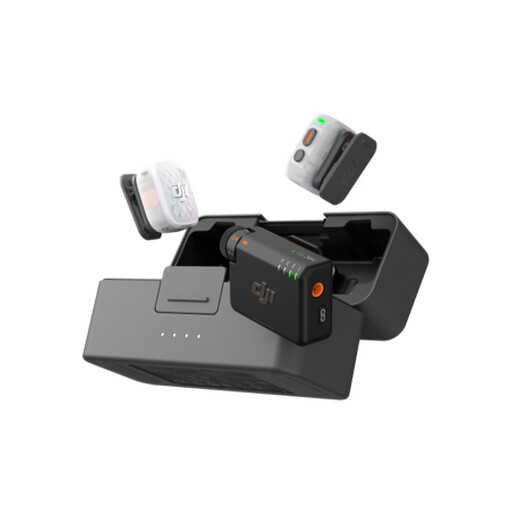 Image unavailable
DJI Mic Mini 2S (2 TX + 1 RX + charging case)
Worth considering if two speakers each need their own transmitter. Check that the receiver connects to your recording device.
View at Joybuy
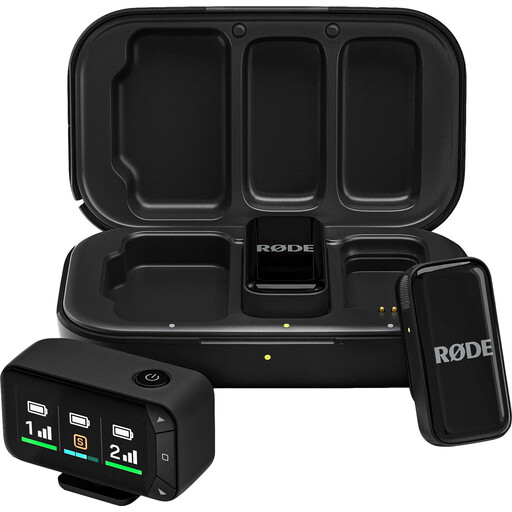 Image unavailable
RØDE Wireless Micro Camera Kit (2 microphones, camera and USB-C receivers, charging case)
Worth considering if you want to switch between a camera and smartphone. Check that the receivers are compatible with your devices.
View at Joybuy
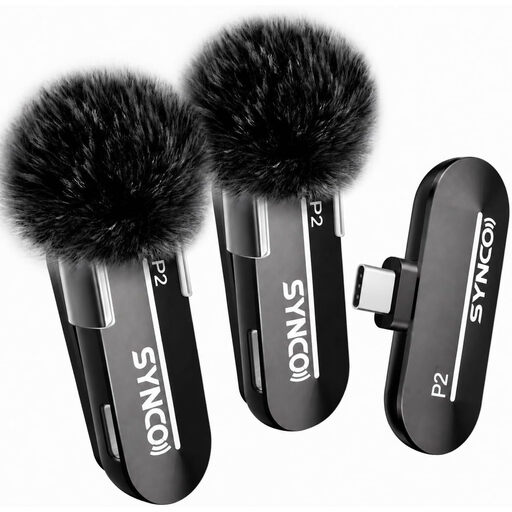 Image unavailable
SYNCO P2XT wireless USB-C microphone
A wireless option if your recording device supports the Type-C receiver.
View at Joybuy
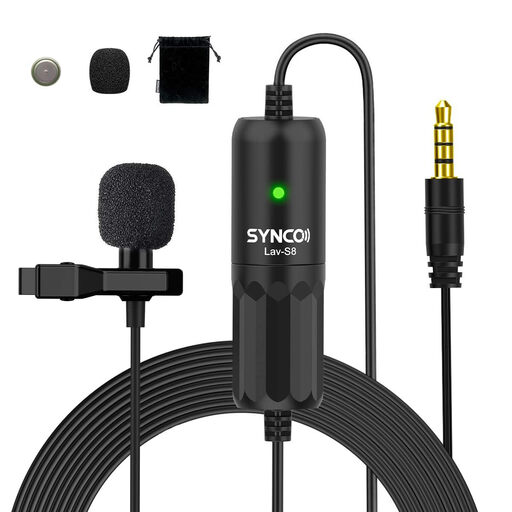 Image unavailable
SYNCO S8 lapel microphone for smartphone, PC and camera
A wired option for a storyteller who stays in roughly one place. Check that your device has a compatible 3.5 mm microphone input.
View at Joybuy
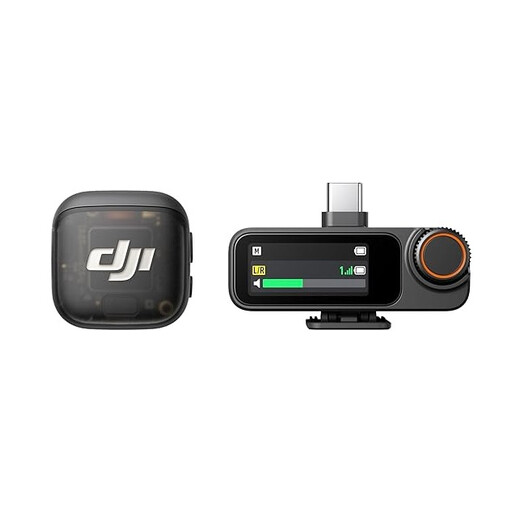 Image unavailable
DJI Mic 3 (1 TX + 1 RX)
A wireless option for one person wearing a microphone. This version includes one transmitter, so it won’t provide two transmitters for simultaneous speakers on its own.
View at Joybuy
Frequently asked questions
Can you connect a phone lapel microphone directly to the venue’s sound system or a camera?
Only if the connections are compatible. IK Multimedia’s iRig Mic Lav uses CTIA/AHJ-compatible 3.5 mm TRRS for suitable mobile devices; the RØDE Lavalier GO has a 3.5 mm TRS plug for a compatible microphone input. Ask what input the venue’s sound system has and test the complete connection.
How can you stop clothing rustle or a flat battery from disrupting your recording?
Secure the microphone clip, then make a test recording at the venue and listen back to it. If you’re using a wireless set, check the battery level before you start. DJI’s stated 6-hour usage time for the Mic 2 applies under specific test conditions and without internal backup recordings.
Do you need a licence to use a wireless microphone in the Netherlands?
That depends on the frequency used and the conditions that apply to it. The Dutch Authority for Digital Infrastructure publishes information about licence-exempt microphone bands and notes that available UHF frequencies vary by location. Check the frequency of the exact version and the venue. Licence-exempt doesn’t mean interference-free.
Can an organiser record and publish a storytelling session?
According to the Dutch Data Protection Authority, a sound recording that makes someone identifiable may count as personal data. If an organisation processes personal data like this, it needs a lawful basis under the GDPR. Consent is one possible basis and, when relied on, must be freely given, specific and informed. Whether a particular recording or publication is allowed depends on the circumstances.


