
Speaking over a rehearsal
Wants spoken diary notes to remain clear while music is being played. Placement and any background-noise rejection both matter; Shure provides model-specific information about the WL184 and microphone positioning.


Choose a wired lapel microphone if you’ll be staying close to your phone or recorder. A wireless set with onboard recording is a better fit if you’ll be moving around while speaking or want to keep a backup recording. If you also want to capture instruments and the room’s acoustics, think about microphone placement and make a test recording: a microphone that rejects more background noise won’t necessarily suit that purpose.
Wants spoken diary notes to remain clear while music is being played. Placement and any background-noise rejection both matter; Shure provides model-specific information about the WL184 and microphone positioning.
Wants to move hands-free and may value a local backup file in case the wireless transmission drops out. RØDE describes onboard recording on the transmitters of the Wireless PRO.
Wants to record instruments and room acoustics as well as their own voice. Shure recommends listening to different microphone positions to find the right balance with the sound of the room.
First decide whether clear speech, connection to your recording device, freedom of movement or capturing the atmosphere of the rehearsal takes priority. This will help you check the connection, recording function and placement that matter to you.
| What to consider | What to look for | Who is this important to? |
|---|---|---|
| Clear speech | Record during a real rehearsal and compare microphone positions. If you’re using a directional microphone, check its orientation too. | If I want to hear spoken notes clearly over the instruments, I pay attention to placement and the balance with the sound of the room. Around 33% of consumers give clear speech top priority. |
| Connection | Check the input on your phone, camera or recorder, the plug type, and which cables or adapters you’ll need. | If I want to use the microphone straight away with my existing device, I first check the exact connection. Around 27% of consumers put compatibility first. |
| Freedom of movement and recording file | Check whether the set includes a transmitter and receiver, whether the transmitter can record locally, and how to transfer files. | If I want to move around while speaking and keep a recording on the transmitter, that matters more than a simple wired setup. Around 20% of consumers cite freedom of movement and a backup recording as their top priority. |
| Atmosphere of the rehearsal | Listen to check that you can hear both the voice and the instruments and room sound you want; compare positions and any noise reduction. | If I want to preserve the atmosphere of the rehearsal room in my diary, I don’t choose on the basis of speech isolation alone. Around 20% of consumers put capturing that atmosphere first. |
Plugs with the same diameter can use different connections. RØDE distinguishes the smartLav+’s TRRS connection from the TRS inputs on the wireless transmitters mentioned.
Before buying, check the input type on your device and whether you’ll need an adapter.
If you also want to capture music and room acoustics, reducing background noise may work against what you want from the recording. Your choice of position affects the balance.
Make test recordings from different positions and, if the feature is available, compare noise reduction on and off.
For the Wireless PRO, RØDE says 32-bit-float recording applies to files saved on the transmitters; it doesn’t automatically apply to audio recorded by the camera.
Check where the file is saved and test in advance how to start and transfer the local recording.
Local recording also takes time to start and to transfer the file afterwards.
Offers both the wired smartLav+ and the wireless Wireless PRO, which comes with two Lavalier II microphones.
The wired V.Lav may suit you if you use a device with a compatible 3.5mm microphone input.
The Mic 2 is a wireless clip-on microphone option for anyone who wants to save a recording on the transmitter and switch between supported recording devices.
The WL183, WL184 and WL185 range offers different pickup characteristics for use with a compatible wireless bodypack.
The XSW 2-ME2 is a wireless lavalier set with a stationary receiver, designed for a more extensive audio setup.
These product picks focus on wireless clip-on microphones for hands-free recording, with an emphasis on sets that can save a local recording.
 No image available
Suited to hands-free recording if you also want the transmitters to record locally.
According to the product description, the set includes two transmitters and one receiver; internal 32-bit-float recording is also listed.
 No image available
A wireless set with one transmitter and one receiver for recording on your own.
The product description lists internal 32-bit-float recording, adaptive gain control and compatibility with iPhone, camera and Android via USB-C.
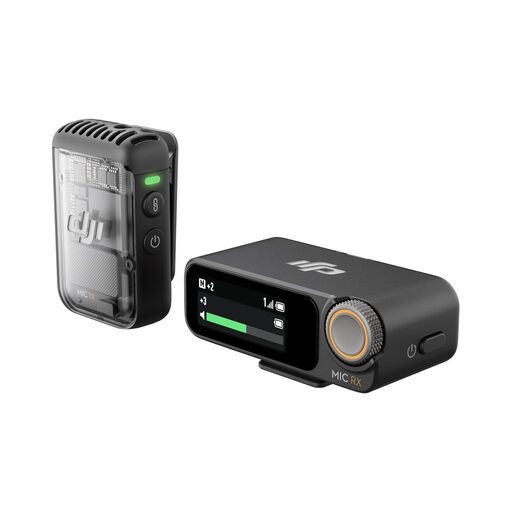 No image available
Suited to anyone who wants to move around while speaking and keep a recording on the transmitter.
The product description lists internal 32-bit-float recording and adapters for USB-C, Lightning and 3.5 mm. Check that the connection supplied is compatible with your device.
 No image available
A wireless lavalier microphone for spoken notes or interviews, if your device supports the connection.
The product title lists a Type-C connection. Check compatibility with your recording device and app.
 No image available
The dual-mic version may suit you if you want to record with more than one microphone.
The product title lists two microphones and a Type-C connection. Check that the connection is compatible with your recording device.
Prevent fabric from rubbing against the microphone capsule or cable, and make a moving test recording before the rehearsal. Shure mentions contact noise from clothing and recommends careful placement and securing of the cable; this doesn’t guarantee a noise-free recording.
No, 32-bit float doesn’t guarantee the whole recording chain. RØDE says that, on the Wireless PRO, this feature applies to files on the transmitters, not the camera recording. Also test the microphone position and sound during the loudest passages.
When you buy as a consumer, the product must be fit for purpose; if it’s faulty, repair, replacement or a refund may be appropriate. The Dutch government states that the Netherlands has no fixed statutory guarantee period and that you can contact the seller if there’s a problem.
Don’t assume that an audio diary made in private can automatically be published online. The Dutch Data Protection Authority explains that publishing personal data online generally requires a lawful basis under the GDPR; consent is one possible basis, but it isn’t automatically the only one. What applies to a particular recording depends on who can be heard and what you do with it.