
Practising pronunciation on your own
You usually record your voice in one place and want to listen back clearly without having to set up a wireless system each time. Shure emphasises that microphone placement matters when recording with a lavalier.


Choose a microphone that you can consistently position close to your mouth and that works with your recording device. A lapel microphone won’t remove room echo by itself. Shure explains that a microphone cannot effectively distinguish direct speech from reflections in the room. A wired microphone is often a good fit if you practise in one place, while a wireless option can be handy if you move around or record two speakers. For wireless sets, also check what’s included, the power requirements and the frequency regulations.
You usually record your voice in one place and want to listen back clearly without having to set up a wireless system each time. Shure emphasises that microphone placement matters when recording with a lavalier.
You use a phone or tablet and want to check in advance that the microphone, connection, any adapter and recording app will work together. RØDE and Shure describe different connection options for their mobile lavalier microphones.
You move around while speaking or record two voices. In that case, the number of microphones and transmitters, the receiver and the power supply are important factors to consider.
A good fit if: you usually practise alone in one place and your phone has a suitable TRRS microphone input. The RØDE smartLav+ and Shure MVL are examples of TRRS models.
Bear in mind: a cable limits how freely you can move, and you may need an adapter if your device doesn’t have the right input.
A good fit if: you already have a recorder or transmitter with a suitable 3.5mm TRS microphone input. The RØDE Lavalier GO is designed for this type of input.
Bear in mind: a standalone lavalier isn’t a complete wireless set. Check the connection and whether plug-in power is required.
A good fit if: you want to move around while practising or record a second speaker. According to Saramonic, the Blink500 ProX B2/B2R includes two lavalier microphones; DJI says the Mic Mini can pair two transmitters with one receiver.
Bear in mind: check the exact set variant, charging requirements, receiver connection and applicable frequency regulations. When practising pronunciation, also listen to how noise reduction affects the sounds you’re working on.
| What to consider | What should you check? | Who is this important for? |
|---|---|---|
| Clear speech in an echoey room | Attach the microphone in a similar position each time and listen back to a test recording. A windscreen or pop filter may help with breath or plosive sounds, if the model includes one. | If I want to assess my pronunciation, I need to be able to hear my voice clearly without expecting the microphone to fix the room acoustics. Around 25% of consumers say clear speech is their top priority. |
| Connection to the recording device | Check the microphone input, whether the connection is TRS or TRRS, and whether you need an adapter or a specific power supply. | If I want to keep using my phone, tablet, camera or recorder, the whole recording chain needs to work. Around 25% of consumers prioritise compatibility with their own device. |
| Freedom of movement and number of speakers | Check how many transmitters and microphones come with the set you’ve chosen, and how the receiver connects to your recording device. | If I move around while speaking or practise with someone else, I want to know whether the set can handle both situations. Around 15% of consumers prioritise freedom of movement or a second speaker. |
| Listening back to pronunciation details | Record a short comparison using the same words, with any available audio processing switched on and off. Listen to check that the sounds you’re practising remain clear. | If I want to hear small differences in my pronunciation, I don’t want to rely only on how pleasant or clear the recording sounds. Around 20% of consumers say being able to assess pronunciation details is their main concern. |
| Easy, repeatable use | Check what’s included in the set and what needs power. According to BOYA, the BY-M1 uses an LR44 button cell; wireless sets have rechargeable components. | If I often record short practice sessions, I want to keep extra steps involving cables, batteries or charging to a minimum. Around 15% of consumers value straightforward, predictable use most. |
A microphone won’t improve the room acoustics. And having a noise reduction feature doesn’t prove that it will leave all the sounds you need to hear when practising pronunciation unchanged.
Start by positioning the microphone consistently, then compare a short test recording with any available processing switched on and off.
A TRRS microphone for a compatible phone has different connection requirements from a TRS microphone for a compatible transmitter or recorder.
Check the complete signal path, including the right adapter and any power requirements, before choosing a microphone.
A receiver’s ability to pair with two transmitters doesn’t mean both transmitters are included in the package you choose.
Check the full variant name and what’s in the box if you want to record two speakers.
RØDE offers wired TRRS and TRS lavalier options for different recording devices.
The Shure MVL is a wired lavalier for mobile devices with a suitable 3.5mm TRRS input or compatible CTIA adapter.
The BOYA BY-M1 is a wired lavalier with a switch for smartphone and camera use.
According to Saramonic, the Blink500 ProX B2/B2R is a wireless system with two lavalier microphones.
The DJI Mic Mini is a wireless option with a transmitter that clips to your clothing and a built-in omnidirectional microphone.
This Joybuy selection features wireless microphone systems with wearable microphones, for anyone who wants to move around while practising or record a second speaker. Check the number of transmitters, the receiver and compatibility with your recording device for each variant.
 No image available
A good fit if you want a wearable microphone while practising and are looking for a set for multiple speakers.
Set variant: 2 TX + 1 RX and Charging Case.
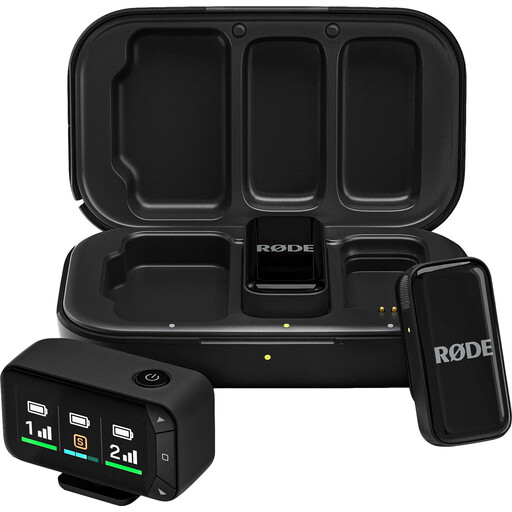 No image available
A good fit if you want to practise wirelessly with a second speaker and are looking for a set for camera or smartphone recordings.
The product name lists two microphones, a camera receiver, a smartphone receiver, a Charging Case and USB-C.
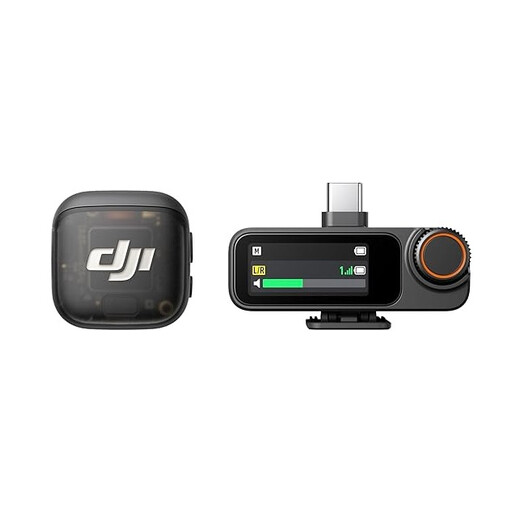 No image available
A good fit if you’re looking for a wireless microphone set for one speaker and want to check that the receiver connects to your recording device.
Set variant: 1 TX + 1 RX. The product name lists use with iPhone, camera and Android.
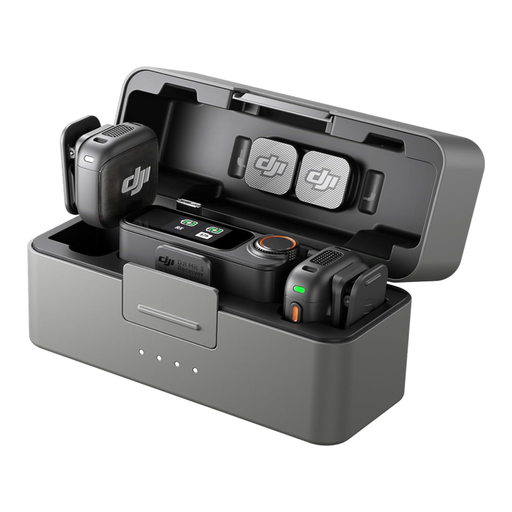 No image available
A good fit if you’re looking for a wireless set for a speaker and a conversation partner.
Set variant: 2 TX + 1 RX and Charging Case.
 No image available
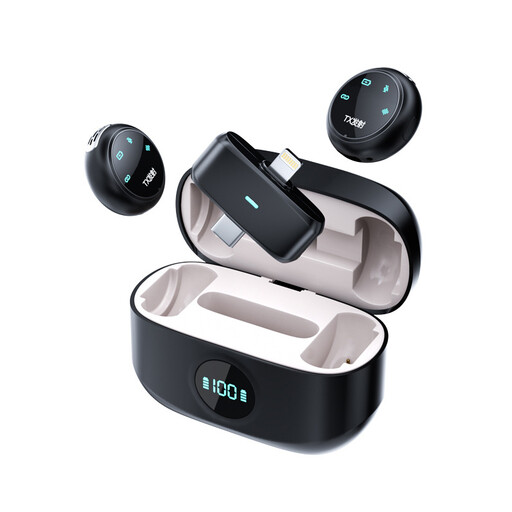
A good fit if you’re looking for two wireless clip-on microphones and want to check compatibility with your device in advance.
The product name lists compatibility with iOS and Type-C interfaces.
No. A microphone can’t effectively separate direct speech from reflections that are already in the recording, and it won’t improve the room acoustics. Position the microphone close to the speaker and listen back to a test recording.
Connections vary by model: the RØDE smartLav+ is TRRS for a compatible smartphone, while the Lavalier GO uses TRS and requires plug-in power. RØDE specifies a TRRS-to-TRS adapter for using the smartLav+ with a Wireless GO transmitter. Also check that your device has a suitable microphone input.
Attach the clip so that clothing doesn’t rub against it, then listen back to a short test recording. If you hear breath or plosive sounds, use the supplied windscreen or pop filter, if your chosen model includes one.
According to the Netherlands Authority for Digital Infrastructure (RDI), a licence is usually not required if you use the correct frequency band and comply with the relevant conditions. Some frequency bands do require a licence. Check the RDI’s frequency regulations for the specific system.
For distance purchases, you generally have a 14-day cooling-off period, according to the Government of the Netherlands. Products must also be of satisfactory quality; if something is faulty, you can contact the seller to ask for a solution. The Netherlands doesn’t have one fixed statutory guarantee period that applies to every product.