Start with a lapel microphone that connects to your phone, computer or recorder, then make a test recording with the microphone in the same position each time. If you’ll be sitting still while practising, a suitable wired microphone is a simple option. Wireless is most useful when you need freedom to move and are happy to check the receiver, power and settings too. To assess noise reduction, listen back to the same words with different settings. BOYA warns that the strong setting on the mini 2 may slightly affect how natural your voice sounds.
Who is this for?
Listening back carefully to your pronunciation
If you want to compare individual sounds, it helps to attach the microphone in the same position each time and make a test recording first. RØDE offers advice on how to attach the microphone and route the cable; BOYA explains how noise reduction can affect your voice.
Recording with a phone
If you want to record using an app on your phone, check that the microphone, input and any adapter are compatible. RØDE and IK Multimedia describe microphones for different types of phone input.
Practising on the move
If you want to move around while practising without a cable running to your recording device, check the wireless set’s receiver, power and settings. RØDE discusses cable routing for wired use, while BOYA describes a wireless range.
What should you look for when choosing?
Wired to a phone or recorder
A good fit if: you’ll be speaking in one place and can keep the recording device nearby; choose a microphone with the right input.
Bear in mind: cable length, contact with clothing and the difference between TRS and TRRS connections.
Wireless with a compatible receiver
A good fit if: you want to move around during practice or place the recording device outside the booth.
Bear in mind: the receiver, power, pairing and settings; noise reduction can affect the sound.
| What to consider |
What should you check? |
Who should pay particular attention? |
| Listening back to your pronunciation |
Keep the microphone in the same position and compare a test recording with noise reduction on and off, if available. |
If you want to compare individual sounds, consistent positioning matters most to me. Around 36% of consumers prioritise accurate pronunciation. |
| Connection |
Check the input type, microphone plug and whether you need an adapter. Also test whether the recording app is using the external microphone. |
If you want to record directly on your phone, the entire signal chain needs to be compatible. Around 29% of consumers put compatibility first. |
| Moving while practising |
Test the clip and cable routing; if you’re using a wireless setup, also check the connection to the receiver. |
If you want to move while speaking without a cable running to the recorder, freedom of movement matters more to me. Around 21% of consumers say this is their main reason for choosing a microphone. |
| Complete kit and upkeep |
Check which adapter, transmitter, receiver and any batteries are included with the set. |
If you don’t want to find out later that you need more parts, first check what you already have and what’s included in the set. Around 14% of consumers prioritise a complete set-up and upkeep. |
Things to watch out for when buying
-
Assuming a 3.5 mm plug means the microphone is compatible
TRS and TRRS connections aren’t automatically interchangeable. A plug that fits physically doesn’t mean your device will recognise the microphone or supply it with the right power.
Check the plug type, input, power and any adapter as one complete signal chain, then make a test recording.
You may need a suitable adapter or a different recording device.
-
Assuming a standalone bodypack microphone is a complete wireless set
Shure describes the WL185 series as microphones for use with a wireless bodypack transmitter, so a standalone microphone isn’t the same as a complete recording set-up.
Check the exact connection and which transmitter and receiver will work with your set-up.
You may also need a compatible transmitter and receiver.
-
Automatically choosing the strongest noise reduction setting
BOYA warns that the strong noise reduction setting on the mini 2 may slightly affect how natural your voice sounds.
Compare the same short exercise with different settings before choosing one for listening back to your pronunciation.
Relevant brands
RØDE
The RØDE smartLav+ offers a TRRS option for a compatible phone input, while the Lavalier GO is a TRS microphone for a suitable input or transmitter.
- The two models’ connections make different recording set-ups possible.
- Check the input and whether you need an adapter; the Lavalier GO isn’t necessarily a direct solution for every smartphone.
IK Multimedia
The iRig Mic Lav is a wired TRRS option for a device with a compatible CTIA/AHJ headset input or adapter.
- IK Multimedia lists headphone monitoring and the option to connect a second iRig Mic Lav.
- The input must be compatible with CTIA/AHJ; check whether you need an adapter.
Audio-Technica
The ATR3350xiS is a wired option for a recorder or camera with a compatible 3.5 mm input.
- Audio-Technica lists a 3 m cable, clip, windscreen and LR44 battery.
- Check the input, battery and switch for your chosen set-up.
BOYA
The mini 2 is a wireless range for anyone looking for a compatible receiver and freedom to move.
- BOYA lists adjustable noise reduction.
- According to BOYA, the strong setting may slightly affect how natural your voice sounds. Also check which receiver is included with the specific bundle.
Shure
The MVL offers a wired TRRS option for compatible phones; the WL185 series is designed for use with a suitable wireless bodypack.
- The two product ranges suit different connections and recording set-ups.
- The MVL requires a compatible headset input or CTIA adapter; a standalone WL185 isn’t a complete wireless set.
Joybuy products
Joybuy product options for voice recording with lavalier microphones.
 No image available
SYNCO P2XT USB-C Wireless Microphone
For anyone looking to record wirelessly with a compatible USB-C device; check that the connection and recording app work with your device.
View at Joybuy
 No image available
SYNCO S8 Lavalier Microphone
The product name lists smartphones, PC laptops and cameras as compatible devices; check which connection and any adapter your recording device requires.
View at Joybuy
 No image available
Moman M1CXT USB-C, 2TX + 1RX
An option to consider if you’re looking for a wireless lavalier set-up for a compatible USB-C device.
The product name lists 2TX + 1RX and a range of 150m; check which set variant and connection will work with your recording set-up.
View at Joybuy
 No image available
DJI Mic 3, 2 TX + 1 RX + Charging Case
A wireless system to consider if you’re looking for a set-up with two transmitters; check the receiver connection and compatibility with your recording device.
The product name lists two transmitters, one receiver and a charging case.
View at Joybuy
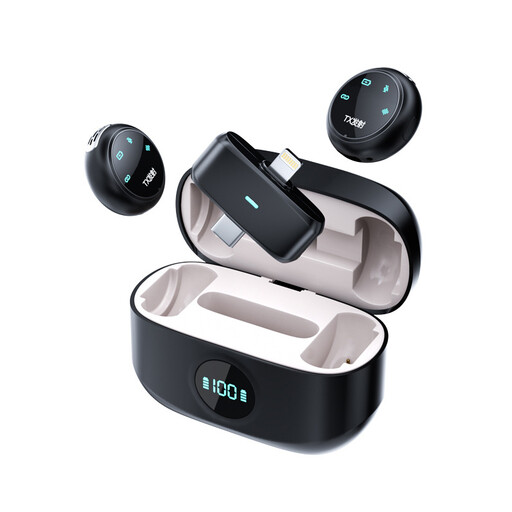 No image available
Verbex K31Pro-Black Dual Microphone
The product name lists iOS and Type-C interface options; check which variant is right for your device.
The product name describes a wireless clip-on lavalier microphone with two microphones.
View at Joybuy
Frequently asked questions
How do you attach a lapel microphone for pronunciation practice?
Attach the capsule securely to your clothing, close to your mouth, and make sure your clothes or the cable don’t rub against it. For wired use, RØDE recommends routing the cable to reduce movement being transferred to the clip. Keep the microphone in the same position for comparison exercises and make a test recording first.
Should noise reduction be on in a small booth?
Not necessarily: compare the same words with the feature switched on and off. BOYA warns that the strong setting on the mini 2 may slightly affect how natural your voice sounds; this warning isn’t a measurement of other models.
What extra parts and rights should you consider when buying online?
Check whether your set-up needs an adapter, transmitter, receiver or battery, and what’s included with the set. According to ACM ConsuWijzer, when you buy as a consumer online in the Netherlands, you have up to 14 days after delivery to change your mind. This is separate from your statutory guarantee: with normal use, a product must do what you could reasonably expect it to do.
Can I use a wireless lapel microphone in the Netherlands without a licence?
Usually, yes, if the system operates within the applicable licence-exempt frequency range and conditions. The Dutch Authority for Digital Infrastructure states that a licence is required for some frequency bands, so check the frequency used by the specific set and the applicable conditions.
Can I record and keep a recording of someone else’s pronunciation?
A sound recording in which someone can be recognised may count as personal data. The Dutch Data Protection Authority states that organisations need a legal basis under the GDPR to process personal data; consent is one possible legal basis. Which legal basis applies in a particular lesson or private situation depends on the circumstances.


