What should you look for when buying?
First check where you’ll be recording and which input your device has. Then consider whether a wired or wireless microphone, or an additional recording option, best suits the way you read.
| What to consider |
What should you check? |
Who is this important for? |
| Clarity with background noise |
Position the microphone close to your mouth without letting it rub against your clothing. Compare a test recording with any noise reduction switched off and on. |
If quiet lines get lost against the sound of a fan or traffic, I want my voice to come through more clearly above the room noise; around 36% of consumers make clarity their top priority. |
| Connection to your recording device |
Check the exact input and whether your microphone uses TRS, TRRS or USB-C; don’t assume it’s compatible based on the plug size alone. |
I want to know in advance whether my phone or recorder will work with the microphone, so I don’t choose a connection I can’t use; around 29% of consumers put device compatibility first. |
| Capturing a full reading |
For the exact wireless kit, check whether the transmitter can record internally and how to retrieve the recording. Test the audio level beforehand. |
If I’m recording a reading that I can’t easily repeat, I want to know whether there’s an additional recording option; around 21% of consumers make reliable recording their top priority. |
| Moving around without a cable |
Check the attachment, transmitter charge and included receiver, and test reception where you’ll be recording. Also watch out for clothing rustle. |
If I want to walk or gesture while reading, I don’t want to be tethered to the recorder by a cable; around 14% of consumers choose freedom to move as their top priority. |
Products at Joybuy
This product selection focuses on wireless microphone kits for readers who want freedom to move; check which receiver and accessories are included with each version.
 No image available
DJI Mic Mini 2S (2 TX + 1 RX + charging case)
A good fit for readers who want to move around wirelessly; the product name lists two transmitters, one receiver and a charging case.
Before recording, check which features this exact version offers and make a test recording.
View at Joybuy
 No image available
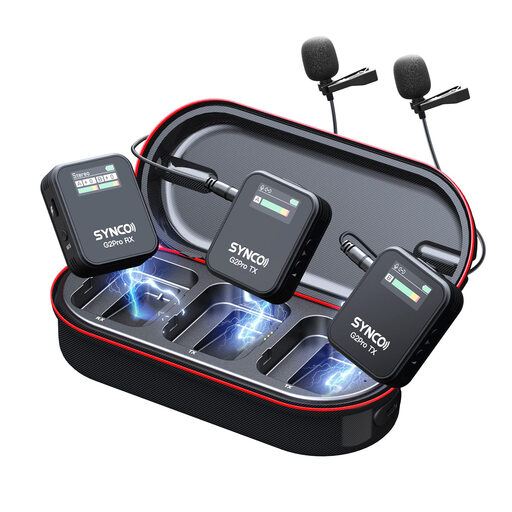
SYNCO G2(A2) Pro
A wireless lapel microphone for readers who want to move around without being connected to the recorder by a cable.
The product title mentions noise reduction; compare the sound in a test recording and check that the included kit works with your recording device.
View at Joybuy
 No image available
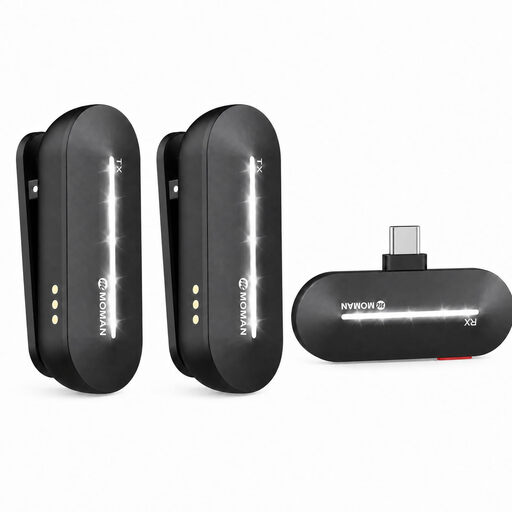
Moman M1CXT (USB-C, 2 TX + 1 RX)
A good fit for readers who want to record wirelessly with a kit that includes two transmitters and a USB-C receiver.
The TF card for local backup recording isn’t included. Check that your recording device works with the USB-C receiver.
View at Joybuy
 No image available
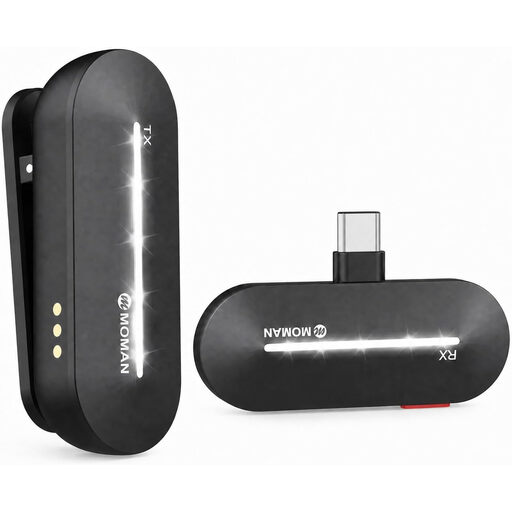
Moman M1CT (USB-C, 1 TX + 1 RX)
A wireless kit for readers who want to move around without an audio cable connecting them to the recorder.
The product name lists a USB-C receiver and one transmitter. Check that USB-C works with your recording device and make a test recording where you plan to use it.
View at Joybuy
 No image available
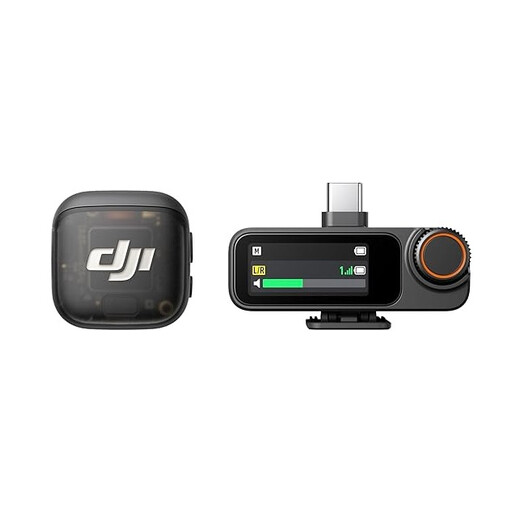
DJI Mic 3 (1 TX + 1 RX)
A wireless kit for readers who want to move while reading; the product name lists one transmitter and one receiver.
Check that the included connection works with your phone, camera or recorder, and test the recording feature you plan to use beforehand.
View at Joybuy
Frequently asked questions
How should you position a lapel microphone for a poetry reading?
Attach the microphone so that the capsule doesn’t rub against your clothing, then make a test recording with both quiet and loud lines. Shure specifically recommends positioning the MVL 15–25 cm from your mouth; that isn’t a universal distance for every model.
Can noise reduction remove a slamming door from a recording?
Don’t count on it. RØDE describes the Wireless Micro’s noise reduction as being designed for continuous sounds, such as a fan or traffic noise, rather than sudden sharp sounds. Also listen out for whether quiet words still sound natural.
What can you do if your microphone develops a fault after purchase in the Netherlands?
In addition to any manufacturer’s or seller’s warranty, you’re covered by the statutory guarantee. If a product develops a fault sooner than you could reasonably expect under normal use, the seller must offer an appropriate solution. ACM ConsuWijzer lists repair, replacement or a refund; a commercial warranty period doesn’t replace this right.
Do you need a licence for a wireless lapel microphone in the Netherlands?
It depends on the frequency band used by the kit. The Netherlands Authority for Digital Infrastructure says that some frequencies are licence-exempt, while a licence is required for certain microphone frequency bands. Check the frequency and conditions for the exact kit; the word ‘wireless’ alone doesn’t tell you whether a licence is needed.
Can you post a recording of someone else’s poem online?
Making a recording for your own use doesn’t automatically give you permission to make the poem available to the public. According to the Dutch Government, you must not distribute or publish copyright-protected texts without the creator’s permission. So check the rights for the specific poem before publishing; a recording that includes identifiable voices of other people may also contain personal data.


