Who is this for?

Practising next to a colleague

You want to listen back to your pronunciation while other voices or movement are present at the same desk. As a general guide, RØDE recommends clipping a lavalier microphone to your chest, around 20–30 cm from your mouth.

Practising alone in one place

You mainly record on your own using a phone or computer, and want a connection that suits your device without having to charge a transmitter. Sennheiser, RØDE and Shure offer wired models with different connectors.

Practising with two people

You both want to speak into the recording. Check how many microphones or transmitters are included, and how the receiver and recording app capture the voices. DJI says the Mic Mini receiver can connect to two transmitters.

What should you look for when buying?

What to consider What should you check? Who is this important for?
Making your voice stand out Clip the microphone in a suitable position and make a test recording while the desk is actually in use by others. An omnidirectional microphone picks up sound from several directions. When I practise next to someone, I want to hear my own pronunciation without assuming that noise cancellation will remove their voice. Around 36% of consumers say making their own voice stand out is their top priority.
Connection Check your device’s port, the exact plug type and whether your recording app uses external audio. USB-C, 3.5mm TRRS and a wireless receiver are different ways to connect. I want to avoid finding that the microphone or receiver doesn’t work with my phone or computer. Around 29% of consumers put device connectivity first.
A simple solo set-up Compare the cable length with your desk, and check which parts need charging if you choose a wireless model. According to the manufacturer, the Sennheiser XS Lav USB-C has a 2 m cable. For short, regular solo practice sessions, I want to get started without unnecessary set-up. Around 21% of consumers say ease of getting started is their main buying priority.
Recording two speakers Check how many microphones or transmitters are included, and whether the receiver and recording app support the combined or separate output you want. When we practise together, I want each of us to be able to wear a microphone and have our voices captured clearly enough to use. Around 14% of consumers say recording two speakers is their top priority.

Common mistakes

  • Assuming noise cancellation will filter out the person next to you

    A description mentioning noise cancellation doesn’t prove that a nearby voice will disappear from the recording. At a shared desk, other voices and background sounds may still be audible.

    Make a short test recording where you practise and listen back with the usual background sounds in the room.

  • Buying a microphone because the plug looks roughly the same

    A 3.5mm TRRS microphone won’t automatically work with every 3.5mm connection. Some transmitter inputs use TRS, and certain connections may require a suitable adapter.

    Before choosing, compare the connections on the exact microphone model with those on your device or transmitter.

  • Choosing a wireless set when you only record in one place

    A set for two speakers is a different set-up from a single wired microphone for solo practice. Wireless models also mean keeping track of transmitters, a receiver and charging.

    First decide whether you need freedom to move around or two microphones. If not, choose a wired option that suits your recording device.

Brands to compare

Sennheiser

The wired XS Lav USB-C is designed for solo recordings with a compatible mobile device or computer.

  • According to the official product specifications, this model has an omnidirectional capsule, USB-C and a 2 m cable.
  • USB-C alone doesn’t confirm compatibility with every port or recording app. And one microphone isn’t a set-up for two separate speakers.

RØDE

The smartLav+ is a wired TRRS option, while the Wireless Micro is a separate wireless product range.

  • RØDE says the smartLav+ has a 1.2 m cable and a TRRS plug. The Wireless Micro has clip-on transmitters and a receiver in either a USB-C or Lightning version.
  • Some transmitter inputs require a TRRS-to-TRS adapter. The wired smartLav+ and Wireless Micro aren’t interchangeable connection options.

Shure

The MOTIV MVL is a wired lapel microphone for compatible mobile devices with a 3.5mm TRRS connection or a suitable adapter.

  • Shure lists a supplied clip and windscreen, and compatibility with most suitable Android and iOS devices.
  • This compatibility claim doesn’t confirm that the microphone works with every individual device, so check your connection and adapter.

DJI

The Mic Mini range consists of wireless clip-on transmitters. A set with two transmitters may suit practice partners who both want to wear a microphone.

  • DJI specifies two levels of noise cancellation and a receiver that can connect to two transmitters.
  • These are manufacturer specifications, not an independent assessment of speech clarity at a shared desk. Check what’s included in the set and how it connects.

Joybuy products

The Joybuy products below are wireless lapel microphone systems. Before choosing, check the receiver, connection and number of transmitters for each model.
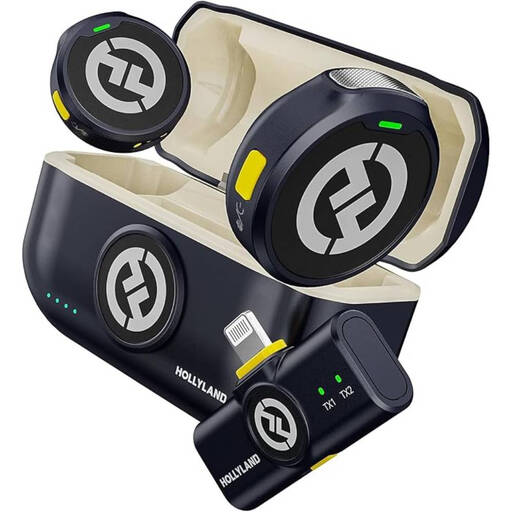
Lark M2 wireless lavalier microphone system

Lark M2 wireless lavalier microphone system

A wireless option if freedom to move around matters more than a fixed wired set-up. Check that the supplied receiver is compatible with your device.

View at Joybuy
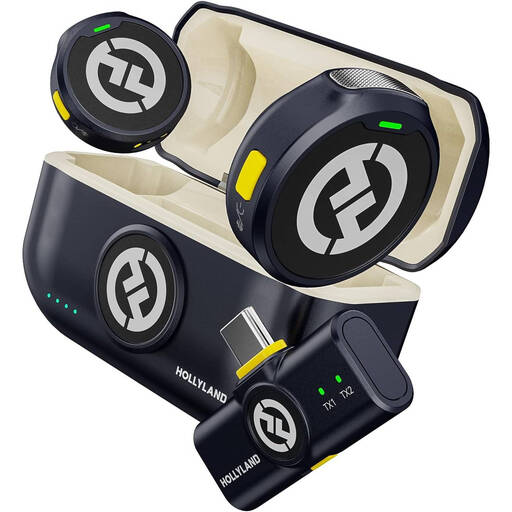
Lark M2 wireless USB-C microphone

Lark M2 wireless USB-C microphone

A wireless option for a set-up where the USB-C connection suits your recording device. Also check that your recording app uses external audio.

Connection listed in the product name: USB-C.

View at Joybuy
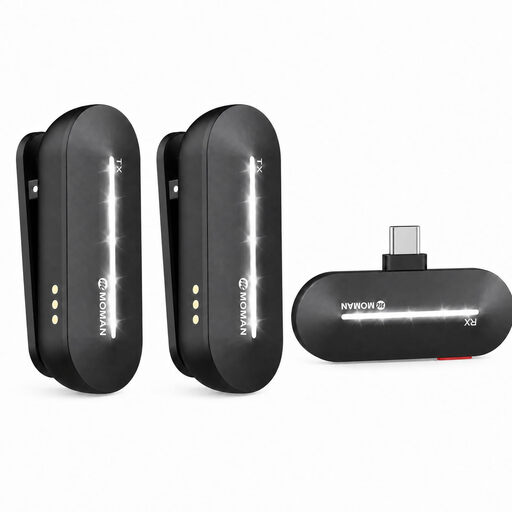
Moman M1CXT wireless lavalier microphone, USB-C, 2TX+1RX

Moman M1CXT wireless lavalier microphone, USB-C, 2TX+1RX

The 2TX+1RX designation may be relevant if you’re looking for a set-up with two transmitters. Check that the receiver and recording app suit the recording you want to make.

Product name lists USB-C and 2TX+1RX.

View at Joybuy
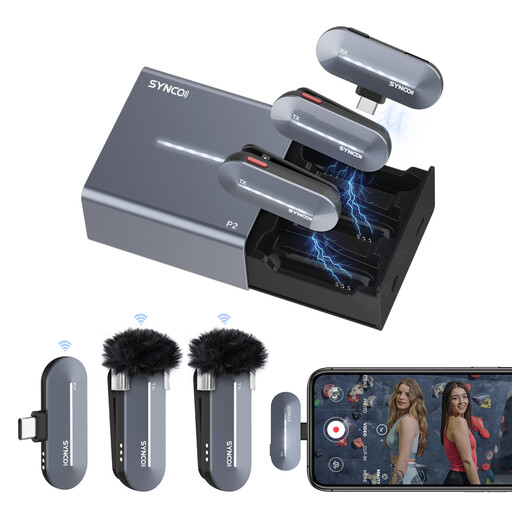
SYNCO P2ST wireless dual lavalier microphone, USB-C

SYNCO P2ST wireless dual lavalier microphone, USB-C

The product name indicates a dual microphone and USB-C. Check that the supplied receiver and your recording app are suitable for the two-person recording you have in mind.

Product name lists USB-C and dual microphones.

View at Joybuy
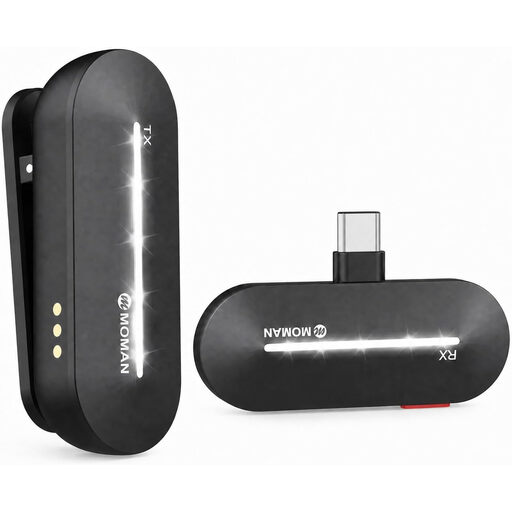
Moman M1CT wireless lavalier microphone, USB-C, 1TX+1RX

Moman M1CT wireless lavalier microphone, USB-C, 1TX+1RX

The product name indicates a wireless set-up with one transmitter and one receiver. Check that the USB-C connection suits your device.

Product name lists USB-C and 1TX+1RX.

View at Joybuy

Frequently asked questions

Will a lapel microphone automatically keep the voice of the person next to me out of the recording?

No, don’t assume it will. The models with omnidirectional capsules covered here pick up sound from several directions. Test the microphone’s position with the actual sounds at your shared workspace. A noise-cancellation claim doesn’t guarantee that a second voice will disappear.

Where should I clip a lapel microphone for pronunciation practice?

As a general guide, RØDE recommends clipping it to your chest, around 20–30 cm from your mouth. Then make a short recording and listen back to check that the sounds you want to assess are clear.

If my microphone breaks, am I only covered by the manufacturer’s warranty?

No. According to the Dutch government, consumer purchases in the Netherlands are also covered by a statutory guarantee. If a product is faulty, contact the seller to find a solution. There is no single fixed statutory guarantee period that applies to all products in the Netherlands.

Can I use a wireless microphone in the Netherlands without a licence?

According to the Dutch Authority for Digital Infrastructure, wireless microphones usually don’t require a licence, but you must use the correct frequency band. Check the frequencies for the version you’re considering. UHF availability may vary by location.

What if a practice partner or someone next to me is identifiable in the recording?

The Dutch Data Protection Authority notes an exception for processing intended solely for personal or household use. Different rules may apply if you publish other people’s personal data. So don’t assume, without checking further, that you can share a recording made at a shared desk publicly.
