
Teacher recording their explanation alone
You mainly want to listen back to your own pronunciation and instructions. Compare a suitable wired microphone with a single-speaker set, and check that it connects to your recorder or phone.


If the teacher stays by the recording device, a suitable wired lapel microphone may be enough. For a teacher who moves around, a complete wireless set is a more practical choice, while a portable recorder is another option for standalone recording. If you also need to hear students clearly, one microphone on the teacher won’t necessarily be enough. Before buying, check the connection, what’s included and whether the version you choose suits the number of speakers and the type of recording you want.
You mainly want to listen back to your own pronunciation and instructions. Compare a suitable wired microphone with a single-speaker set, and check that it connects to your recorder or phone.
You move between the chairs or the board and don’t want to be tethered to the recording device by a cable. Compare complete wireless options and check the receiver, power supply and connection.
You want to record a conversation partner clearly as well as the teacher. Check how many transmitters the set actually includes; one microphone on the teacher won’t guarantee that voices can be heard clearly throughout the room.
Choose this when: the teacher will mostly stay in one place and the cable can reach the recording device.
Bear in mind: the cable limits how far you can move, and the plug must be compatible with the recording device.
Choose this when: the teacher moves around the room and the receiver can be connected to the recording device.
Bear in mind: charging and the wireless connection; also check that the set you choose includes enough transmitters.
Choose this when: you want to record audio on the teacher without using a phone or camera as a connected receiver.
Bear in mind: batteries and storage; you’ll need to transfer the recording afterwards or synchronise it with video.
| What to consider | What should you check? | Who is this important for? |
|---|---|---|
| How clearly the teacher can be heard | Check where the microphone can be clipped, which recorder or phone you’ll use, and whether you can listen back to a test recording. | If I mainly want to listen back to pronunciation and instructions, I’ll consider microphone placement and clothing noise. Around 36% of consumers prioritise the teacher’s clarity. |
| Freedom of movement | Check that both a transmitter and a compatible receiver are included, and test the connection at the teaching venue. | If you move between the chairs and the board, you won’t want a cable getting in the way, so a complete wireless set can be useful. Around 29% of consumers give freedom of movement top priority. |
| Recording the teacher and a conversation partner | Check whether the version you’re considering includes one or two transmitters and the corresponding receiver. | If a conversation partner needs to be heard clearly too, I’ll want to know whether they’ll have their own microphone. Around 21% of consumers prioritise recording two specific speakers. |
| Standalone recording | For a recorder, check whether a lavalier microphone and batteries are included, whether you’ll need a microSD card, and how to transfer files. | If you want to record without a connected phone, camera or wireless receiver, you’ll also need to factor in storage and power. Around 14% of consumers give standalone recording top priority. |
RØDE says that the Wireless ME TX, sold separately, needs a compatible Series IV receiver and does not work on its own.
Before buying, check exactly what’s included and whether the receiver can connect to your recording device.
The Shure MVL uses a 3.5 mm TRRS connection. Shure says that a CTIA-compliant adapter may sometimes be needed for compatible mobile devices.
Check your recording device’s microphone input against the plug type and any adapter required.
DJI’s usage times for the Mic Mini were measured with noise cancellation switched off, at close range and in an interference-free environment. The maximum range is stated for an open, unobstructed area.
Plan for the power needs of both the transmitter and receiver, and test the connection and recording where you’ll be teaching.
A lavalier microphone is worn by one speaker. That means a second specific speaker won’t automatically be close to a microphone.
Decide which voices you want to record and check that the set has enough transmitters for those speakers. Make a test recording beforehand.
The wired BY-M1 is an option if you stay within cable reach and the connection is compatible with your phone, camera or recorder.
The wired MVL is designed for compatible mobile devices with a 3.5 mm TRRS connection, or the right adapter.
The Mic Mini is a wireless product range for a speaker who needs freedom to move; sets may differ in the number of transmitters included.
The Wireless ME is a wireless set; how useful it is will also depend on the connection to your recording device and the version you choose.
The F2 combines a lavalier microphone with a portable recorder for standalone audio recording.
The LARK M2 is available in mobile, camera and combo versions, with different receivers.
These Joybuy products are wireless lavalier microphones for recording a teacher; some versions are described in the product name as having two microphones. Before buying, check that the connection and what’s included with the version you choose suit your recording device and the number of speakers.
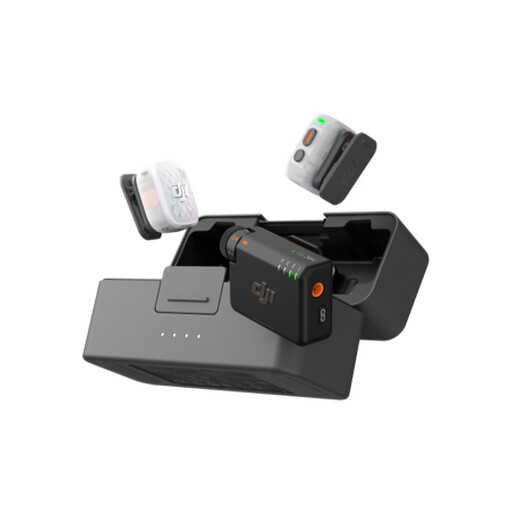 No image available
The product name lists two transmitters and one receiver, which could suit two specific speakers, each with their own transmitter. The product description mentions internal recording and connection to cameras, smartphones and PCs; check that the receiver is compatible with your recording device.
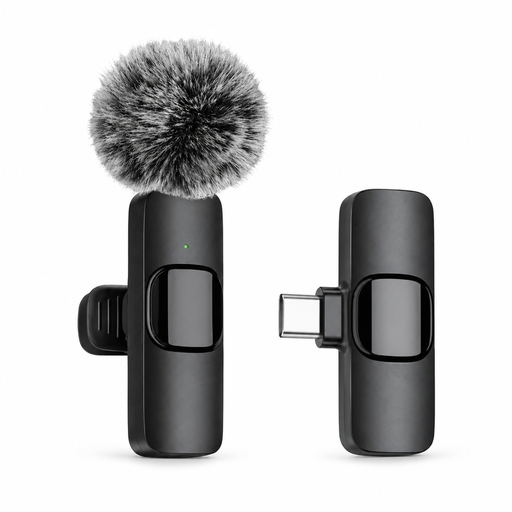 No image available
The product name describes a wireless lavalier microphone for recording and interviews, with a Type-C connection. Check that it’s compatible with the recording device you’ll use for your lesson.
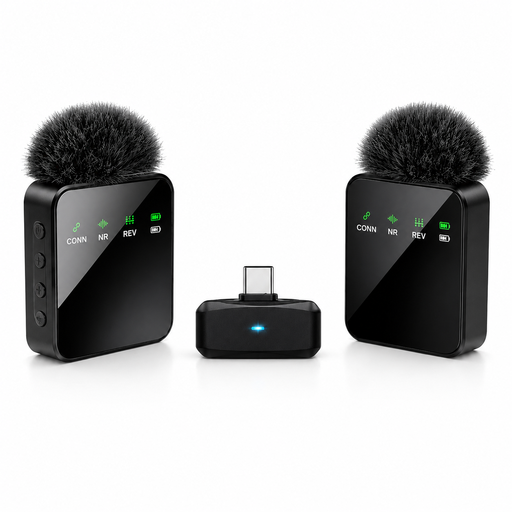 No image available
The product name specifies dual microphones and a Type-C interface. This could suit two specific speakers who each need a microphone; check that the connection is compatible with your recording device.
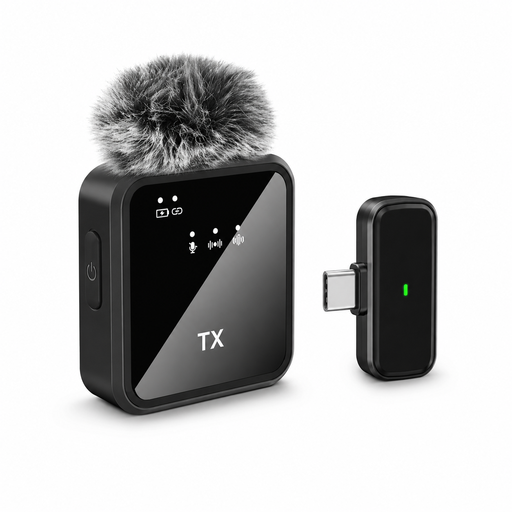 No image available
The product name specifies one microphone and a universal interface. Before buying, check what that connection means for your recording device and whether this version meets your recording needs.
Don’t rely on that without making a test recording. A lavalier microphone is worn by one speaker, so if a second specific speaker matters, check whether a version with two transmitters is suitable. That still doesn’t prove that students seated around the room will all be equally easy to hear.
The Shure MVL uses 3.5 mm TRRS and, according to Shure, works with compatible mobile devices that have this connection or with a suitable CTIA-compliant adapter. Check your phone’s input and adapter; don’t rely on the plug diameter alone.
Make a short recording at the teaching venue while the teacher speaks and moves around, then listen back for clothing rustle and the voices you want to hear. If you’re using a wireless set, check the charge on the transmitter and receiver; for a Zoom F2, also check the batteries and microSD storage.
There isn’t a straightforward yes or no that applies in every situation. According to the Dutch Data Protection Authority, an audio recording in which someone is identifiable is personal data. If the GDPR applies to the processing, you need a valid legal basis; consent is one possible basis, but not the only one. So before recording and sharing, consider who is making the recording, why, and who will receive it.
According to the Dutch Authority for Digital Infrastructure, a licence is usually not needed if you use the correct permitted frequency band and comply with the conditions. Some frequency bands do require a licence. So check the frequency of the specific set, especially if it uses UHF.