
Presenter in an echoey room
You record from a fixed position and want your voice to remain clear against the room sound. Shure explains why a microphone cannot automatically separate reflections from your direct voice.


Start with a lapel microphone that can sit close to your mouth and is confirmed to work with your recording device. This can help your voice stand out more clearly against the room sound, but it won’t eliminate echo. A wired mic may be enough if you’re staying in one place, while a wireless set is better suited to moving around or recording separately.
You record from a fixed position and want your voice to remain clear against the room sound. Shure explains why a microphone cannot automatically separate reflections from your direct voice.
You want to know in advance whether the microphone, phone and any adapters you need will work together. Shure and RØDE describe different connections for their wired models.
You want to move around while recording or keep a separate audio file. RØDE and DJI describe wireless sets with internal recording features; check what’s included with each version.
| What to consider | What should you check? | Who should pay particular attention? |
|---|---|---|
| Speech clarity | Make a test recording from your usual speaking position and check that the microphone stays close to your mouth without rubbing against your clothes. | If I’m recording a news bulletin in an echoey room, I want my voice to be clear without relying on a feature that acoustically treats the room. Around 36% of consumers put speech clarity first. |
| Connection | Check the input, connector type, any power requirements and the full adapter chain with your own phone, camera or recorder. | If I want to use my existing phone or recorder, the whole connection needs to work, not just the plug. Around 29% of consumers prioritise device compatibility. |
| Freedom of movement | Check how many transmitters and receivers the set includes, which microphone comes with it and how the receiver connects to your recording device. | If I want to move around while recording a bulletin, I don’t want a cable between me and the camera or recorder. Around 21% of consumers make freedom of movement their main priority. |
| Separate recording | Check whether the exact version records internally, and how to start, find and transfer the file. | If I can’t easily record something again, I want to check whether a separate file is available and test the whole setup in advance. Around 14% of consumers prioritise separate recording. |
A noise reduction claim doesn’t prove that reflections will disappear in your room. Shure explains that a microphone cannot effectively separate direct speech from unwanted echo.
First, make a test recording where you’ll be recording your bulletin, then listen back to it.
The Shure MVL has a TRRS connection, while the RØDE Lavalier GO has TRS. Your phone may also need a different input or an additional adapter.
Before choosing, check the microphone connection, the input on your recording device and the entire adapter chain.
The RØDE Lavalier GO and Deity W.Lav Pro are standalone microphones. The RØDE Wireless PRO is a set with transmitters, a receiver and lavalier microphones.
Compare what’s included with the version you’re considering against the transmitter, receiver or recorder you already own.
Sennheiser offers EW-DP versions with different frequencies. The Dutch Authority for Digital Infrastructure (RDI) distinguishes between licence-free frequencies and bands that may require a licence.
Check the frequency of the exact product and the requirements for the location in the Netherlands where you’ll be recording.
The wired MVL is designed for portable recording devices with a compatible 3.5mm TRRS connection.
The Lavalier GO is a standalone TRS microphone; the Wireless PRO is a wireless set with two Lavalier II microphones.
The Mic 2 offers a compact wireless recording option; compare versions by the number of transmitters and the accessories included.
The EW-DP is a UHF camera system. Sennheiser describes versions with the omnidirectional ME 2 and the cardioid ME 4.
The W.Lav Pro is a standalone lavalier microphone with a locking 3.5mm TRS connection.
These product picks focus on compact wireless sets for moving around while recording, solo presentations or conversations with multiple speakers.
 No image available
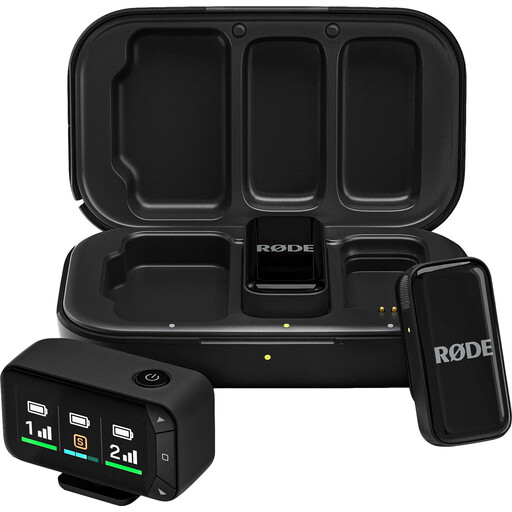
May suit recordings involving movement or multiple transmitters; check how the set connects to your recording device.
The product information lists internal 32-bit float recording.
 No image available
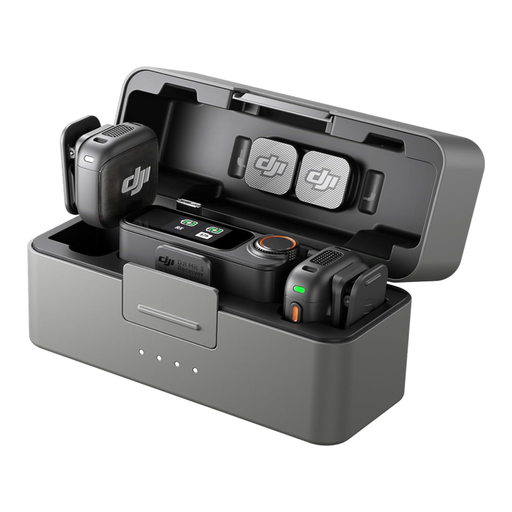
May suit interviews using two microphones; check which receiver you’ll use with your recording device.
The product information lists two transmitters, a camera receiver, a USB-C receiver and integrated clips.
 No image available
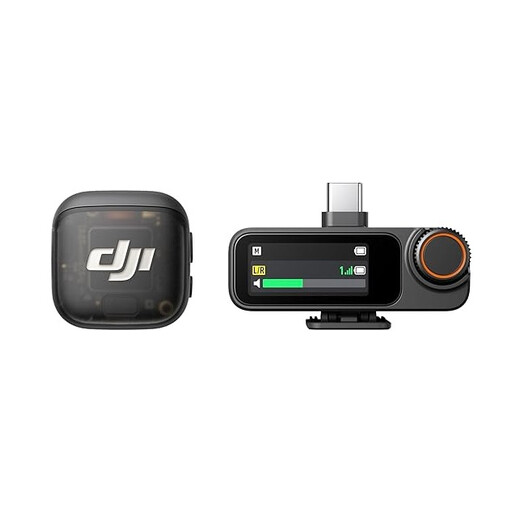
May suit a solo recording where you also want an internal recording feature; check the connection to your phone or camera.
The product information lists internal 32-bit float recording and a USB-C adapter.
 No image available
May suit conversations with two speakers; check how the receiver works with your recording device.
The product title lists two transmitters, one receiver and a charging case.
 No image available
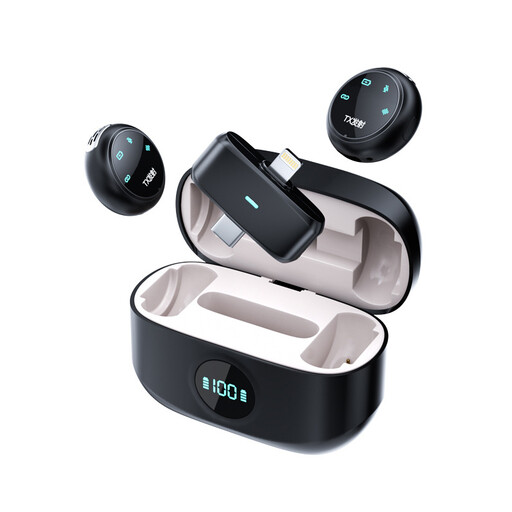
May suit interviews using two microphones; check that the connection and attachment work with your recording setup.
The product information lists compatibility with iOS and Type-C interfaces, as well as a magnetic charging case.
No. Don’t assume these features will remove echo. Shure explains that a microphone cannot effectively separate direct speech from unwanted reflections. DJI lists noise reduction and internal 32-bit float recording for the Mic 2, but these specifications don’t confirm that echo will be removed in your room.
Start close to your mouth and make a test recording while wearing the clothes you’ll have on for the bulletin. RØDE gives a general guideline of around 20–30 cm; for the specific MVL, Shure recommends 15–25 cm. Make sure fabric doesn’t rub against the capsule.
Keep clothing away from the capsule and secure the cable so that movement doesn’t pull on the microphone. RØDE describes an extra cable loop as a way to provide strain relief and reduce handling noise. If a product breaks sooner than you could reasonably expect during normal use, ACM ConsuWijzer explains that you may have a right to a legal guarantee from the seller.
It depends on the frequency and the conditions for that band. The Dutch Authority for Digital Infrastructure publishes licence-free frequencies for wireless microphones and notes that some bands require a licence. Check the frequency of the exact version and the rules for your recording location.
Treat recording and publishing as separate questions. The Dutch Data Protection Authority states that processing personal data requires an appropriate legal basis, and describes a possible journalistic exemption for publication. Whether that exemption applies to your production depends on the circumstances.