
Seated solo storyteller
You want to record one voice close to the mouth without having a microphone in front of your face. The connection, cable length and a secure, quiet clip are all important considerations.


If you do most of your storytelling sitting down, a wired lapel microphone is a sensible choice as long as the plug, power requirements and cable length suit your recorder. If you move around while you speak or want to record two voices, choose a wireless set with the right receiver and enough transmitters.
You want to record one voice close to the mouth without having a microphone in front of your face. The connection, cable length and a secure, quiet clip are all important considerations.
You stand up or use hand gestures, and want to rely less on a cable running to your recording device. Check the wireless set you choose and how long it lasts.
You want to record two voices. Before buying, check that the set actually includes two transmitters and a suitable receiver.
Best for: a storytelling session where you stay mostly in one place and can safely run a cable to your recorder.
Bear in mind: the plug type, power requirements and cable length vary by model. A cable can also rub against your clothes.
Best for: storytelling with movement, or a recording where two voices are captured separately.
Bear in mind: you’ll need to manage the transmitters and receiver, and check that the frequency is permitted at your recording location. The Dutch Authority for Digital Infrastructure (RDI) sets out the applicable frequency requirements.
| What to consider | What should you check? | Who is this important for? |
|---|---|---|
| Connection to your recorder | Check the microphone input, TRS or TRRS plug and any power requirements against your device’s manual. | If I already own a recorder, I want to know whether the microphone will connect to it; around 33% of consumers prioritise compatibility with their existing device. |
| Quiet, secure attachment | Try positioning it and listen back for clothing noise. RØDE gives around 20–30 cm from the mouth as a general guideline for chest placement. | If I mainly want a clean voice recording, I look out for friction between the capsule, cable and clothing; around 25% of consumers prioritise quiet placement above all else. |
| Movement or two voices | Count how many transmitters you need, and check the receiver output and frequency-use requirements. DJI says a Mic Mini receiver can pair with two transmitters; also check whether the version you choose includes them. | If I want to move around or record with a second storyteller, I need enough transmitters and a suitable receiver; around 25% of consumers prioritise freedom of movement or recording two voices. |
| Long sessions and accessories | Check the operating time of the transmitter and receiver, as well as what’s included in the set you choose. DJI states that the Mic Mini lasts around 11.5 hours with one transmitter and one receiver, with noise cancellation off and under the stated test conditions. | If I want to finish a session without missing connection parts or a flat transmitter, I check the operating time and accessories in advance; around 17% of consumers prioritise these points above all else. |
Microphones can have different connections and power requirements. A plug that physically fits the socket isn’t necessarily compatible with your recorder.
Check the manuals for both the microphone and recorder to confirm the exact plug type, input and power requirements.
DJI states that the Mic Mini lasts around 11.5 hours with one transmitter and one receiver, with noise cancellation off and under specific test conditions. That figure doesn’t automatically apply to every set or usage scenario.
Check the operating time for the transmitter and receiver in the exact version you’re buying, and make a test recording beforehand.
Friction between clothing and the capsule or cable can cause audible contact noise; Shure explains this risk with lavalier microphones.
Attach the capsule and cable so they don’t rub against anything, then listen back to a test recording while moving around.
The Lavalier II is a wired option for anyone looking for a compact model with a locking 3.5 mm TRS connection.
The V.Lav is a wired option for a fixed recording spot, where a longer cable and connection to compatible 3.5 mm devices may come in handy.
The Mic Mini is a portable wireless option for storytellers who move around or need a version with two transmitters.
The BY-M1 is a wired option for anyone who wants a long cable to use with a device the manufacturer considers compatible.
The ME 2 is a lavalier microphone for speech that may be a good option if its connection suits your existing transmitter or recording set-up.
These product options include wired lapel microphones for a fixed set-up and wireless sets for solo or duo recordings. For each set, check that the connection is compatible with your recording device.
 No image available
The version with two transmitters and one receiver is designed for a two-speaker set-up; check that the receiver is compatible with your recording device.
The product description lists internal recording and storage in a charging case.
 No image available
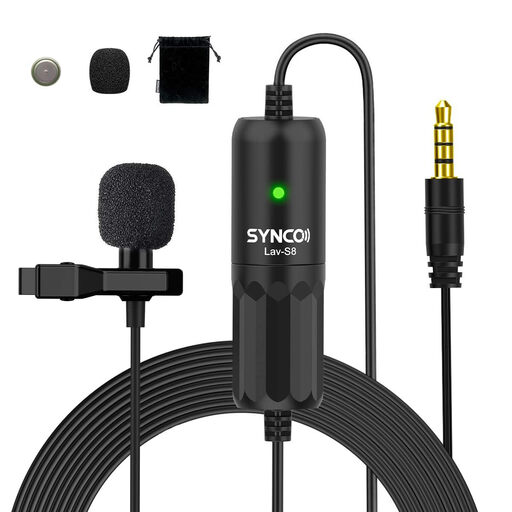
This wired lavalier is an option for a fixed recording spot if your device has a compatible microphone input.
The product description lists a 3.5 mm connection, an omnidirectional pickup pattern and an included windscreen. Check that your recorder’s input is compatible.
 No image available
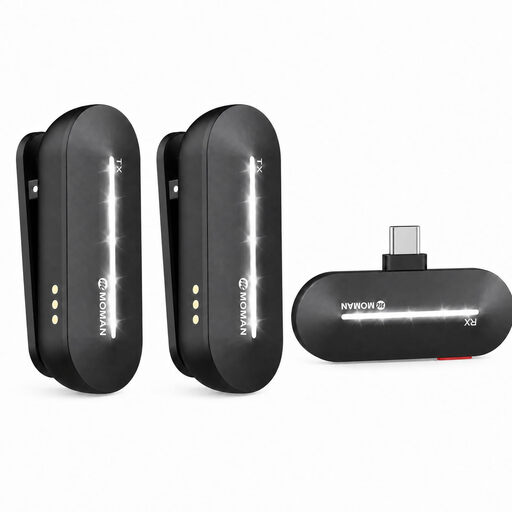
The set with two transmitters and one receiver is worth considering for recording two speakers, provided your device has a compatible USB-C connection.
The product description lists monitoring and charging while in use. Check the frequency requirements for this exact set at your recording location.
 No image available
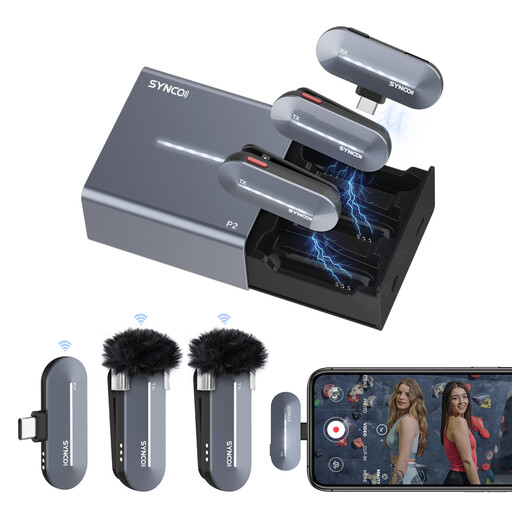
The dual-mic system may suit a storytelling duo if your recording device supports the USB-C receiver.
The product title lists a charging case. Check the connection and frequency requirements for this exact set.
 No image available
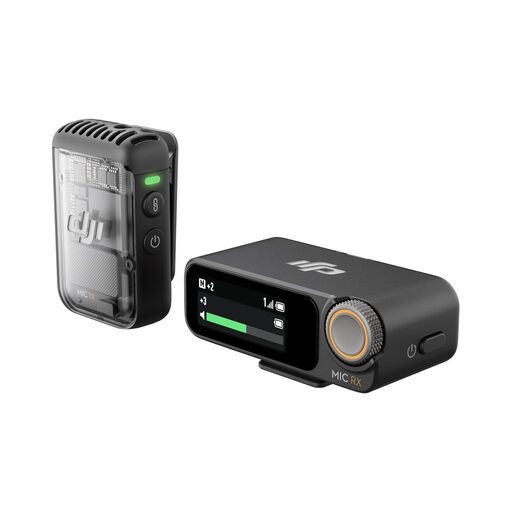
The version with one transmitter and one receiver is an option for a solo storyteller; check which connection your recording device needs before buying.
The product description lists USB-C, Lightning and 3.5 mm adapters, as well as internal recording. Check that the included connections suit your set-up.
Start on your chest: RØDE gives around 20–30 cm from the mouth as a general guideline. Keep the capsule and cable clear of clothing that might rub against them, then listen back to a test recording while moving around.
No. First check the exact plug type, microphone input, power requirements and whether you need an adapter. The RØDE Lavalier II has a locking TRS plug; the Deity V.Lav uses a TRRS plug which, according to the manufacturer, automatically configures for many—but not all—3.5 mm microphone inputs.
Check the operating time of both the transmitter and receiver, and what’s included in the set you choose. DJI states that the Mic Mini lasts around 11.5 hours with one transmitter and one receiver, with noise cancellation off and under specific test conditions; this isn’t a guaranteed duration for every set-up.
According to the Dutch Authority for Digital Infrastructure, wireless microphones generally don’t require a licence if you use the correct licence-exempt frequency band and comply with its conditions. Not every frequency is available at every location, so check the frequency of the exact set and the requirements at your recording location.
Online consumer purchases generally come with a statutory 14-day cooling-off period after delivery, subject to applicable exceptions. ACM ConsuWijzer also distinguishes between the cooling-off period and the statutory guarantee. Check which rules apply to your purchase and product.