
Vandaag of morgen in huis

Kwaliteit gegarandeerd

Welkomstaanbiedingen ontgrendelen: GRATIS bezorging | Tot 80% korting | Gratis 30 dagen JoyPlus-proefperiode
Download de app
Buying a new lamp seems simple until you discover that the fitting does not fit, the light is too bright or an outdoor lamp does not offer sufficient protection against moisture. With lamps and lighting, it is therefore not just about design. The right choice depends on the fitting, light output, colour temperature, dimensions and where you want to use the lamp.
Three common pitfalls are:
The fitting determines whether a light source will fit your lamp. The most common types are:
Also pay attention to the lamp’s shape and height. A large G95 bulb with a diameter of 9.5 cm will not fit every lamp. For a pendant lamp above the dining table, the overall height, adjustable cable and diameter are also important.
Lumens indicate how much light a lamp emits. A few hundred lumens are often enough for atmospheric lighting. For functional lighting, such as above a workspace, a higher light output is more appropriate.
Colour temperature is measured in kelvin:
According to the product information, a Philips E14 globe-shaped LED bulb has a colour temperature of 2,700 K, 470 lumens and a consumption of 4.9 W per light point. The Philips E27 bulbs with a 40 W equivalent also have 2,700 K and 470 lumens. Always check that the atmosphere you want matches the space.
LED bulbs are generally a practical choice for energy-efficient lighting. According to Philips’ own information, the LED bulbs mentioned use around 80% less energy than comparable incandescent bulbs. This is a claim made by the brand; the actual saving depends on usage time, light output and the bulb being replaced.
Pay attention to the following details:
For outdoor wall lamps, garden lighting and balcony lamps, the IP rating is an important point to check. The first digit refers to solid particles and the second to water.
A fitting with IP44 is protected against splashing water from different directions. Install this type of lamp according to the instructions, for example beneath a canopy or on a sheltered exterior wall. An IP44 lamp is not intended to stand underwater or to be exposed to direct jets of water for extended periods.
Solar lamps are useful when you do not want to run a cable. However, pay attention to the position of the solar panel. Shade from a wall, balcony edge or tree can affect charging time. A model with USB charging provides a practical back-up in these circumstances.
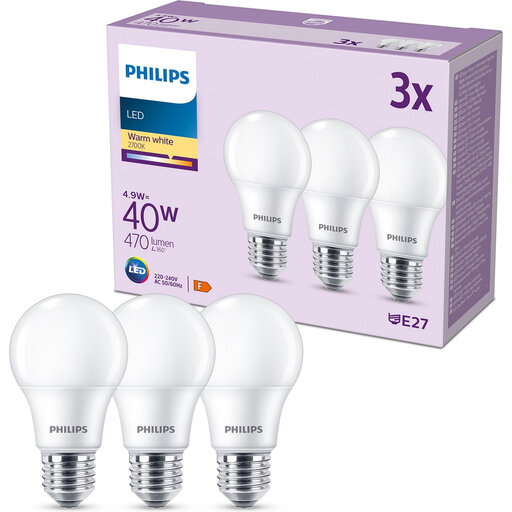
Why it suits this profile: A simple set for anyone who wants to equip several lamps at home with a suitable E27 light source.
The fitting, 4.9 W consumption, 470 lumens and 2,700 K colour temperature are clearly stated. The bulb is intended for indoor use and is not dimmable.
E27 fitting, warm white light, 3 bulbs per pack and 15,000 stated operating hours.
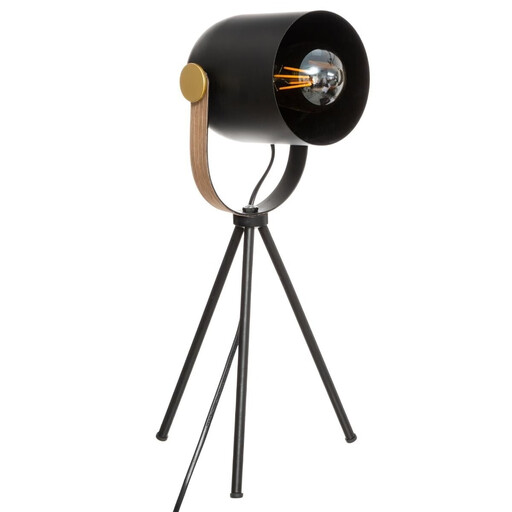
Why it suits this profile: A decorative floor lamp for a living room, bedroom or interior with industrial accents.
The fitting works with an E27 light source and the lamp is supplied without a bulb. This means you can choose a suitable LED bulb yourself, but you will need to order it separately.
Metal construction, height of 45 cm, 1.53 m cable and an on/off switch on the cord.
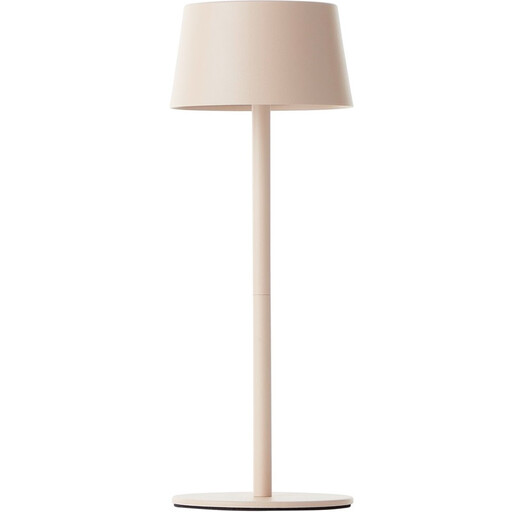
Why it suits this profile: For a balcony, patio, garden or damp indoor area where wireless use and adjustable brightness are practical.
The IP44 rating makes the limitations clear: splashing water is permitted, but immersion is not. If there is little sunlight, you can charge it via USB.
170 lumens, 3-step dimming, integrated LED, solar panel and USB charging.
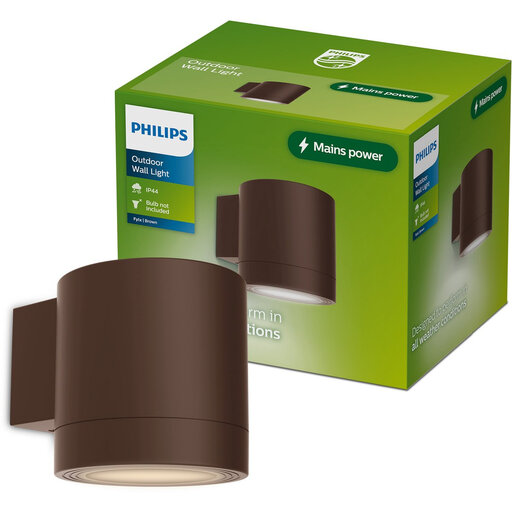
Why it suits this profile: For anyone who wants to combine a fixed outdoor wall lamp with a GU10 LED spotlight of their choice.
The GU10 light source is not included. This prevents you from ending up with the wrong colour temperature, but means you need to select a suitable spotlight separately.
GU10 fitting, IP44, aluminium housing and replaceable light source.
We have compiled a complete, up-to-date list of products that fully meet these strict selection criteria and the applicable European safety regulations.
Check the old light source or the fitting’s product specifications. E27 is a large screw fitting, E14 is a small screw fitting and GU10 is a fitting for spotlights. Also check the maximum wattage, dimensions and whether the light source needs to be dimmable.
This depends on the wattage and the number of operating hours. A 4.9 W LED bulb uses less electricity per hour than a traditional 40 W bulb. Calculate the exact cost using: wattage ÷ 1,000 × operating hours × your electricity tariff. Use lumens to compare light output, rather than wattage alone.
The product information for several of the Philips models mentioned states 15,000 operating hours. This is the manufacturer’s specification. Actual service life can be affected by heat, ventilation, switching frequency and the quality of the fitting. Always switch off the power before replacing an LED bulb and follow the manufacturer’s instructions.
