
Vandaag of morgen in huis

Kwaliteit gegarandeerd

Welkomstaanbiedingen ontgrendelen: GRATIS bezorging | Tot 80% korting | Gratis 30 dagen JoyPlus-proefperiode
Download de app
Choosing a new lamp seems simple until you need to consider the fitting, light colour, lumens, dimmability and safety. When buying lamps and lighting, three familiar pitfalls often lead to the wrong choice:
Smart features, RGB lighting and motion sensors are not always necessary either. First check where the lamp will be used and which controls you will actually use. This helps you avoid paying for features that will go unused.
The fitting determines whether a light source will fit into a lamp or light fixture. Common options include:
You should also check the fixture’s maximum wattage. For example, an Atmosphera Lio wall lamp has an E14 fitting, one light point and a maximum power of 25 watts. The light source is not included. A fixture with an E27 fitting, such as a classic outdoor light, may require a different light source and maximum wattage.
Lumens indicate how much visible light a lamp produces. A 255-lumen GU10 spotlight is suitable for focused or supplementary lighting, while a 1,300-lumen floor lamp can illuminate a larger part of a living room.
Colour temperature is measured in kelvin:
A lamp is not automatically dimmable simply because it is an LED lamp. Check whether the packaging or product description explicitly mentions a dimming function. According to the product specifications, the Philips Hue GU10 spotlights can be dimmed via the app. The Philips GU10 spotlights with 2,700 K and 4,000 K in the packages mentioned are not dimmable.
The IP rating is important for outdoor lighting. IP44 means protection against splashing water, but not against immersion or powerful water jets. For this reason, install an IP44 lamp according to the fitting instructions and, preferably, in a sheltered position.
A solar wall light with a motion sensor is useful in a location without a power socket, but the solar panel needs direct daylight to charge the battery. A wired outdoor light will generally need to be installed by a qualified electrician. Also check whether the LED light source can be replaced. With integrated LED lighting, the entire fixture often needs to be replaced once the light source reaches the end of its service life.
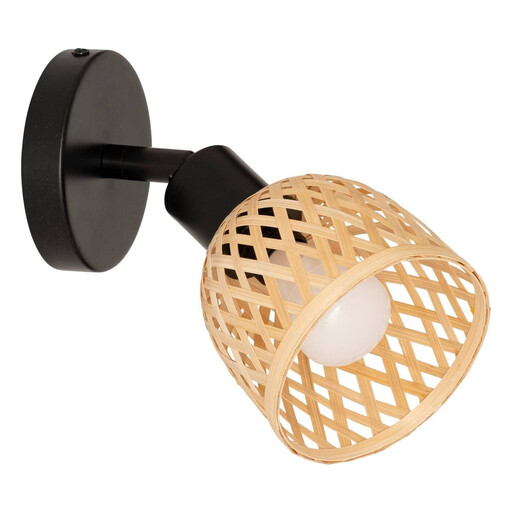
Why it suits this profile: This compact indoor lamp is ideal as a first wall or ceiling lighting solution in a hallway, bedroom or small workspace.
The product details clearly state the E14 fitting, the maximum power of 25 watts, indoor use and that no lamp is included.
Directional spotlight, dimensions of 10 x 10 x 17.5 cm and a bamboo shade with FSC certification, according to the product description.
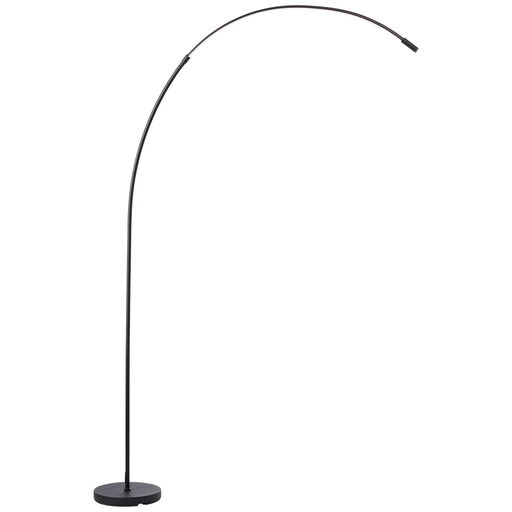
Why it suits this profile: This floor lamp is ideal for a living room where one fixture needs to provide both ambient light and bright light for reading or working.
The specifications state both the light output of 1,300 lumens and the dimming function, as well as an adjustable range from 3,000 to 6,500 K.
Touch controls, a 2.28-metre cable, integrated LED and a height of 179 cm. The IP20 rating means it is for indoor use only.
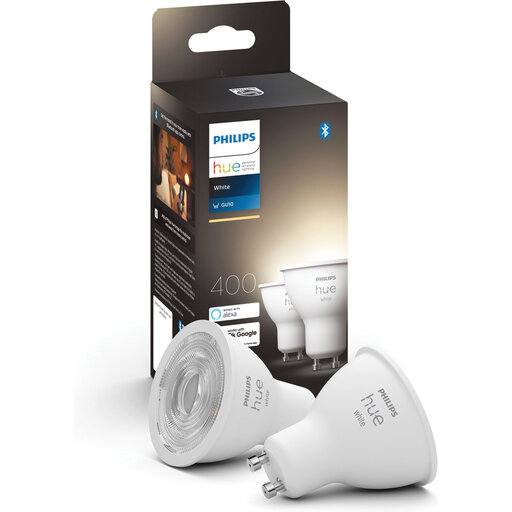
Why it suits this profile: Suitable for users who want to control GU10 spotlights via smartphone, voice control or a smart home platform.
The fitting, power and IP20 rating are specified. This makes it clear that the spotlight is intended for dry indoor spaces.
400 lumens per spotlight, 2,700 K, Bluetooth control, dimming function and Matter support, according to the product details.

Why it suits this profile: A practical choice for a garden, balcony or patio where no power socket is available.
The product information states an IP44 rating, motion sensor and two lighting modes. However, the light must be positioned where it receives sufficient direct sunlight.
Solar power, 400 lumens per light point, warm white lighting and automatic operation via daylight and motion sensors.
We have put together a complete, up-to-date list of products that fully meet these strict selection criteria and the applicable European safety regulations.
For a living room, 2,700 K to 3,000 K is usually a practical choice. This provides warm white lighting. For reading or working, a separate lamp with a higher light output or adjustable colour temperature may be more useful.
LED lamps generally use fewer watts than traditional light sources while providing a similar light output. Therefore, look at lumens, wattage and energy consumption per 1,000 hours. According to Philips’ own product information, certain LED spotlights can use around 80% less energy than traditional spotlights; always check the current packaging and energy label.
No. Both the light source and the dimmer must be suitable for this purpose. Do not use a non-dimmable GU10 or E27 lamp with a conventional dimmer. With smart lighting, dimming is often controlled via an app, bridge or compatible voice assistant. Before buying, check the fitting, voltage, dimming function and type of control.
