
Vandaag of morgen in huis

Kwaliteit gegarandeerd

Welkomstaanbiedingen ontgrendelen: GRATIS bezorging | Tot 80% korting | Gratis 30 dagen JoyPlus-proefperiode
Download de app
Choosing the right lamps seems simple until you discover that an attractive design does not automatically suit your space. For example, a floor lamp may not provide enough light for reading, a ceiling lamp may have a fitting you do not have at home, and an outdoor lamp may be unsuitable for prolonged exposure to rain.
So do not only consider colour and shape. Above all, check the technical specifications, dimensions and intended environment. This will help you avoid having to buy another lamp after just a few months.
A gold or black lamp may suit your interior, but the fitting determines which light source you can use. Many models use an E27 bulb, while compact fittings often use an E14 bulb. A GU10 bulb is also common for spotlights and various types of outdoor lighting.
Before buying, check:
With an integrated LED bulb, you do not need to buy a separate light source, but replacing it may sometimes require replacing the entire fitting. A fitting with a separate socket gives you more freedom to adjust the colour temperature or brightness later.
A dimmable lamp does not automatically include a dimming function. An in-line switch usually only turns the lamp on and off. To dim the light, you need a suitable dimmer, remote control, touch control or built-in dimming function. Also check whether the LED bulb being used is dimmable.
A lamp with several colour temperatures can be practical, but check whether the controls are included and how wide the operating range is. The VIVREAL LED floor lamp, for example, uses a remote control with a stated range of up to 10 metres. The product specifications list three colour temperatures: 3000K, 4000K and 6000K.
For bathrooms, balconies, gardens and patios, the IP rating is important. IP20 is intended for dry indoor areas. An outdoor wall lamp generally needs a higher level of protection. IP44 protects against splashing water, while IP54 also offers greater protection against dust and splashing water.
An IP rating does not automatically make a lamp suitable for every situation. Install a fitting according to the instructions and avoid submerging it or exposing it to heavy rain for prolonged periods unless the manufacturer explicitly permits this.
Brightness is usually stated in lumens. Wattage mainly indicates energy consumption and does not directly tell you how much light you will get. A lower lumen output is often sufficient for mood lighting, while a reading lamp or workspace requires more focused and brighter light.
Colour temperature is expressed in kelvin:
Also consider the direction of the beam. An uplighter spreads light upwards for general indoor lighting, while a reading lamp directs the light more towards a book or work surface.
Measure the area where the lamp will be placed. A 180 cm floor lamp needs sufficient height clearance and should not be positioned in a walkway. For a table lamp, check that the base fits securely on your desk or bedside table.
Important details include:
A tall lamp with a narrow base can be knocked more easily in a busy room. Place every lamp on a flat, stable surface and route the cable so that it does not create a trip hazard.
An LED bulb generally uses less energy than many older light sources, but always compare the stated wattage and light output. An integrated LED bulb is compact and ready to use straight away, while a fitting with an E27, E14 or GU10 socket is easier to adapt.
The energy efficiency class is shown on the product label. A lower class does not mean that the product is unsuitable, but it is sensible to consider energy consumption when the lamp is used for many hours every day.
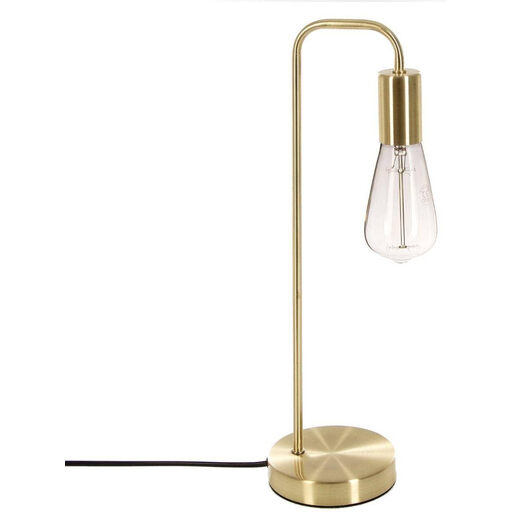
Why it suits this profile: This compact table lamp is easy to place on a desk, bedside table or side table. The E27 socket gives you a choice of different light sources.
The product details clearly state that the lamp is not dimmable, is intended for indoor use and is supplied without a light source. This means you can choose a suitable E27 bulb in advance.
46 cm high, metal housing, E27 socket and a 150 cm cable with switch.
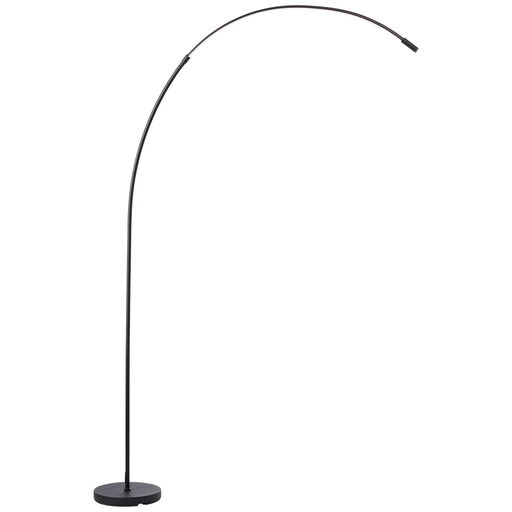
Why it suits this profile: The arched design is ideal for a seating area where you want light above a table or beside the sofa without placing a lamp base in the middle of the furniture.
The specifications state both the light output and the dimming function. The colour temperature is also adjustable, so you are not limited to a single lighting atmosphere.
Integrated LED bulb, 1300 lumens, dimmable, 3000–6500K and a cable measuring approximately 2.3 metres.
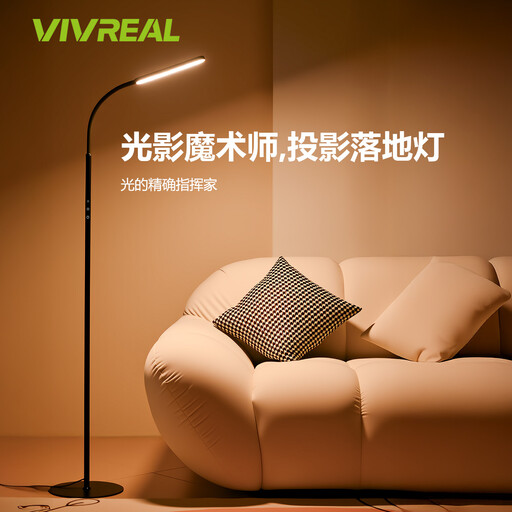
Why it suits this profile: This black floor lamp is ideal for a reading corner, living room, bedroom or office where controlling the light from the sofa or desk is convenient.
The lamp does not rely on a separate socket: the specifications list integrated LEDs, three colour temperatures and a remote control. However, check beforehand whether a non-replaceable light source suits your needs.
180 cm high, 14W, 3000/4000/6000K, remote control with a range of up to 10 metres and a heavy iron base.
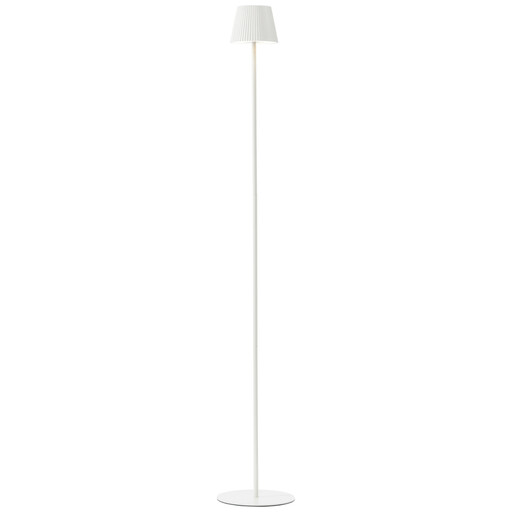
Why it suits this profile: The rechargeable design is convenient for a patio, balcony or garden where there is no fixed power socket nearby.
The product specifications list IP54, a battery and a touch dimmer. They also state that heavy rain and submersion should be avoided, so place the lamp somewhere sheltered and stable.
125 cm high, 340 lumens, warm white light at 3000K, three dimming settings and USB-A charging.
We have put together a complete, up-to-date list of products that fully meet these strict selection criteria and the applicable European safety regulations.
Check the fitting itself or the product information. E27 is a widely used large socket, E14 is more compact and GU10 is often used in spotlights. G9 sockets are found in some ceiling lamps and decorative fittings, among other products. Never use a light source with a different fitting or a higher wattage than permitted.
This depends on the distance, shade and area where you read. As well as lumens, consider the direction of the light and whether it can be dimmed. An adjustable reading lamp can be more practical than one very powerful light source because you can direct the light straight onto the book or work surface.
Use this calculation: wattage ÷ 1000 × hours of use × electricity price. A 10W lamp used for 1000 hours consumes approximately 10 kWh. The actual cost depends on your energy tariff and the number of hours the lamp is used. So check both the wattage and light output before comparing different lamps.
