
Vandaag of morgen in huis

Kwaliteit gegarandeerd

Welkomstaanbiedingen ontgrendelen: GRATIS bezorging | Tot 80% korting | Gratis 30 dagen JoyPlus-proefperiode
Download de app
Buying a new lamp seems simple, until you discover that the fitting does not fit, the light is too bright or an outdoor lamp cannot withstand rain. Features such as dimming, smart control or solar power are only useful when they suit your space and how you use it.
The three most common pitfalls when choosing lamps are:
Before buying, check whether your light fitting requires an E27 bulb or an E14 bulb. E27 is the larger, widely used screw fitting. E14 is narrower and is often found in smaller table lamps, wall lights and decorative fittings.
Also check the maximum wattage of the fitting. For example, an Atmosphera Keli floor lamp has an E27 fitting and is suitable for a light source of up to 60 watts. The lamp is supplied without a light source, so you can choose a suitable LED bulb yourself.
With some product listings, the title and technical table may differ. Always check the fitting on the product page and, if necessary, consult the manual before placing your order.
For ambient lighting, a lower lumen output is often enough. A reading corner or workspace generally requires more focused light. As a guide:
Colour temperature is expressed in kelvin (K). Around 2,200 K produces an extra-warm, yellowish light. At around 3,000 K, the light is warm white. A range of 3,000 to 6,500 K offers both warm and cooler white light.
For example, a vintage lamp with amber-coloured glass and 2,200 K is well suited to a cosy seating area. For a home office, 4,000 K may be more practical. Also check whether the light source is dimmable; a dimmable lamp and a dimmable light source are not automatically the same thing.
For a living room lamp, dimensions, cable length and stability are important. A tall arc lamp measuring 179 cm requires more space than a compact table lamp. So measure not only the floor space, but also the lamp's reach.
For a balcony, patio or garden, these points are also important:
An integrated LED module often cannot be replaced by the user. This can make maintenance easier, but it also means that if the light source develops a fault, you may need to replace the entire lamp. With a fitting that uses a separate bulb, you can usually install a new E27 or E14 bulb more easily later on.
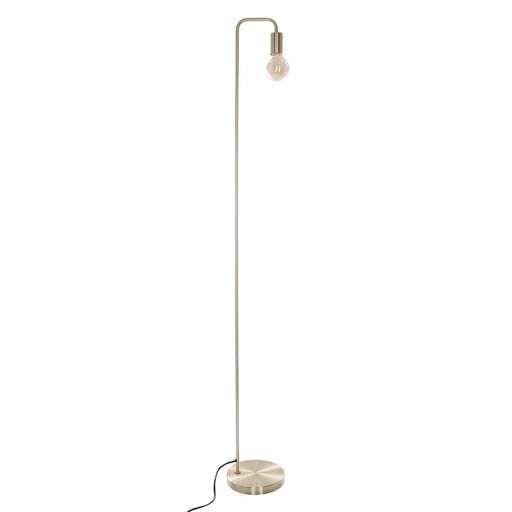
Why it suits this profile: This floor lamp is ideal for anyone looking for a simple indoor fitting with a striking vintage appearance. The lamp is 150 cm tall and has a 2-metre cable.
The product information clearly states that the E27 light source is not included and that the lamp is not intended for outdoor use. This means you can choose a suitable LED bulb in advance.
Metal construction, E27 fitting, on/off switch on the cable and a compact design with a diameter of 20 cm.

Why it suits this profile: This pack is ideal for households looking to expand their smart lighting and who value control via an app, switch or compatible smart home platforms.
The set specifies the fitting, light output and dimming function. This means you do not need to check separately whether the supplied bulbs are compatible with the system.
Two E27 LED bulbs producing 1,100 lumens per light point, dimming function and support for Zigbee and various smart home platforms.
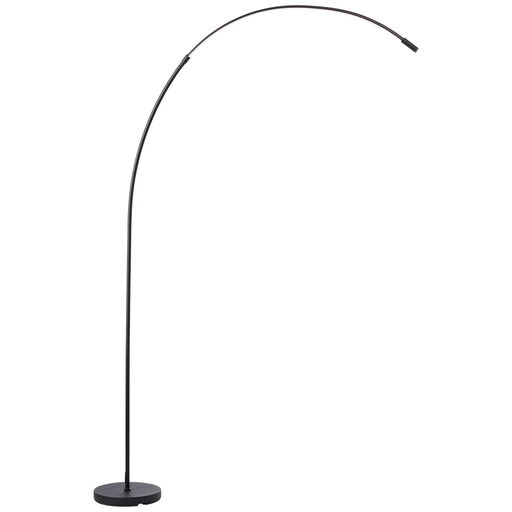
Why it suits this profile: This arc lamp is designed for a spacious living room where indirect light is wanted above a seating area. However, its long arc requires sufficient floor space.
The specifications state 1,300 lumens, IP20 and indoor use. This allows you to assess in advance whether the lamp provides enough light and where it can be placed safely.
Integrated LED, touch dimmer, adjustable colour temperature from 3,000 to 6,500 K and a 2.28-metre cable.
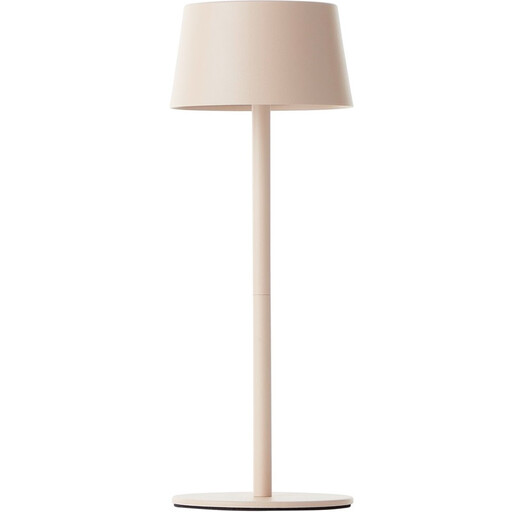
Why it suits this profile: This portable solar lamp is ideal for a balcony, patio or sheltered garden area where you do not want to use a permanent power connection.
The product details mention both solar and USB charging, as well as IP44. This makes you less dependent on sunlight, while protection against splashing water remains the key consideration.
170 lumens, three dimming settings, integrated battery, two mounting heights and an IP44 rating.
We have put together a complete, up-to-date list of products that fully meet these strict selection criteria and the applicable European safety regulations.
An LED bulb generally uses fewer watts than a comparable traditional light source for a similar light output. In particular, compare the number of lumens, wattage and energy-efficiency label. A 3-watt bulb may be sufficient for accent lighting, but not for general lighting.
No. Check whether both the lamp and the light source are dimmable. With a fitting that uses a separate bulb, you will also need a suitable external dimmer. Some integrated LED lamps have a built-in touch dimmer or electronic controls.
Lifespan varies according to the product and conditions of use. Check the stated lifespan in hours and whether the LED module is replaceable. With an integrated, non-replaceable light source, the entire lamp will usually need to be replaced if the module develops a fault.
