
Cooks preparing larger portions in advance
You want to make several meals’ worth of lamb curry in one session, so usable capacity and the maximum fill level are your main considerations.


Start by working out how much curry you want to make at a time, then check the maximum fill level for the exact model you’re considering; the stated pot capacity isn’t necessarily all usable. Sautéing before pressure cooking is ideal if you want to brown the ingredients in the same pot and then cook the curry under pressure, while slow cooking is also an option if you don’t need a pressure function. Divide leftovers into portions promptly after cooking: keeping food warm isn’t a substitute for cooling and storing it safely.
You want to make several meals’ worth of lamb curry in one session, so usable capacity and the maximum fill level are your main considerations.
You want to brown the ingredients in the same pot and then pressure cook them. The features listed on their own don’t tell you how long your curry will take to cook.
You have time for a longer cooking process and don’t necessarily need a pressure function.
A good fit if: you want to brown the ingredients in the inner pot first, then cook the curry under pressure.
Bear in mind: you can’t necessarily use the full stated capacity for pressure cooking; check the manual for the model you choose.
A good fit if: you have plenty of time and want to slow cook without needing a pressure function.
Bear in mind: the Russell Hobbs Good to Go 28270-56 feature list doesn’t include pressure cooking.
A good fit if: you want to cook dishes other than curry too, and automatic pressure release or a lamb programme matters to you.
Bear in mind: a lamb programme won’t automatically select the right settings for every curry recipe.
When batch-cooking lamb curry, batch size, your preferred cooking method and safe storage of leftovers each need separate consideration.
| What to consider | What to look for | Who should pay particular attention? |
|---|---|---|
| Usable capacity per batch | Compare the stated capacity with the fill markings and manual for the exact model. The Instant Pot Duo manual specifies a maximum fill of 2/3, or 1/2 for ingredients that expand; don’t apply this limit to other models without checking their manuals. | If I want to make several meals in one session, I need to know how much curry will fit within the maximum fill level. Around 29% of consumers mainly care about batch capacity. |
| Cooking method and time | Check that the model offers both sautéing and pressure cooking if you want to brown ingredients and cook them under pressure in the same pot. Remember to allow for preparation and pressure release too. | If I want to combine browning and pressure cooking in one session, that method matters most to me. Around 24% of consumers mainly prioritise cooking time and method. |
| Slow cooking | Check whether you can slow cook and brown ingredients first, and follow the model’s instructions. The Russell Hobbs Good to Go 28270-56 lists slow cooking and browning, but not pressure cooking. | If I’d rather slow cook and don’t need a pressure function, I’ll choose based on that cooking method. This is the main requirement for around 18% of consumers. |
| Portioning and storage | Have airtight containers and enough fridge or freezer space ready. The Voedingscentrum advises cooling leftovers within two hours; then refrigerate or freeze them. | I want to be able to store the curry in portions after cooking, rather than leave it in the warm pot. For around 17% of consumers, batch cooking and safe storage come first. |
| Cleaning and parts | Check the cleaning instructions for the pot and lid, and make sure any replacement parts are fully compatible with your model. An inner pot from a different model range won’t necessarily fit. | If I want the pot to be easy to clean and maintain after making a large batch, that will influence my choice. Around 12% of consumers put cleaning and parts first. |
When pressure cooking, the maximum fill level may be lower than the stated capacity. The Instant Pot Duo manual specifies a maximum of 2/3, or 1/2 for ingredients that expand.
Use the fill markings and manual for your exact appliance to work out your batch size; don’t automatically apply the Duo limit to other models.
A lower usable capacity may mean you need to cook the curry in more than one session.
The Russell Hobbs Good to Go 28270-56 feature list includes browning and slow cooking, but not a pressure function.
Decide whether you want to pressure cook or slow cook before comparing models, then check the features of the exact model.
Keeping food warm isn’t a substitute for cooling and storing leftovers. The Voedingscentrum advises cooling leftovers within two hours, then refrigerating or freezing them.
Have airtight containers ready before you start cooking, and make sure you have room in the fridge or freezer.
A pot with the right capacity won’t necessarily fit every model range. Instant Pot states that its 5,7L inner pot fits the Duo and Duo Crisp, but not the Pro range.
Before buying, check the full model number and make sure the pot, seal and lid are compatible.
A part that doesn’t fit your appliance may need to be replaced.
The Pro 7,6L is worth considering if you want a larger stated capacity alongside sautéing and pressure cooking.
According to Tefal, the Turbo Cuisine CY7548 combines pressure cooking with features including sautéing and slow cooking.
The Good to Go 28270-56 suits a cooking method that involves browning and slow cooking, without a stated pressure function.
According to Philips, the HD2633/80 combines a 6L pot with pressure cooking, sautéing and slow cooking.
These products are suited to larger cooking sessions and offer features such as sautéing, slow cooking or pressure cooking. Check the maximum fill level and cooking method for each model.
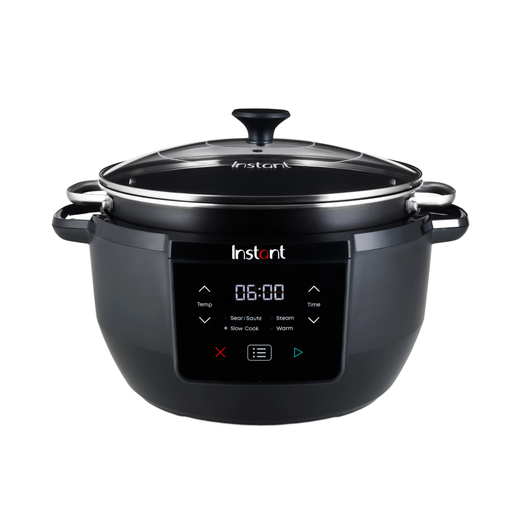 No image available
An option if you want to sauté and then slow cook; the listed features don’t include pressure cooking.
The product listing gives a capacity of 7,1 L and says it serves up to 10 portions. Don’t use the inner pot on a hob or in an oven: the product information warns that this could damage the coating.
 No image available
An option to compare if you want an electric pressure cooker that can also slow cook.
The product title lists a 6 L capacity, 1000 W, 14 cooking functions and a stainless steel inner pot; the product information also mentions slow cooking.
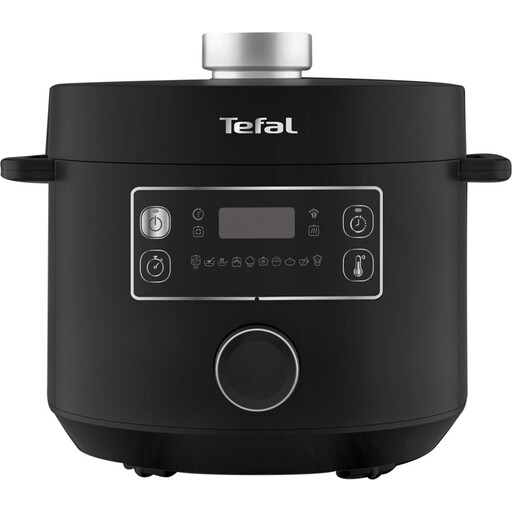 No image available
An option if you want to sauté the ingredients and then cook the curry under pressure.
The Joybuy product listing gives a capacity of 5 L and 10 automatic programmes. Check that the maximum fill level suits your batch size.
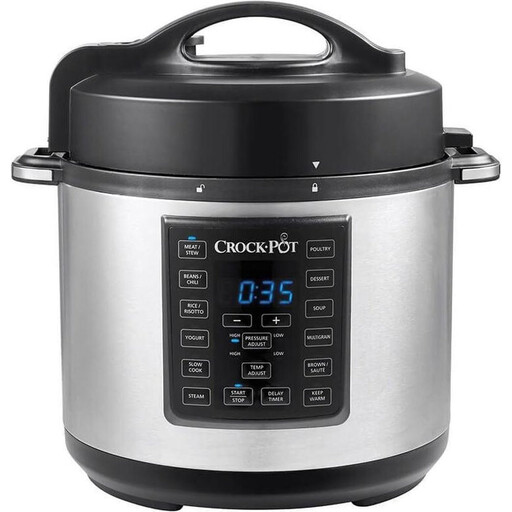 No image available
An option to compare if you want one appliance for both pressure cooking and slow cooking.
The product title lists 5.6L, 1000W and 12 programmes, including pressure cook and slow cook. The product information also mentions sautéing.
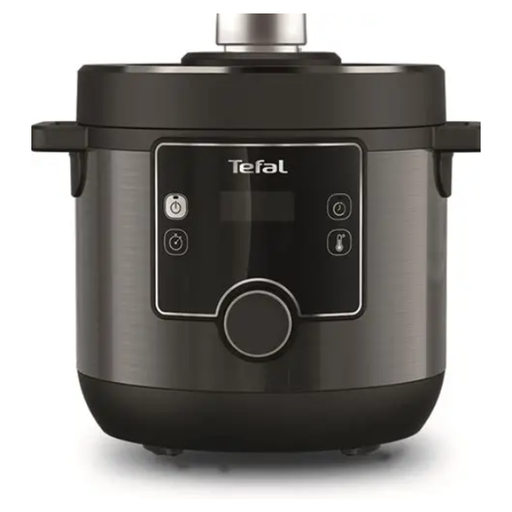 No image available
An option if you want to combine pressure cooking, sautéing and slow cooking.
The product title gives a capacity of 6 L and 15 functions; the product information also mentions digital controls.
Those figures refer to the stated pot capacity, not necessarily how much you can use when pressure cooking. The Instant Pot Duo manual specifies a maximum fill of 2/3, or 1/2 for ingredients that expand. Check the markings and manual for your multicooker; the stated capacity doesn’t tell you exactly how many portions of lamb curry you can make.
No. Don’t open the lid while the cooker is under pressure. The Instant Pot Duo manual warns never to force the lid open and says to make sure the pressure has been fully released first. For other models, follow their instructions for releasing pressure.
The Voedingscentrum advises cooling leftovers within two hours, storing them in airtight containers, and eating refrigerated leftovers within two days or freezing them. When reheating, heat leftovers all the way through until piping hot, and don’t reheat them more than once.
Yes. The Netherlands Food and Consumer Product Safety Authority states that electrical products covered by the requirement must carry a CE mark. The mark is the manufacturer’s declaration that the product meets the relevant European requirements; it doesn’t, by itself, mean that an individual model has been tested.
No. ACM ConsuWijzer distinguishes between a manufacturer’s or retailer’s warranty and statutory consumer rights. With normal use, a product must meet the standard you could reasonably expect; if it’s faulty, the retailer is responsible for providing an appropriate solution.