
Vandaag of morgen in huis

Kwaliteit gegarandeerd

Welkomstaanbiedingen ontgrendelen: GRATIS bezorging | Tot 80% korting | Gratis 30 dagen JoyPlus-proefperiode
Download de app
A pair of Lacoste children’s trainers can be suitable for school, play and everyday outfits, but the brand alone does not tell you enough about the fit or practicality. Children walk, run and grow quickly. As a result, a shoe that looks right in the shop may feel too small, too stiff or difficult to clean after just a few weeks.
Pay particular attention to these three common pitfalls:
Focusing only on appearance
White trainers for children and pink children’s trainers go with lots of outfits, but an attractive colour says nothing about the space inside, fastening or sole.
Buying a size without measuring the foot
Children’s feet vary between models and brands. Children’s shoe size 23 may feel different in one model than another. The same applies to children’s shoes size 27.
Confusing marketing claims with a guarantee
Terms such as “extra comfort”, “sporty” or “durable” are only useful when you check the specifications. Look at the material, insole, sole and type of fastening.
Measure both feet while your child is standing and compare the measurements with the size chart on the product page. Allow for a small amount of growing room, but do not buy a shoe that is clearly too roomy. A shoe that is too long or loose may feel unstable when running and playing.
Also check the following:
With Lacoste L001 children’s shoes, it is sensible not to rely on the EU size alone. Always check the available size and product information. For example, a model in size 23 is not automatically suitable for every foot requiring that size.
The product information for the LACOSTE L001 models lists an upper made from synthetic leather and textile, a lined EVA insole and a rubber outsole. Synthetic material can be practical for everyday use, while textile sections may react differently to dirt and moisture.
According to the product information, care involves:
A rubber sole can provide grip on ordinary surfaces, but that does not automatically mean a casual trainer is suitable for every sports floor. For intensive training, proper children’s sports shoes are often a more suitable category.
A classic tennis shoe style works well with school uniform and everyday outfits. A flexible, lined sole is comfortable for playgrounds and short activities. For team sports, running or lots of jumping, cushioning, stability and the specific surface are more important.
So ask yourself what the shoes will mainly be used for:
The selection below matches each product to a different usage profile. The features listed are based on the available product descriptions.
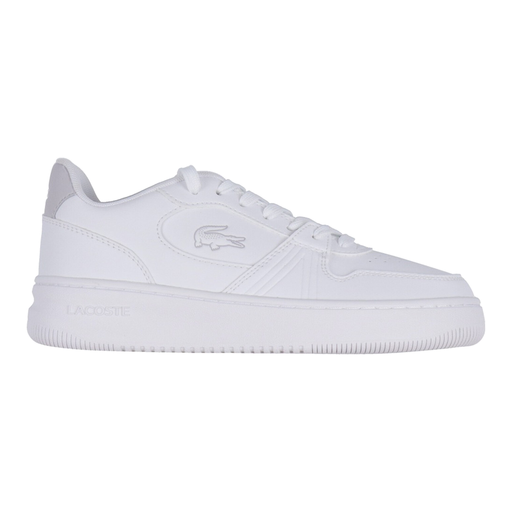
Why it suits this profile: The white design is easy to pair with school and leisurewear. The stated EU size 23 makes this model relevant for young children who need this size.
The product description specifies the materials and a lined EVA insole. This means you can assess the choice based on its specifications rather than the white design alone.
Synthetic leather and textile upper, lined EVA insole and rubber outsole; model information states EU size 23.
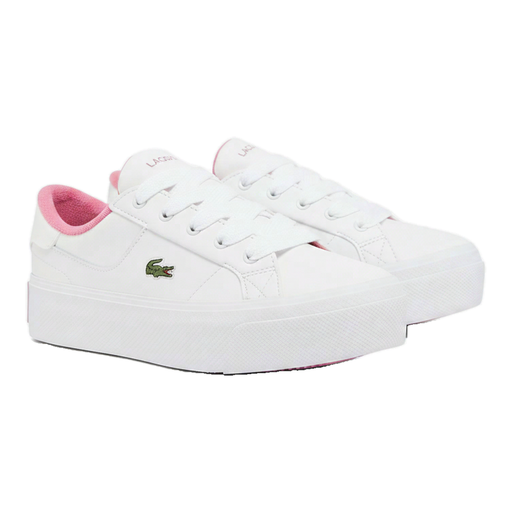
Why it suits this profile: The combination of white with light pink details is ideal for parents looking for smart children’s trainers with a subtle splash of colour. The stated size is EU 27.
The light colour requires regular wiping, but the product information gives clear care instructions involving a damp cloth. This makes everyday maintenance straightforward.
Lightweight construction, lined EVA insole and rubber outsole; white upper with light pink details.
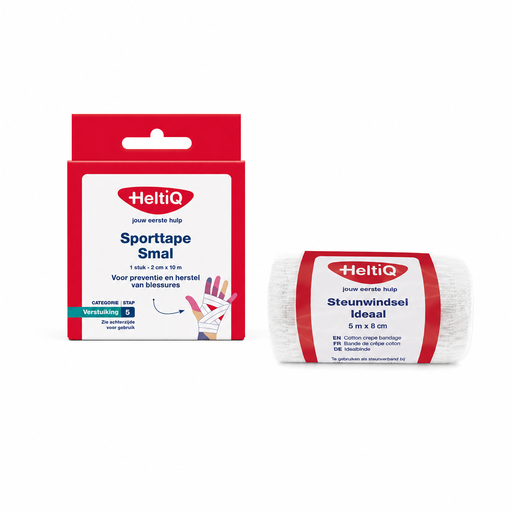
Why it suits this profile: This is not a children’s trainer, but a practical addition for sportspeople and families who want sports tape or supportive bandages close at hand.
The bundle distinguishes between narrow tape for fingers and hands and a wider bandage for larger areas. Use both only as directed.
Contains one roll of sports tape measuring 2 cm × 10 m and one reusable support bandage measuring 5 m × 8 cm.
Alternate shoes whenever possible. This allows one pair to air and dry after a wet school day. Also check the fastening and sole before your child goes to sport or outdoor play. Wear on the underside, coming-away seams or a misshapen heel are signs that it is time to reassess the fit and suitability.
For light dirt, a damp cloth is usually enough. Do not use harsh cleaning products without first checking the material care instructions. A shoe that is often worn outdoors will show signs of use more quickly than a pair that is mainly worn indoors.
Never use sports tape on open skin injuries and do not apply a bandage too tightly. If you notice discolouration, tingling, numbness, increasing pain or reduced freedom of movement, remove the bandage immediately. If you are unsure about taping or support, it is advisable to seek guidance from a qualified professional.
We have put together a complete, up-to-date list of products that fully meet these strict selection criteria and the applicable European safety regulations.
That depends on the sport and the surface. According to the product information, an L001 model has a rubber outsole and a lined EVA insole, but the models are described as casual tennis shoes. For intensive training, running or a specific team sport, a sports shoe with suitable cushioning, sole and stability is often the more sensible choice.
Measure both feet while standing and then use the size chart on the relevant product page. Also check the width, heel fastening and toe space. A model in children’s shoe size 23 or size 27 should therefore be assessed based on both the foot and the specific shoe construction.
Wipe off dirt as soon as possible with a slightly damp cloth. Then allow the shoes to dry at room temperature and avoid prolonged exposure to direct sunlight. Check beforehand that the care advice is suitable for the material, particularly when the upper combines synthetic leather and textile.
