Who is this buying guide for?

Making easy-to-read shelf labels

You want to identify folders and storage compartments at a glance. Measure the space on the front of your shelf and decide how much text needs to fit. Brother and NIIMBOT describe models that support different tape and label widths.

Making labels for frequently used items

If labels on shelves or boxes are handled often, consider the material and surface. Brother specifies laminated TZe tape; you can check how suitable it is and how well it sticks to your shelf by printing a test label.

Choosing a label maker to suit how you like to work

You may want to type text directly on a device, or design labels using a phone app. Brother describes both a keyboard model and app-enabled models; DYMO pairs the LetraTag 200B with the LetraTag Connect app.

What should you look for in a shelf-label printer?

Keyboard tape label printer

A good fit if: you want to enter short shelf names without using a phone or computer. Brother specifies a QWERTY keyboard and tape up to 12 mm wide for the PT-D210VP.

Keep in mind: narrower tape gives you less room than wider labels, and the tape must be cut by hand.

App-enabled tape label printer

A good fit if: you want to design labels on your phone. Brother specifies tape up to 12 mm wide for the PT-P300BT and up to 24 mm for the PT-P710BT; DYMO describes the LetraTag 200B as working with LetraTag Connect and 12 mm tape.

Keep in mind: you’ll need a compatible device and the corresponding app. LetraTag and Brother TZe cassettes are different systems.

Printer for individual thermal labels

A good fit if: there’s room on the front of your shelf for larger, individual labels. NIIMBOT specifies rolls 20–50 mm wide and an effective print width of up to 48 mm for the B1.

Keep in mind: choose a roll that fits both the printer and the front of your shelf. You can check how easy a label is to read on your shelf by printing a test label.

What to consider What should you check? Who is this important for?
Readability and size Measure the front of your shelf and compare it with the supported tape or label width; print a test label if possible. I want to be able to read shelf names from my usual viewing distance, so I’ll choose the right size first. Around 36% of consumers prioritise readability and size.
Material and surface Choose a material suited to the surface and conditions where you’ll use it; if needed, try it somewhere discreet first. If labels are going on shelves or boxes that are handled often, I want to know which material will work on that surface. Around 29% of consumers give material and durability top priority.
Controls and devices Check whether the model uses a keyboard or an app, and whether the app and power supply will suit your workspace. I want to type short text directly or design labels on my phone, without choosing a model that needs a device I don’t have. Around 21% of consumers focus mainly on ease of use.
Refills and compatible supplies Check the cassette or roll range, size and colour you need. If I replace labels regularly, I want to know in advance which refills fit the printer. Around 14% of consumers prioritise refills and availability.

Common buying mistakes

  • Choosing a printer without checking the label size

    Tape up to 12 mm wide, tape up to 24 mm wide and individual labels measuring 20–50 mm offer different amounts of space for text on the front of your shelf.

    Measure the space available and decide what text you want before choosing a printer and label material.

  • Assuming cassettes and rolls are interchangeable

    Brother TZe, DYMO LetraTag and rolls for the NIIMBOT B1 are different consumable systems.

    Make a note of the full printer model and check which cassette or roll sizes it supports before choosing refills.

  • Not checking which materials and power supply you’ll need

    The wrong cassette or roll may not fit your model, and power requirements vary between printers. For example, Brother specifies AAA batteries or an optional adapter for the PT-P300BT.

    Before buying, check which label material is compatible and whether batteries, a rechargeable battery or an adapter will suit the way you plan to use it.

Brands to consider

Brother

According to its product information, Brother offers both keyboard-operated P-touch models and app-enabled printers for home office labels.

  • Brother specifies a keyboard and a maximum tape width of 12 mm for the PT-D210VP; the brand lists tape up to 24 mm wide and PC or Mac compatibility for the PT-P710BT.
  • TZe cassettes vary by model. The specifications listed are from the manufacturer and are not an independent test of readability, adhesion or lifespan.

DYMO

According to DYMO, the LetraTag 200B is an app-enabled option for compact labels in a home office.

  • DYMO specifies control via the LetraTag Connect app and compatibility with 12 mm LetraTag tape.
  • Check that the app is compatible with your device and which pack and tape type you’re choosing. LetraTag tape is not the same system as Brother TZe.

NIIMBOT

According to NIIMBOT, the B1 is designed for individual thermal labels and may suit shelves with a wider front.

  • NIIMBOT specifies Bluetooth, rolls 20–50 mm wide and an effective print width of up to 48 mm.
  • Check that the roll dimensions suit both the printer and the front of your shelf. The manufacturer’s information doesn’t indicate how long a label will remain readable on your surface.

Phomemo

According to Phomemo, the M110 is an app-enabled printer for individual thermal labels, offering an alternative to continuous label tape.

  • Phomemo describes mobile label design and loading a roll of thermal labels.
  • Set the label size in the app to match the roll you’re using. Manufacturer information isn’t an independent comparison of readability or lifespan.

Label printers at Joybuy

This selection includes app-enabled printers for narrow tape labels and individual labels, as well as Brother models for tape or wider labels. Check which consumables are compatible with each model.

Phomemo M110 label printer

Phomemo M110 label printer

An app-enabled option if you want to design individual labels on a mobile device.

The product information lists Bluetooth, the Print Master app and labels 20–50 mm wide. It also specifies a rechargeable battery; the product name mentions one roll of labels.

View at Joybuy

Phomemo D30 label printer

Phomemo D30 label printer

An app-enabled option if you want to design short labels on a phone or tablet.

The product name specifies a label width of 0,59 inch. The product information lists Bluetooth and a built-in rechargeable battery.

View at Joybuy

Brother PT-P300BT label printer

Brother PT-P300BT

An app-enabled tape label printer for designing narrow labels on a smartphone or tablet.

The product information lists Bluetooth, TZe tape in widths of 3,5, 6, 9 and 12 mm, and AAA power. Check that the cassette is compatible with the model.

View at Joybuy
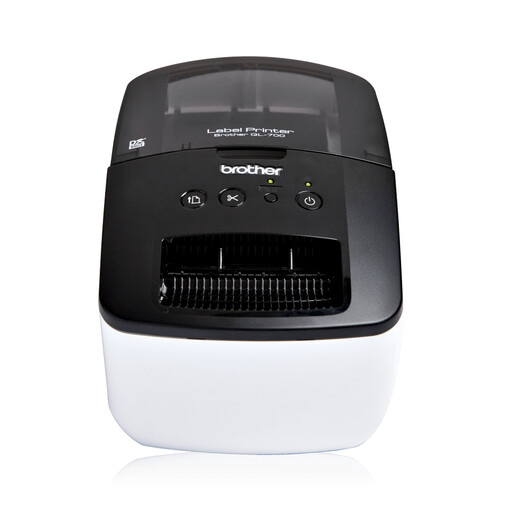
Brother QL-700 label printer

Brother QL-700

An option if you want to design wider individual labels on a computer.

The product information lists DK labels up to 62 mm wide, USB and software for Windows and Mac.

View at Joybuy
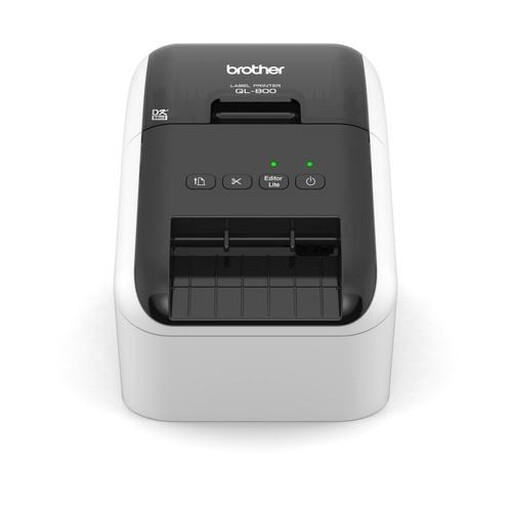
Brother QL-800 label printer

Brother QL-800

An option if you want wider individual labels and a wired connection to a computer.

The product information lists DK tape up to 62 mm wide and a USB connection.

View at Joybuy

Frequently asked questions

How do I get started making shelf labels?

First, measure the part of the shelf front where the label will go and decide what text you want on it. Then choose a compatible tape or label size and, if possible, print a test label to check how easy it is to read in its usual position. For the M110, Phomemo recommends setting the size in the app to match the actual label size.

Can I use the same label cassettes in every printer?

No. Check the cassette or roll range for the exact model. According to DYMO, the DYMO LetraTag 200B uses 12 mm LetraTag tape; the Brother P-touch models reviewed use compatible TZe cassettes. Also check which widths your model supports.

What can I do if a label printer bought online isn’t right for me or breaks too soon?

For online consumer purchases in the Netherlands, you generally have a statutory cooling-off period of up to 14 days after delivery; check which exceptions apply to your purchase. If a product doesn’t perform as you could reasonably expect under normal use, the seller is responsible under the statutory guarantee. ACM ConsuWijzer distinguishes between the cooling-off period and the statutory guarantee.

Does an electric label printer sold in the Netherlands need a CE marking?

According to the Dutch government, products such as electronic devices placed on the EU market must carry a CE marking. This alone doesn’t confirm whether a specific item has been marked correctly, so check the product and its accompanying documentation.
