First, choose a label material that suits when you’ll apply it: being suitable for storage doesn’t mean a label will stick to a container that’s already frozen. A handheld tape label maker is handy for short, occasional markings; for more text or labels you use regularly, you may need a different type of printer and material. HERMA specifies an application temperature from -25 °C for its freezer labels, while Brady says to apply the B-7425 cassette before freezing.
Who is this choice for?
Shopkeeper with containers that are already frozen
You want to label them afterwards. So check whether the manufacturer specifies an application temperature and whether it suits your containers and process. HERMA specifies an application temperature from -25 °C for its freezer labels.
Shopkeeper preparing individual portions
You label portions with short names and dates before freezing, and want a handy, easy-to-use device. DYMO describes D1 Durable tape as suitable for temperatures below freezing, but that claim doesn’t automatically apply to every D1 cassette.
Shopkeeper preparing batches regularly
You often print the same layout or need room for more text. Check the available label width and whether you can reuse saved designs. Brother says the PT-D610BTVP can store 99 designs.
What should you look for in a label printer for freezer containers?
First, decide when you’ll label your containers, how much text needs to be legible and how often you’ll reuse the same layout. Then choose the printer and the label material to go with it.
| What to consider |
What should you check? |
Who is this most relevant to? |
| Adhesion when applying the label |
Check the specified application and service temperatures for the specific label material. |
If I’m only labelling containers once they’re already frozen, I want to know whether the material is designed for that temperature. Around 33% of consumers prioritise adhesion when applying labels in the cold. |
| Space to read the contents and date |
Create a test layout with the text you need and check the maximum label width of the model you’ve chosen. |
If the contents and a date both need to be legible on one container, the space available is especially important to me. Around 27% of consumers prioritise legible contents and date markings. |
| Reprinting a layout |
Check whether the device can save designs and whether this feature suits the number of labels you use regularly. |
For repeat batches, I want to be able to reuse the same layout quickly. Around 20% of consumers prioritise repeatable batch labelling. |
| Compatible cassettes or rolls |
Check the full cassette or roll type and compare the cost per label for your chosen size and usage. |
If I print labels often, I want to know which consumables are compatible with the printer and what they mean for my process. Around 20% of consumers focus on ongoing costs and the availability of suitable materials. |
Common mistakes with freezer labels
-
Confusing freezer-resistant with suitable for applying in the cold
A label may withstand low temperatures in storage, but that doesn’t mean it will stick to a container that’s already frozen. HERMA specifies an application temperature from -25 °C for its freezer labels; for the B-7425, Brady says to apply the label before freezing.
Compare the specified application temperature with when you’ll be labelling, not just the storage temperature.
-
Assuming all tapes and rolls are interchangeable
Brother, DYMO and Brady models use different consumables. The wrong cassette or roll may not fit the printer or suit the application.
Before buying, make a note of both the full printer model and the code for the label material you intend to use.
-
Mistaking an internal container label for a complete retail label
The information required depends on how the food is offered to customers. The Netherlands Food and Consumer Product Safety Authority (NVWA) treats labelling for prepacked foods separately from allergen information for non-prepacked foods.
Decide whether the container is for internal stock only or will be offered to customers, then check what information is required in that situation.
Brands to compare
Brother
P-touch models offer tape for occasional markings and repeat designs, with different maximum tape widths depending on the model.
- The PT-D210VP prints on tape up to 12 mm wide; the PT-D610BTVP supports tape up to 24 mm wide and, according to Brother, can store 99 designs.
- Brother describes TZe labels for the PT-D610BTVP as resistant to water and extreme temperatures, among other things. This alone doesn’t establish the temperature at which you can apply them to a frozen container.
DYMO
The LabelManager 210D+ is a portable tape label maker for short markings and uses D1 tape.
- DYMO says the model can store frequently used labels. DYMO describes D1 Durable tape as suitable for temperatures below freezing.
- The claim about resistance to freezing applies to D1 Durable, not automatically to every D1 cassette. It also doesn’t confirm that you can apply the tape in the cold.
Brady
The M210 is a portable printer for which Brady specifies separate materials, including the B-7425 cassette.
- Brady says the B-7425 is compatible with the M210 and designed for low-temperature applications.
- For freezer use, Brady says to apply the B-7425 before freezing. This guidance doesn’t automatically apply to other cassettes.
Zebra
The ZD421 desktop series is available in direct thermal and thermal transfer versions for roll labels.
- The series offers different versions for anyone looking for a roll printer and room for larger labels.
- The printer specifications don’t prove that any given roll will stick to freezer containers. Check the exact version and the label material it uses.
Label printers on Joybuy
This selection includes portable label makers and printers for short to wider stock labels. The printer specifications alone don’t tell you whether a particular label is suitable for when you’ll apply it in the freezer, so check the material too.
 No image available
Phomemo M110 label maker, including 1 label roll
Could suit repeat stock labelling if a label roll with the right freezer-resistant properties is available.
According to the product description, it supports label widths of 20–50 mm and batch printing via the app.
Joybuy
 No image available
Phomemo D30 label maker
A portable option for stock labels if the available label width suits the text you need on the container.
The product title specifies a label width of 0.59 inch; the product description mentions Bluetooth, templates and a rechargeable battery.
Joybuy
 No image available
DYMO LetraTag 200B Bluetooth, including 1 roll of white paper labels
Could suit short markings you want to design using a phone or tablet, provided the label material you choose is suitable for both the freezer and when you’ll apply it.
The product description specifies labels up to 1.2 cm wide, Bluetooth and use with a smartphone or tablet.
Joybuy
 No image available
Brother PT-P300BT TZe label printer
A tape label maker for short organisation and identification labels, if the available tape provides enough space and suits when you’ll apply it.
The product description specifies TZe tape widths of 3.5, 6, 9 and 12 mm, as well as Bluetooth. The product title specifies 180 × 180 DPI and 20 mm/sec.
Joybuy
 No image available
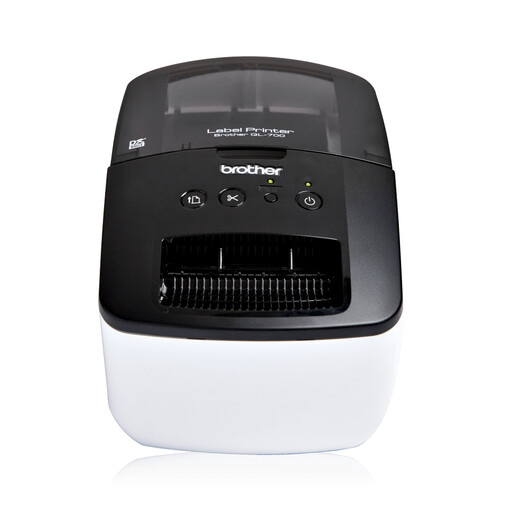
Brother QL-700 DK label printer
Could suit labels with more text or longer print runs if the roll material you choose is suitable for your freezer use.
The product description specifies labels up to 62 mm wide, an automatic cutter and print lengths of up to 1 metre.
Joybuy
Frequently asked questions
Can you apply any freezer-resistant label to a container that’s already frozen?
No. Don’t assume so based only on the service temperature. HERMA specifies an application temperature from -25 °C for its freezer labels; for the B-7425, Brady says to apply the label before freezing. These instructions apply to different materials.
Does a shop in the Netherlands have to use a particular brand of label printer?
The NVWA information described on working safely with food and food information doesn’t specify a printer brand. A printer doesn’t replace the food safety plan that applies to your process.
Is an internal container label enough if you sell the contents to customers?
Not necessarily: the information required depends in part on how the food is offered. The NVWA treats labelling for prepacked foods separately. For non-prepacked food, customers must also be told about any allergens present; according to the NVWA, this can be done in writing or verbally, subject to certain conditions. First decide how the food will be sold, then check what information is required.
What should you look for in a cassette or roll?
Check that the consumable is compatible with the exact printer model and designed for when you’ll apply it and how you’ll use it in the freezer. The Brother PT-D610BTVP uses TZe tape, the DYMO LabelManager 210D+ uses D1 tape, and Brady lists the B-7425 as compatible with the M210. Print a test label on the material you actually intend to use.


